
Water Heaters & TPR Discharge
~14 min read · Inspect TPR valves and discharge piping, combustion air, venting and seismic strapping.
The water heater is the one appliance that can explode: the TPR valve and its discharge pipe are the safety system, and their rules are exact — full-size pipe, gravity flow, no threads on the end, terminating near the floor. Everything else is combustion, venting, and rust.
TPR valve and discharge
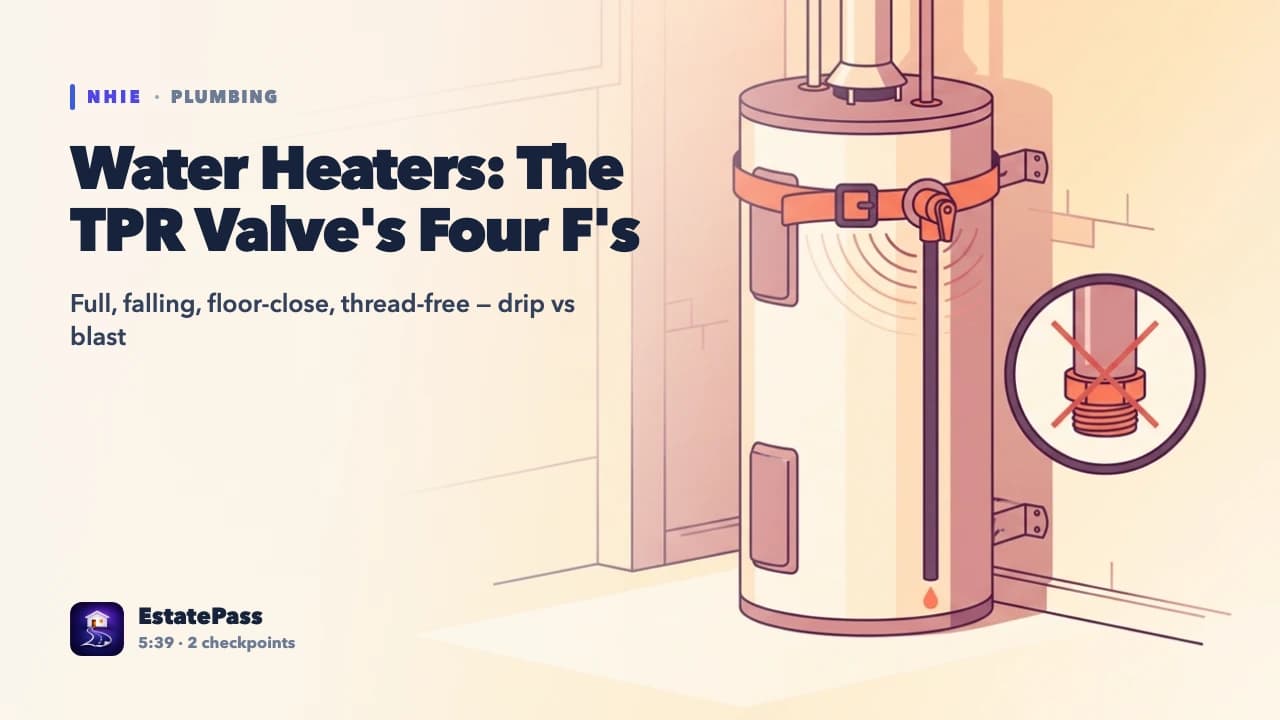
The temperature-and-pressure-relief valve opens before tank pressure/temperature reach explosive failure. Its discharge pipe rules are stable and testable: full size of the valve outlet (no reduction), gravity fall (no traps, no uphill runs), serving one valve only, of approved rigid material, terminating not more than 6 inches above the floor or receptor flood rim (and not less than two pipe diameters), and — the famous one — the end may never be threaded (a threaded end invites a cap; a capped TPR discharge converts a nuisance drip into a bomb). Missing pipe entirely (valve discharges at face level) is the other classic.
- Full-size, downhill, one valve, rigid, ≤6 in of the floor
- No threads at the end — capping kills
- Missing discharge pipe = eye-level steam blast finding
Combustion, venting, and location
Gas heaters need combustion air (soot, a lazy yellow flame, and roll-out scorching mark starvation), sound venting — draft hood connected, vent rising with proper connector slope and clearances, no backdrafting (mirror/smoke test at the hood; melted plastic atop the tank is the tell) — and location logic: garage installations protect against vehicle impact (bollard) with ignition-source elevation principles (modern FVIR tanks changed the specifics — report by principle), and pan-plus-drain under tanks above living space. Seismic strapping is a state-level requirement — report the restraint principle where applicable.
- Soot, roll-out, melted grommets: combustion/venting findings
- Garage: impact protection; overhead: pan and drain
- Strapping per state practice — restraint is the principle
Tank condition and function
Age from the serial (rating plate decode), rust at the base and fittings, rumbling/popping (sediment boiling — efficiency and end-of-life flag), moisture or active leaks at the base seam (tank leaks are terminal), water temperature check (scald discussion ~120°F setpoint), dielectric-corroded connections, and for tankless units: venting material (condensing PVC vs stainless), condensate handling, and service history. Typical tank life ~8–12 years frames the budgeting note.
Worked example
A garage gas water heater: the TPR valve wears a short pipe stub with a hose cap threaded onto it; the draft hood's vent connector runs level then dips before rising; the tank top shows browned plastic and the burner chamber rim is sooted; no straps in a seismic state; serial decodes to 13 years old with rust tears at the base seam. Prioritize.
Lead with the bomb: a capped TPR discharge defeats the only device standing between an over-pressure tank and a BLEVE — remove the cap immediately and re-pipe full-size, downhill, unthreaded end near the floor; this is the report's most urgent line. Second: combustion/venting — the level-then-dipping connector encourages backdraft, and browned plastic plus soot say flue gases are spilling; hazard pairing of CO and heat — service and re-vent. Third: strapping absent in a seismic state — restraint finding. Fourth: 13 years with base-seam rust tears — end of life; leak-imminent budgeting note (pan/drain check). One appliance, one safety hierarchy: explosion, then gas/CO, then quake, then flood.
Common exam pitfalls
Testing the TPR lever casually.
Old valves often won't reseat — operating it is discretionary; the PIPING defects are the reportable certainty.
Missing the dip in a vent connector.
Flue gas rises or it spills — level and dipping runs plus melted plastic mean backdrafting; treat as a CO finding.
Calling a rusty leaking tank 'serviceable.'
Tank-seam leaks are terminal — the finding is replacement, with pan/drain protection where located above damageable space.
Full, falling, floor-close, thread-free — the TPR pipe's four F's stand between a drip and a detonation.
Recap
- TPR discharge: full-size, gravity, one valve, ≤6 in of floor, unthreaded end
- Capped/missing discharge = top-priority finding
- Combustion air and draft: soot, roll-out, melt marks, backdraft tests
- Garage impact protection; pans above living space; state strapping
- Age + base rust + rumble = end-of-life budgeting
- Safety hierarchy: explosion, CO, restraint, leak
VIDEO LESSON
Watch this lesson on video — free
Prove it: 10 questions on this topic
Every lesson ends with a ten-question check in the free course — your progress syncs between the web and the EstatePass app.