
GFCI & AFCI Protection
~12 min read · List every required GFCI/AFCI location and describe how each device is tested.
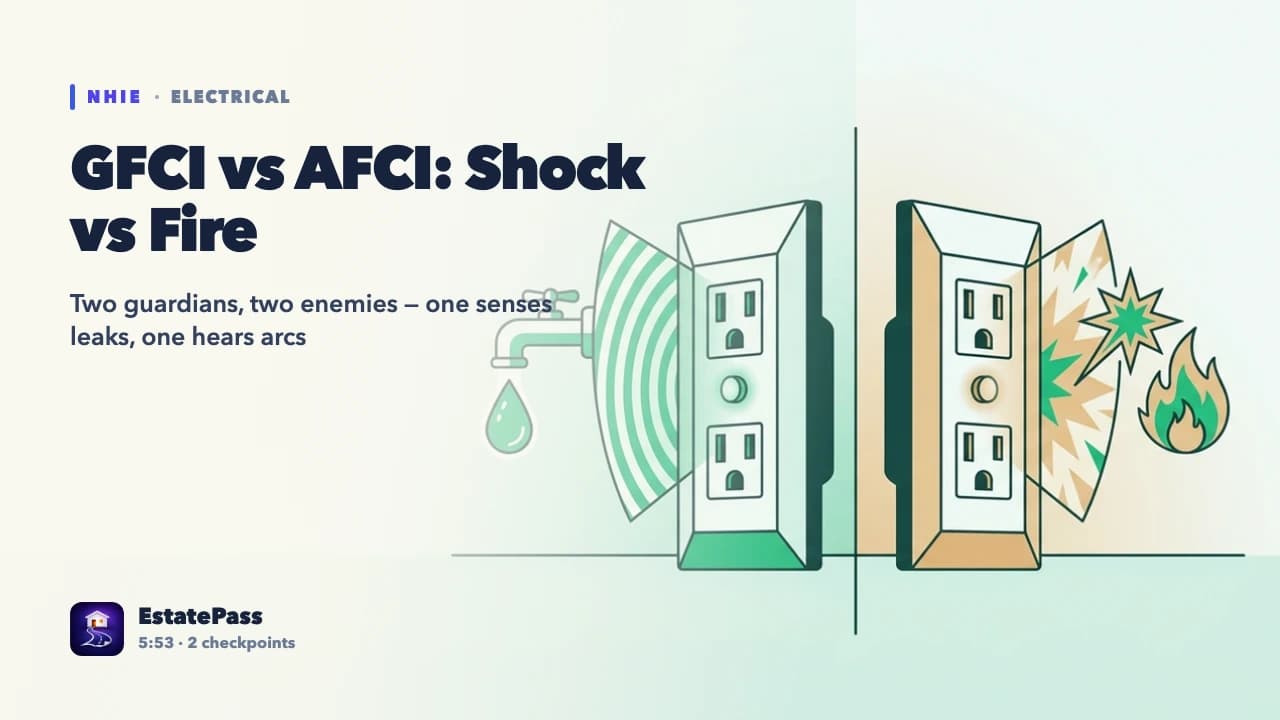
Two protective technologies guard against two different deaths: GFCIs sense current leaking to ground and stop electrocution; AFCIs recognize arc signatures and stop fires. The inspector tests the devices and reports by protection principle — because the required-location lists grow every code cycle.
GFCI: shock protection
A ground-fault circuit interrupter compares hot and neutral current; an imbalance of a few milliamps means current is escaping — through water, tools, or a person — and it trips in a fraction of a second, faster than a fatal shock. Breakers protect WIRES (tens of amps); GFCIs protect PEOPLE (milliamps) — the exam's core contrast. Protection lives in the WET geography: the modern principle is receptacles near water and outdoors — bathrooms, kitchens, garages, exteriors, unfinished basements, laundry — with the precise list expanding by cycle; older homes are graded on principle ('no GFCI protection at wet locations — recommend upgrading as a safety enhancement').
- Senses milliamp leakage; trips before electrocution
- People-protection, versus the breaker's wire-protection
- Wet-location principle governs; the code list keeps growing
AFCI: fire protection
An arc-fault circuit interrupter recognizes the electrical signature of dangerous arcing — damaged cords, nicked cables, loosened connections sputtering behind walls — and opens the circuit before ignition. Its territory: living areas and (by modern cycles) most habitable circuits. The distinction to hold: AFCI targets fire, GFCI targets shock; dual-function breakers do both. Reporting mirrors GFCI: presence noted, absence in older homes framed as an era-appropriate upgrade recommendation.
- Arc signatures → trip before fire
- Fire vs shock: the AFCI/GFCI dividing line
- Dual-function devices combine both
Testing and findings
Test with the device's own TEST button (the authoritative method — it must trip and kill downstream power) and reset; plug-in testers supplement but can't validate everything. Findings: GFCIs that fail to trip or fail to hold (worn devices), no power after reset (miswiring), downstream receptacles unprotected that should ride a protected feed, painted-over buttons, and nuisance-tripping AFCIs flagging real arc sources versus incompatible loads. Ungrounded two-wire circuits have a legitimate GFCI story: a GFCI can protect an ungrounded receptacle (labeled 'No Equipment Ground') — a common and acceptable older-home upgrade.
Worked example
In a 1988 house: the two bathrooms share one GFCI (in the master) protecting both; its TEST button does nothing — power stays on; kitchen counter receptacles are standard duplexes; and the listing brags 'all-new AFCI breakers' for the bedrooms. Sort the protection story.
The dead TEST button is the headline: a GFCI that won't trip provides zero protection while advertising it — replacement finding, priority because two bathrooms depend on this single device (downstream protection is fine IF the upstream device works — this one doesn't). The kitchen: no GFCI protection at counters within reach of sink and appliances — in a 1988 home that's era-typical, reported as a recommended safety upgrade by principle, not a code citation. The bedroom AFCIs: genuine improvements — note them, and confirm they hold under load. Wrap with the distinction the buyer should hear: the new AFCIs guard against fires; the failed GFCI was the electrocution guard — fix the latter first.
Common exam pitfalls
Reciting the current GFCI location list as the standard for every house.
Lists expand each cycle — report by wet-location principle and frame older homes' gaps as upgrades.
Confusing the two technologies' missions.
GFCI = shock (ground leakage); AFCI = fire (arc signatures). The answer to 'which protects against electrocution' is GFCI.
Trusting the plug-in tester over the device button.
The built-in TEST button is the definitive check — especially on ungrounded circuits where plug-in testers can't trip a healthy GFCI.
Ground-fault guards the body, arc-fault guards the building — test the button, not the brochure.
Recap
- GFCI: milliamp imbalance, trips before electrocution
- AFCI: arc recognition, trips before fire
- Wet-location principle for GFCI; habitable areas for AFCI
- Test via device buttons; verify downstream coverage
- GFCI on two-wire circuits: legitimate, labeled, ungrounded
- Older homes: absence = upgrade recommendation, not citation
VIDEO LESSON
Watch this lesson on video — free
Prove it: 10 questions on this topic
Every lesson ends with a ten-question check in the free course — your progress syncs between the web and the EstatePass app.