Real estate exam · explorable chapters
Explorable Real Estate Exam Chapters
Real estate exam math and concepts taught one figure at a time: commissions and prorations, legal descriptions, area, financing, CMA adjustments, investment tax, closing statements, property tax, leases, appreciation, amortization, the cost approach, zoning limits, easements, forms of ownership, agency, contracts, property rights, fair housing, liens and foreclosure, deeds and title, disclosures, land use controls, appraisal, lending laws, brokerage practice, listing agreements, transfer of title, and options and land contracts, each with hands-on activities and practice sets.
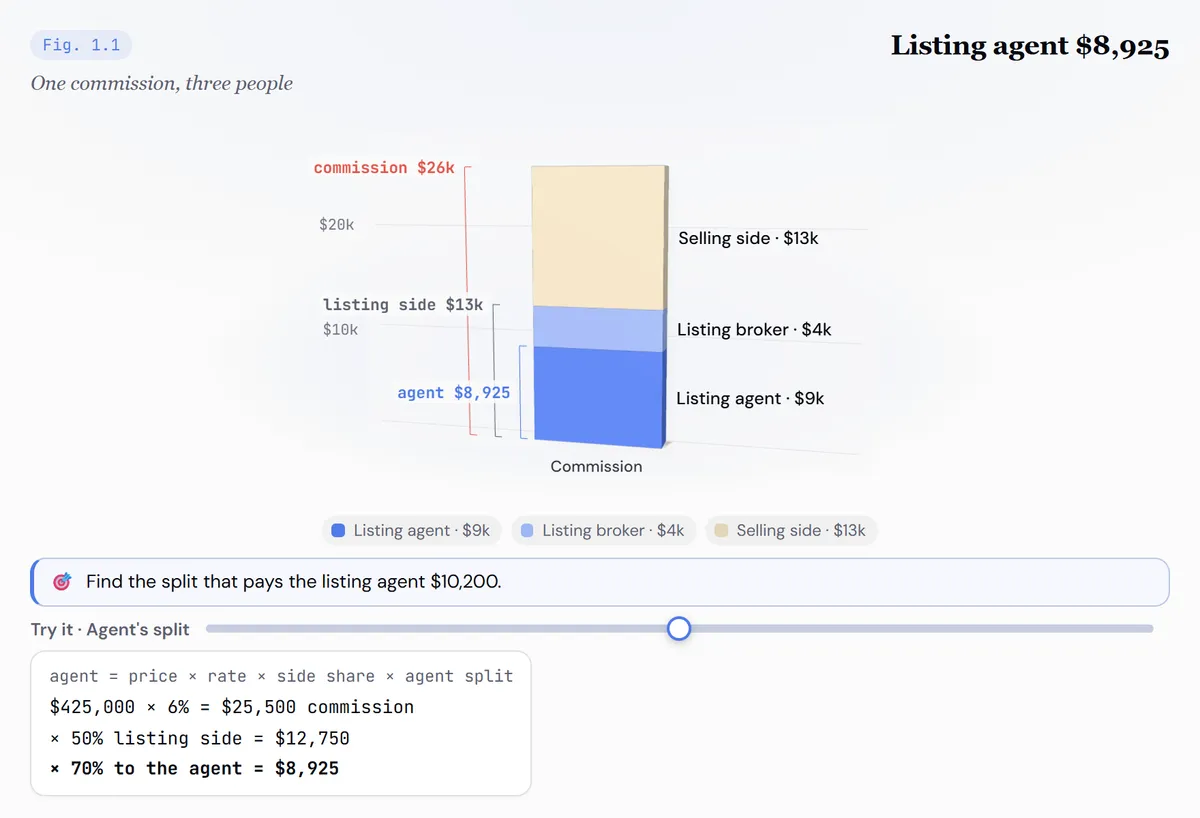
- Chapter 1Real estate mathOne sale, four calculations
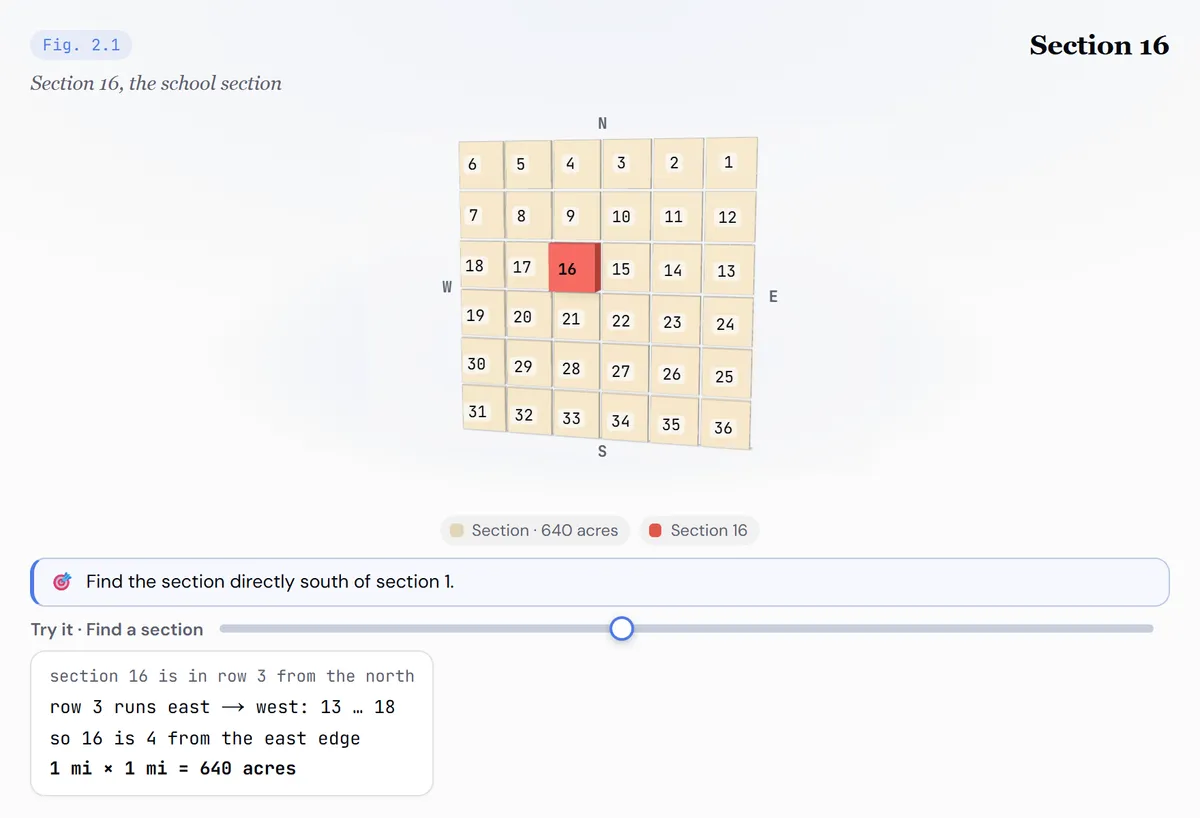
- Chapter 2Legal descriptionsTownships, sections and reading a description right to left
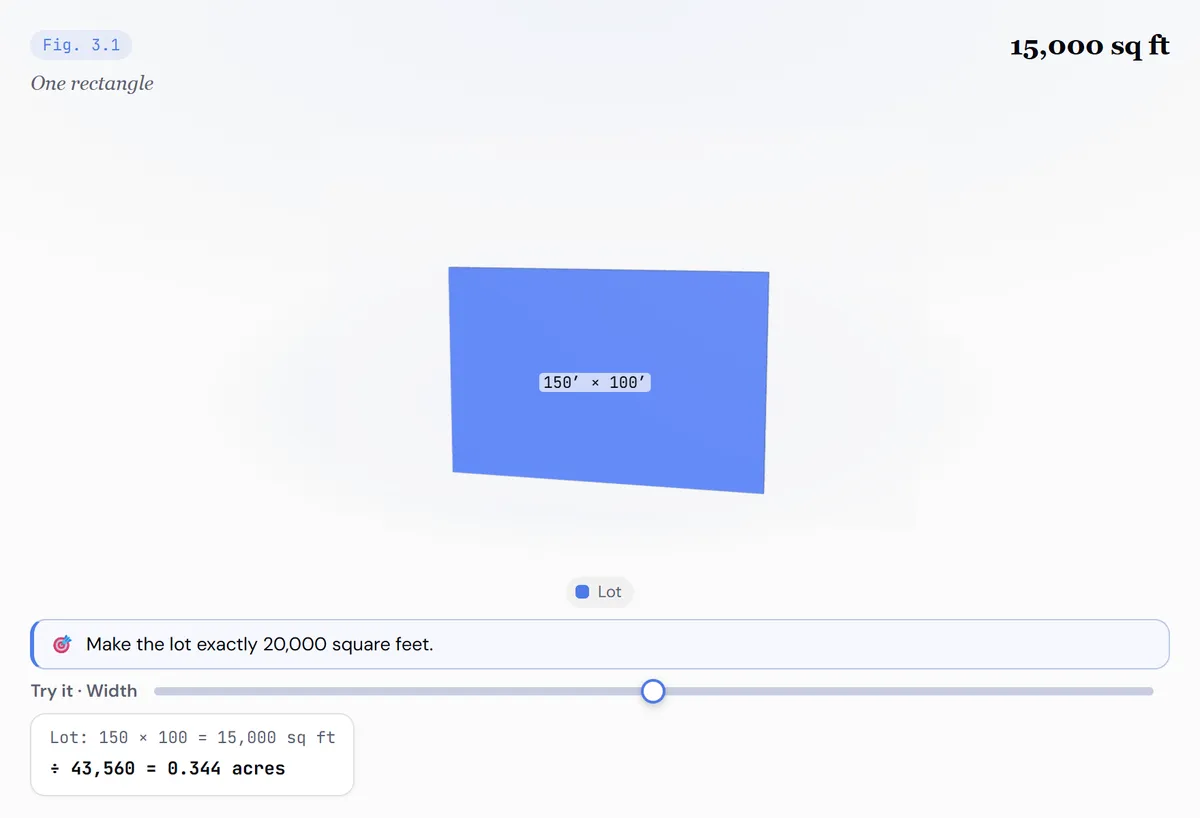
- Chapter 3Area and measurementSquare feet, acres and lots that are not rectangles
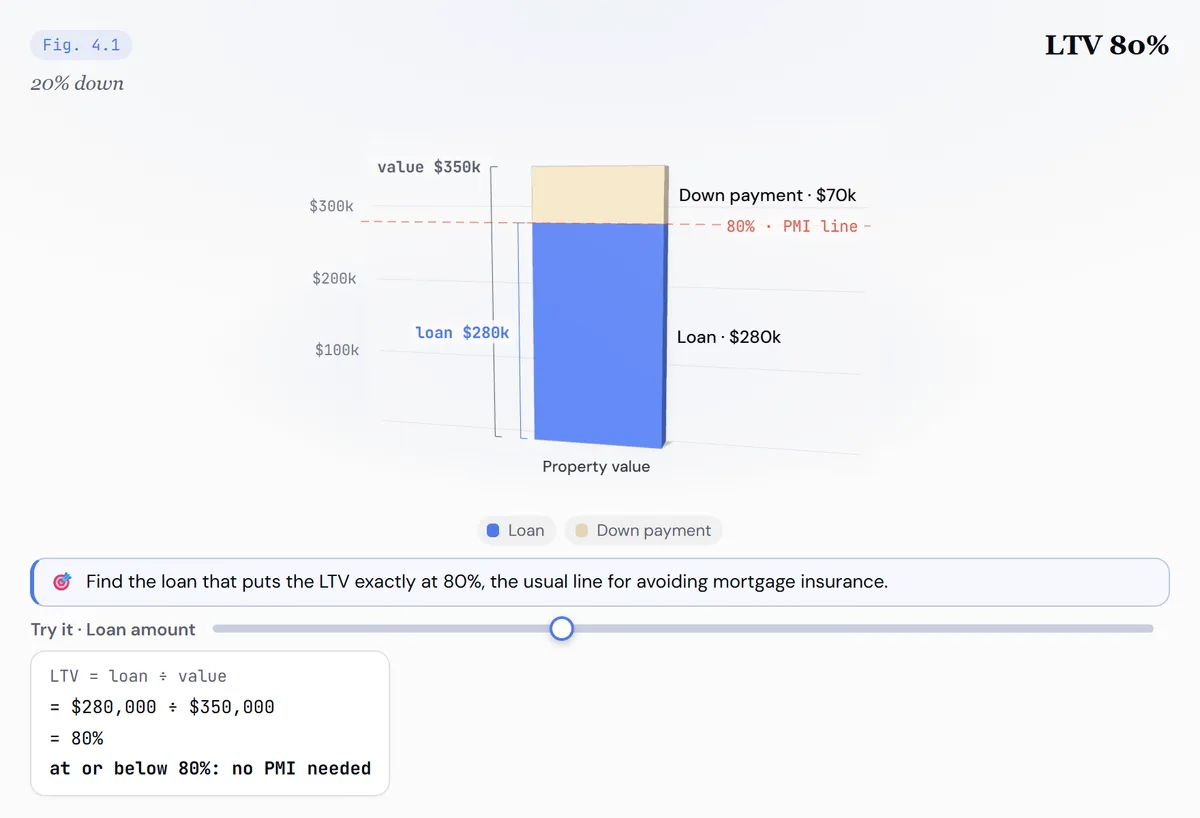
- Chapter 4Financing mathDown payments, points, interest and qualifying
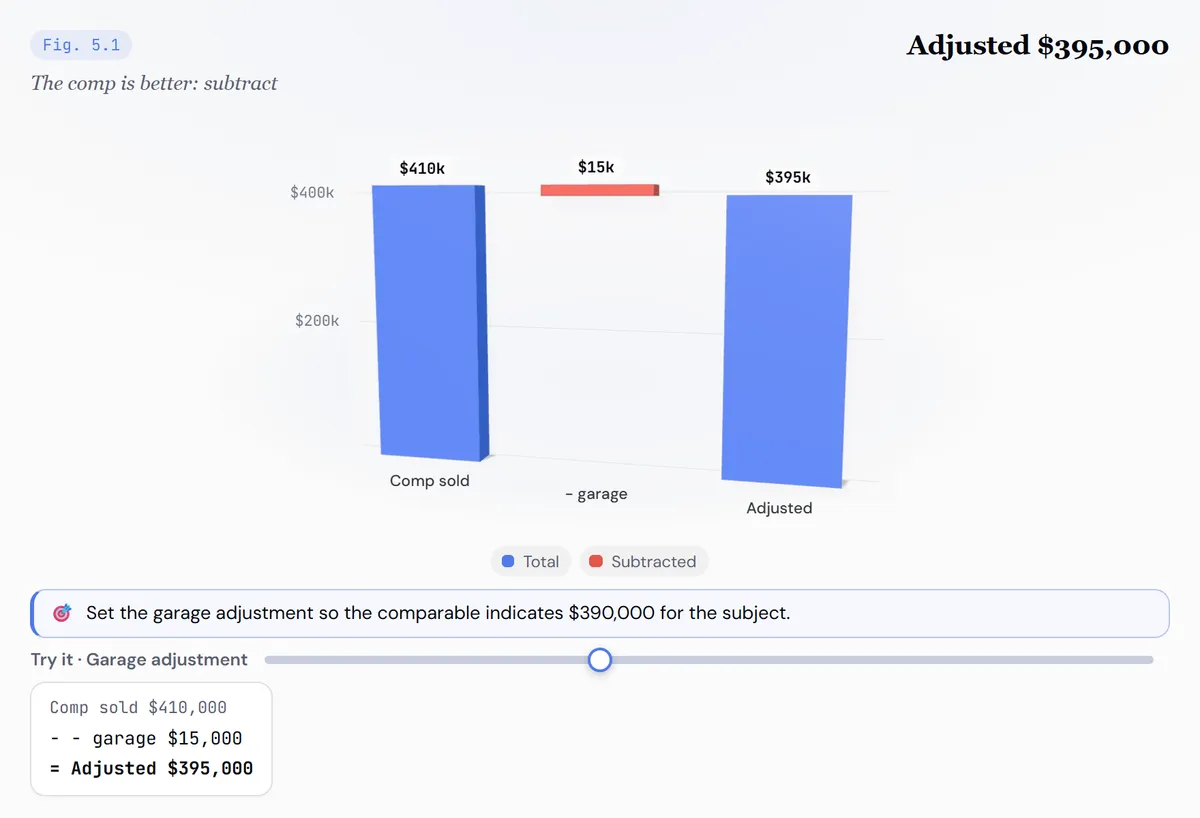
- Chapter 5Valuation and CMA adjustmentsAdjust the comparable, never the subject
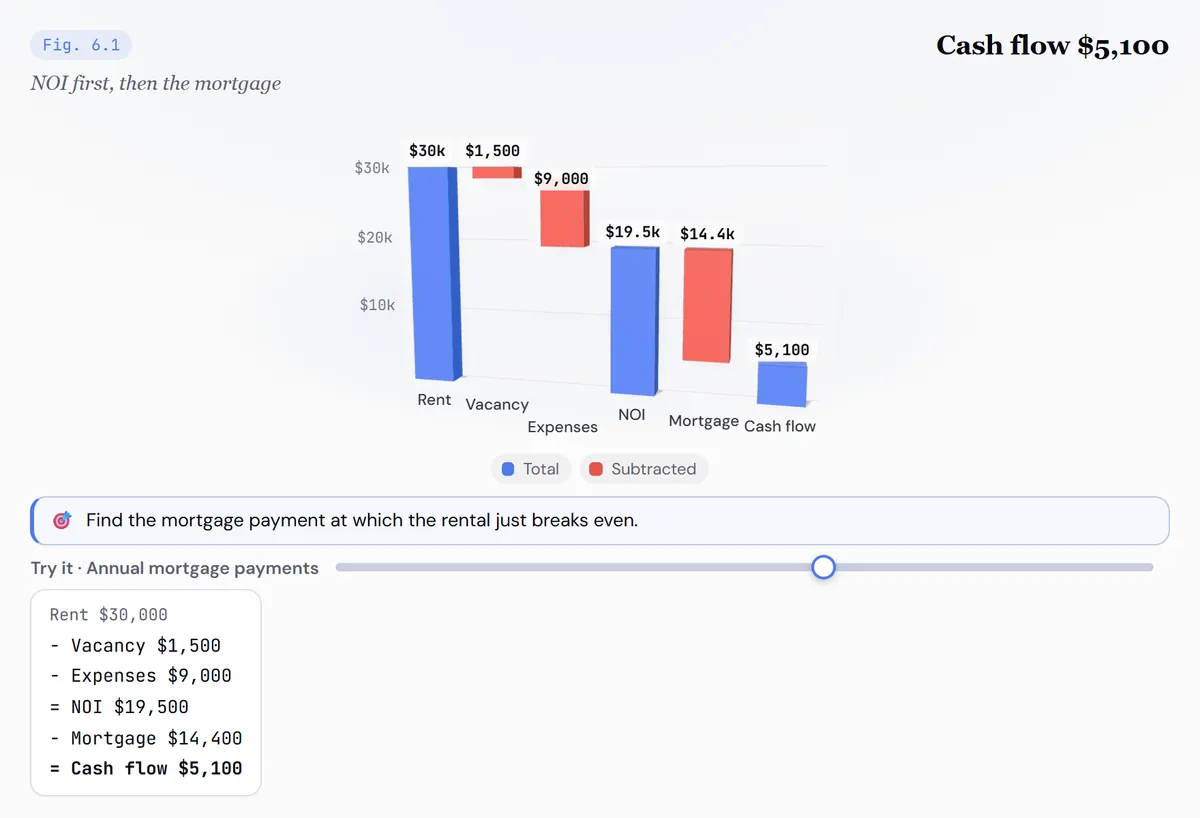
- Chapter 6Investment and taxCash flow, returns, basis and gain
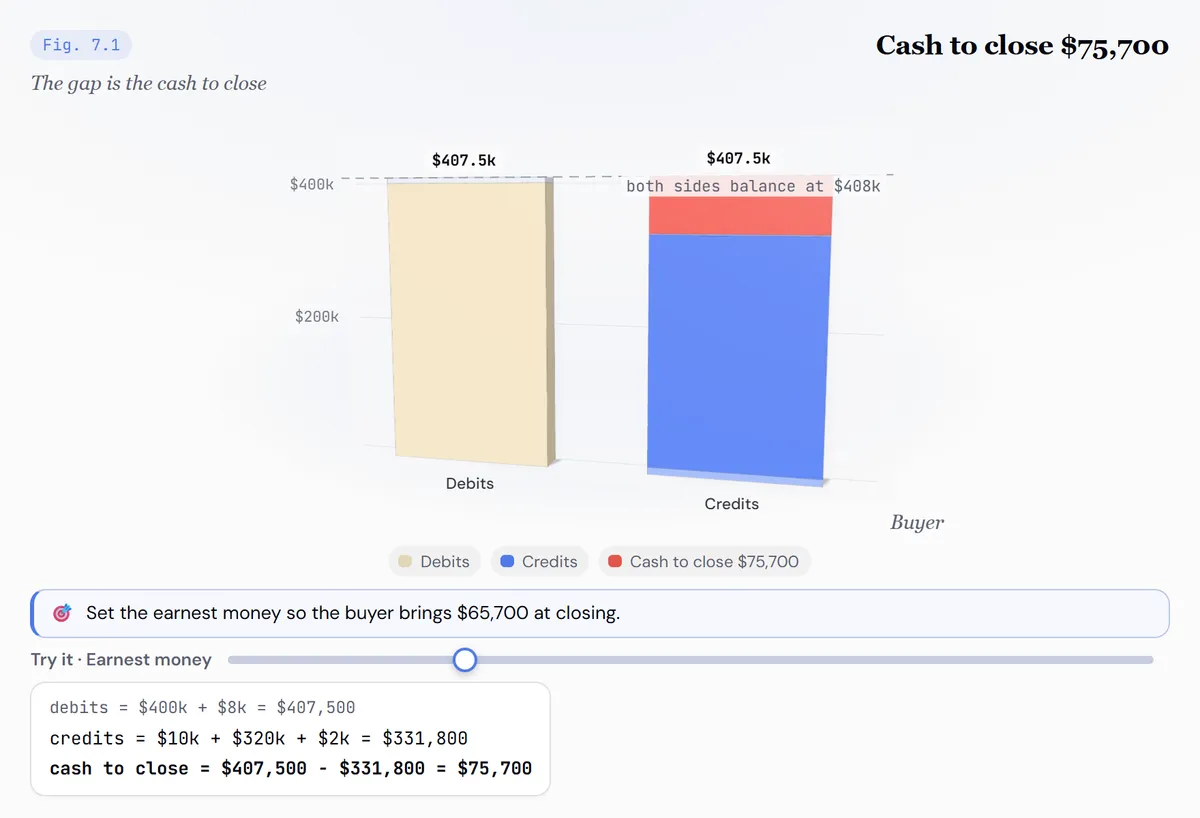
- Chapter 7The closing statementDebits, credits and the cash that changes hands
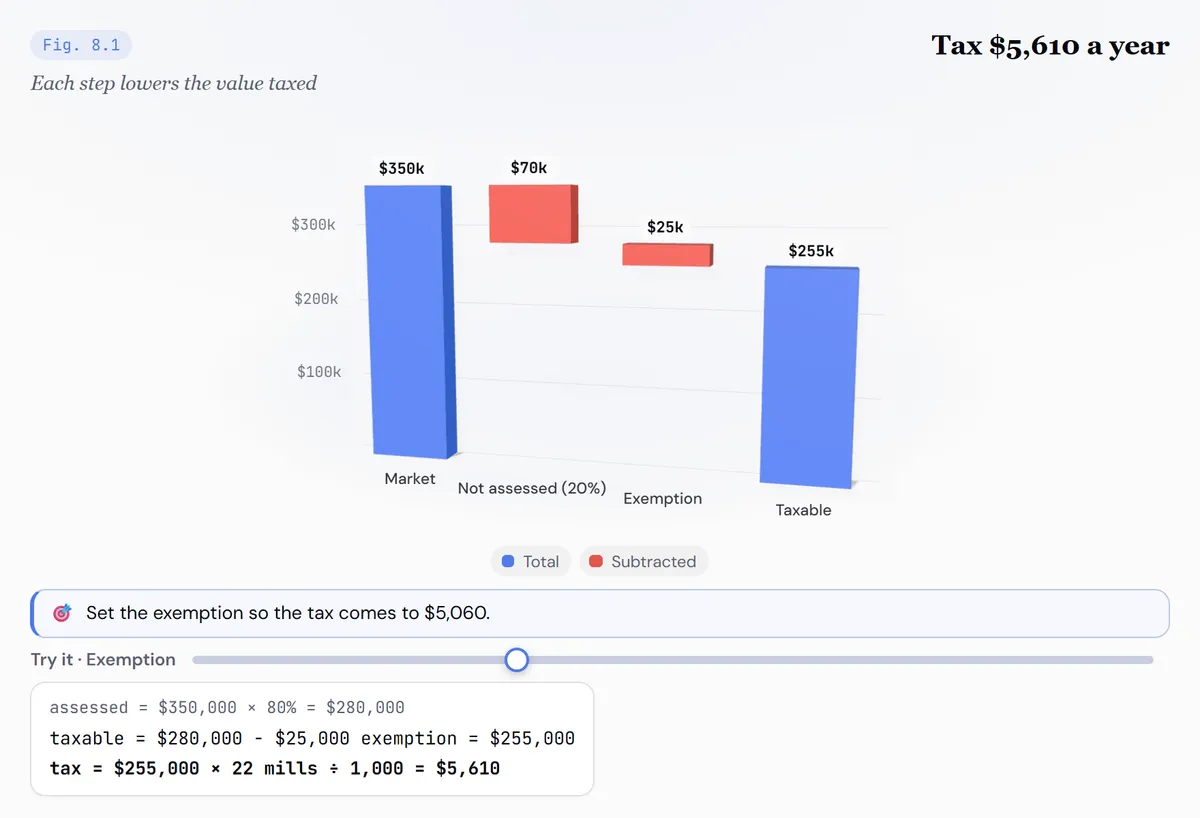
- Chapter 8Property taxFrom market value to the bill
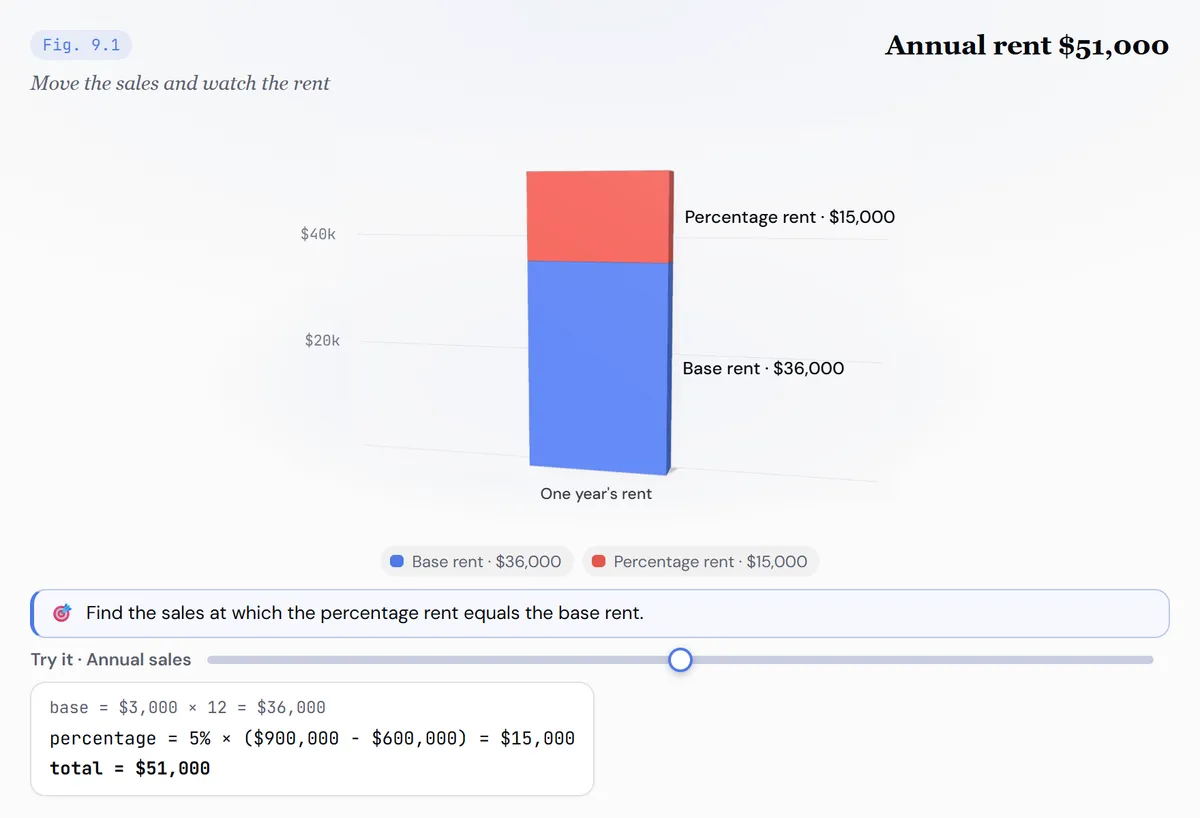
- Chapter 9Leases and property managementPercentage rent, shared costs and the manager's fee
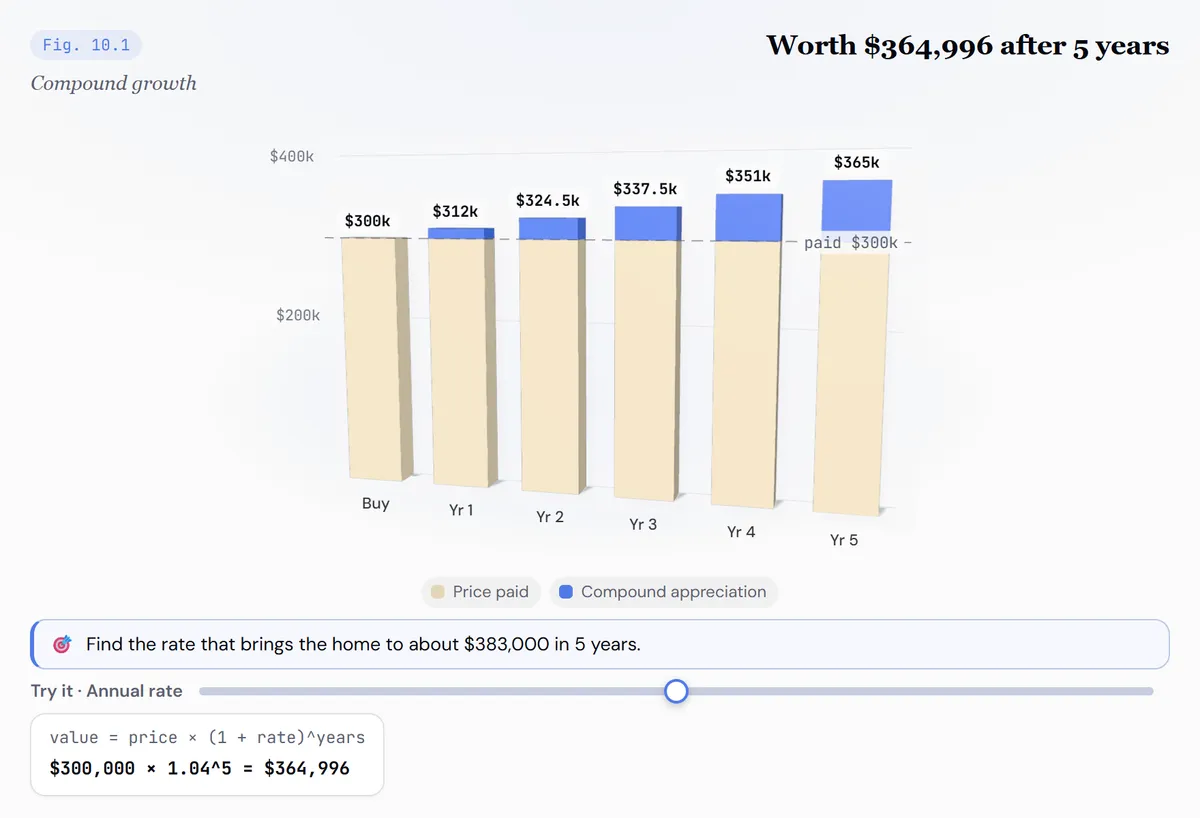
- Chapter 10Appreciation, depreciation and equityWhat a home gains, what the owner keeps
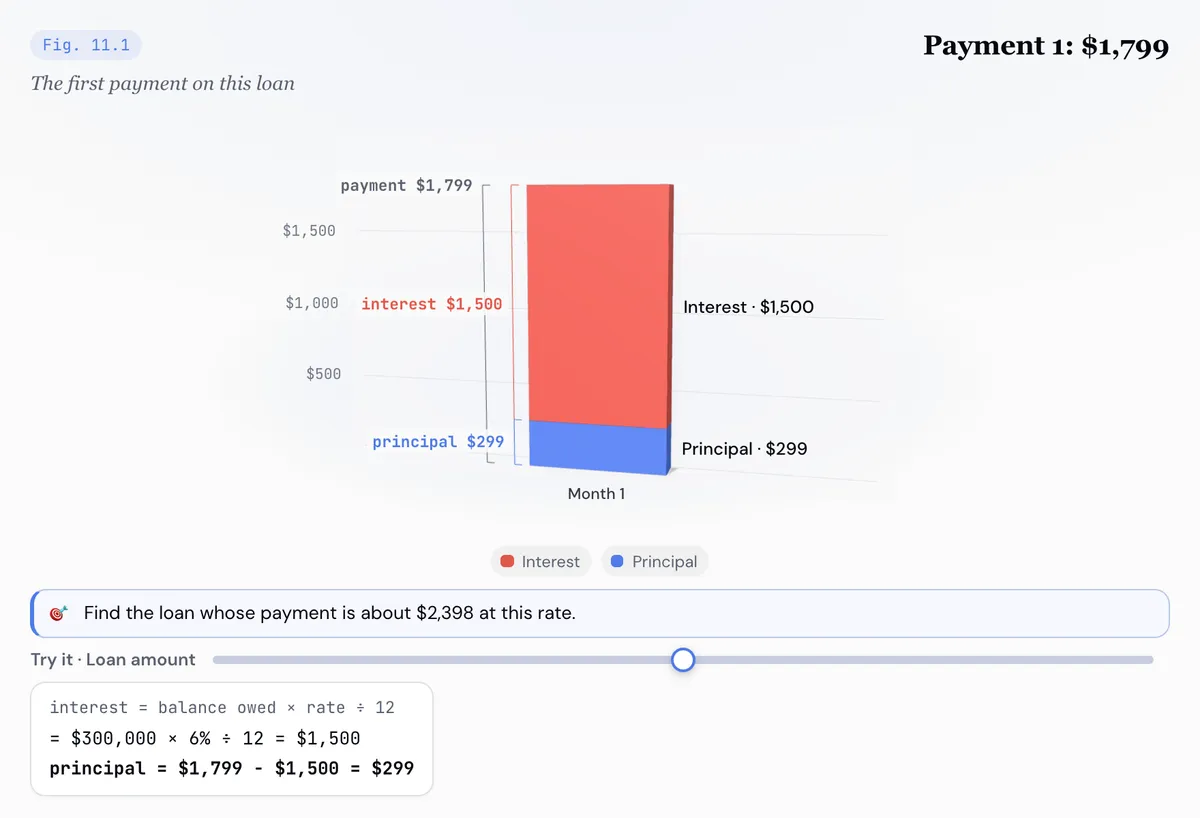
- Chapter 11AmortizationWhere each payment goes, and what is still owed
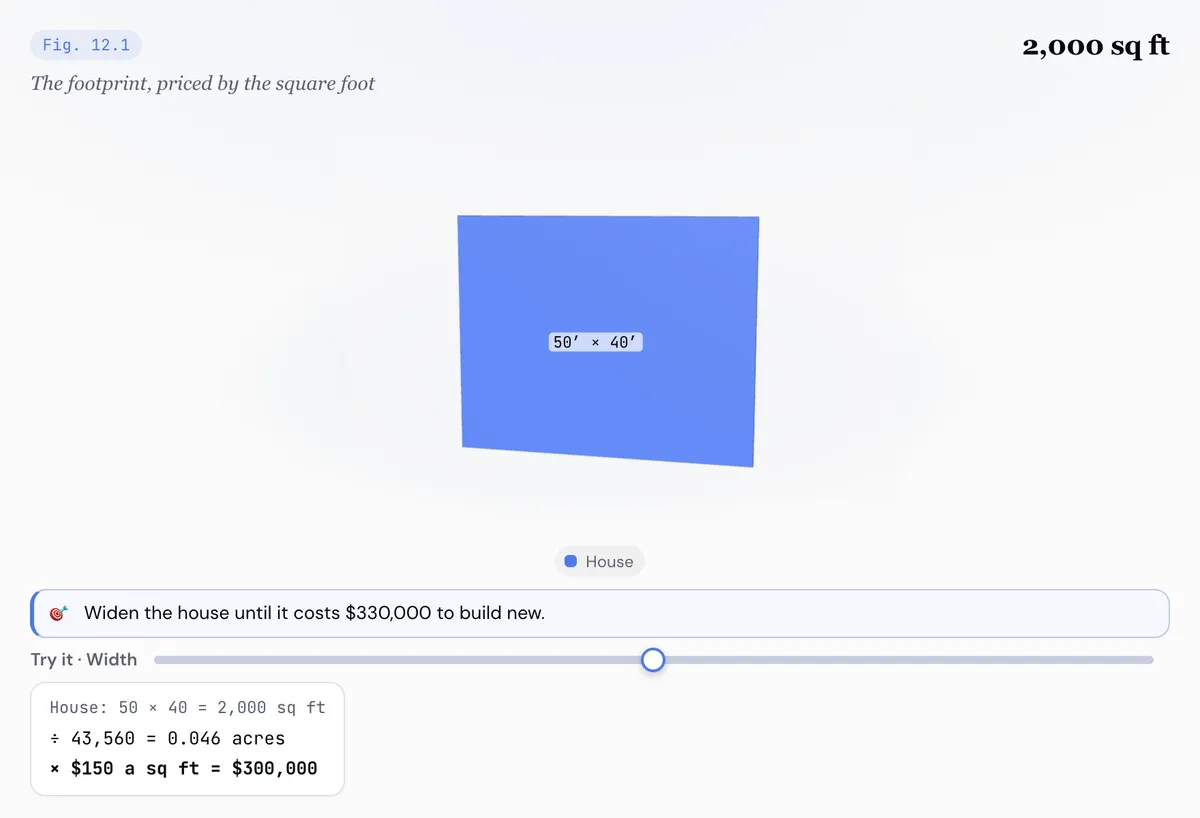
- Chapter 12The cost approachBuild it new, take off depreciation, add the land
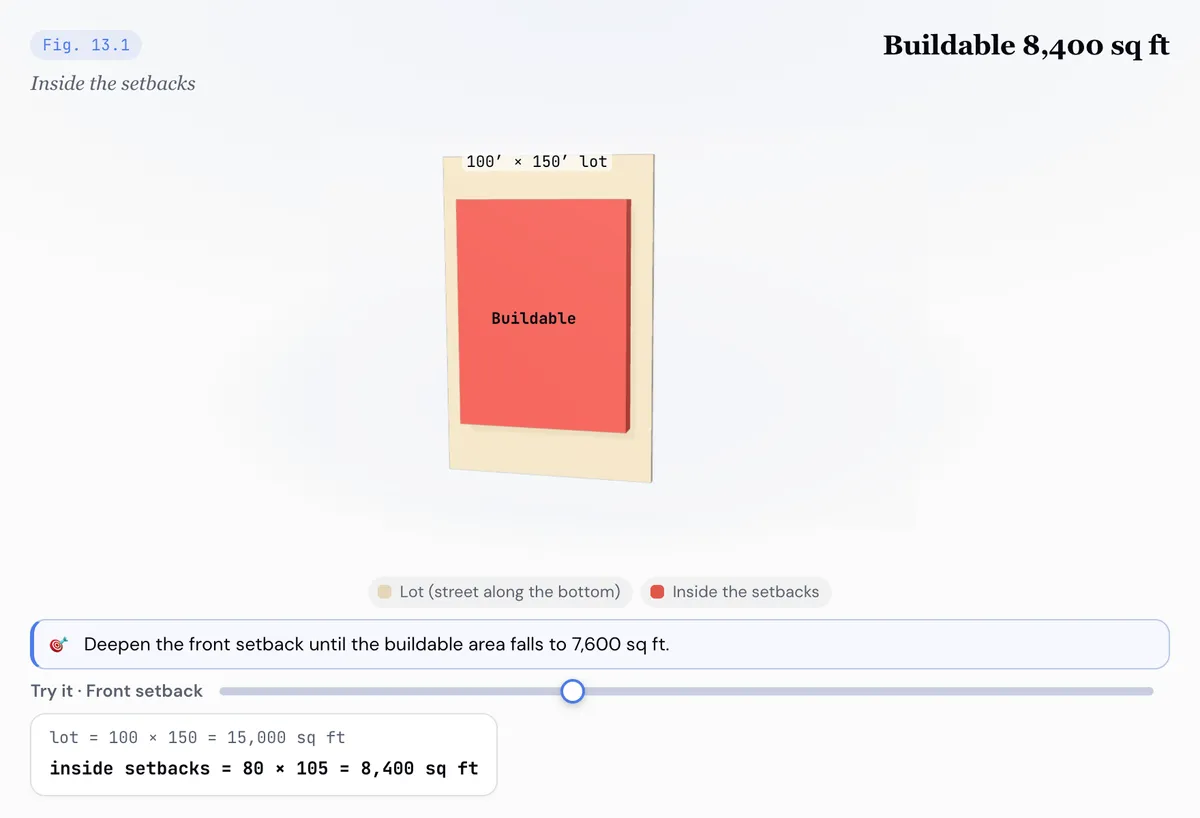
- Chapter 13Zoning and buildable areaSetbacks, lot coverage, floor area ratio and density
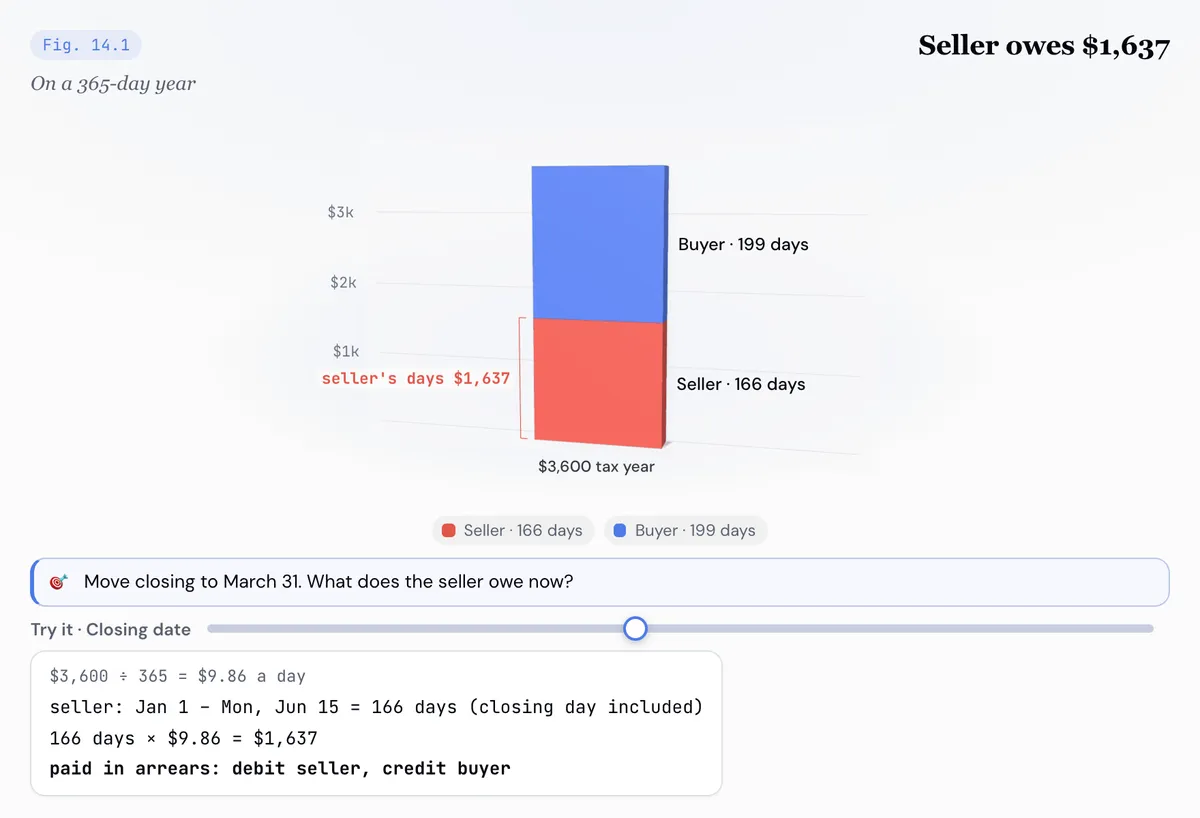
- Chapter 14ProrationsTaxes, dues, rent and interest split at closing
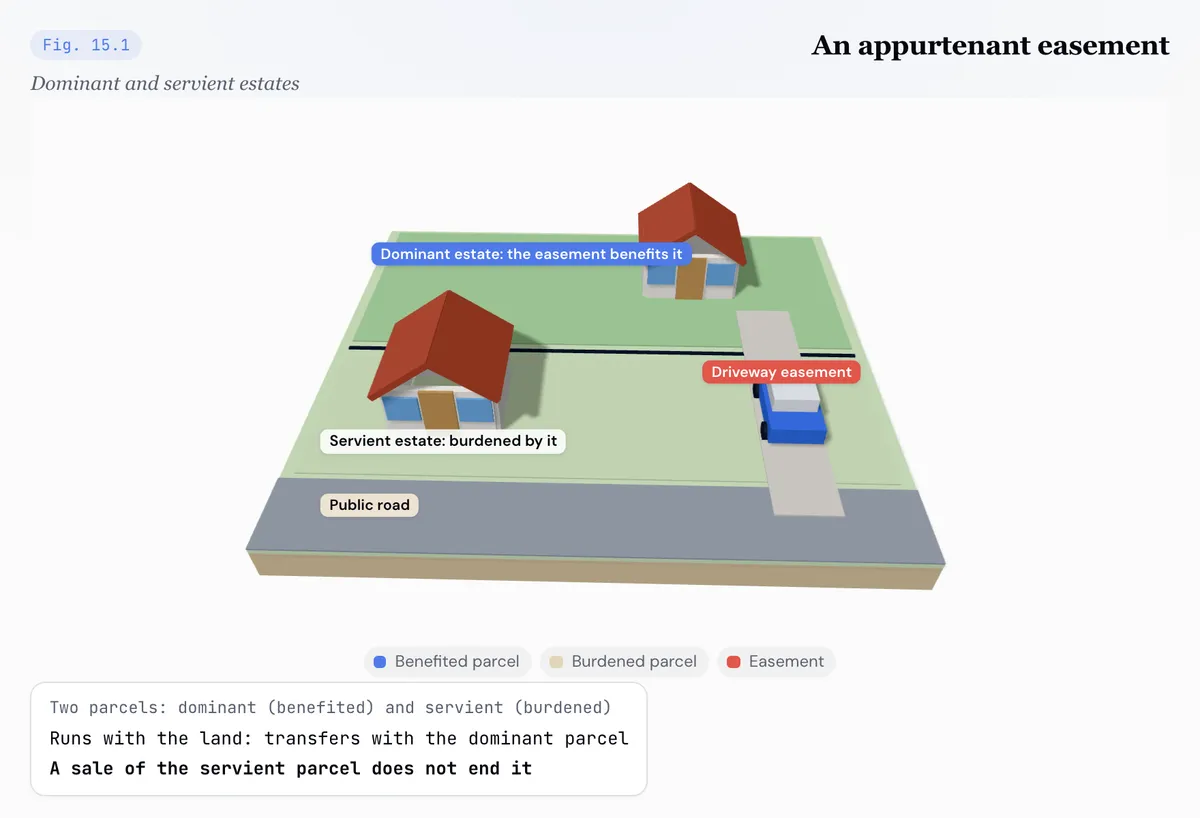
- Chapter 15EasementsRights to use land someone else owns
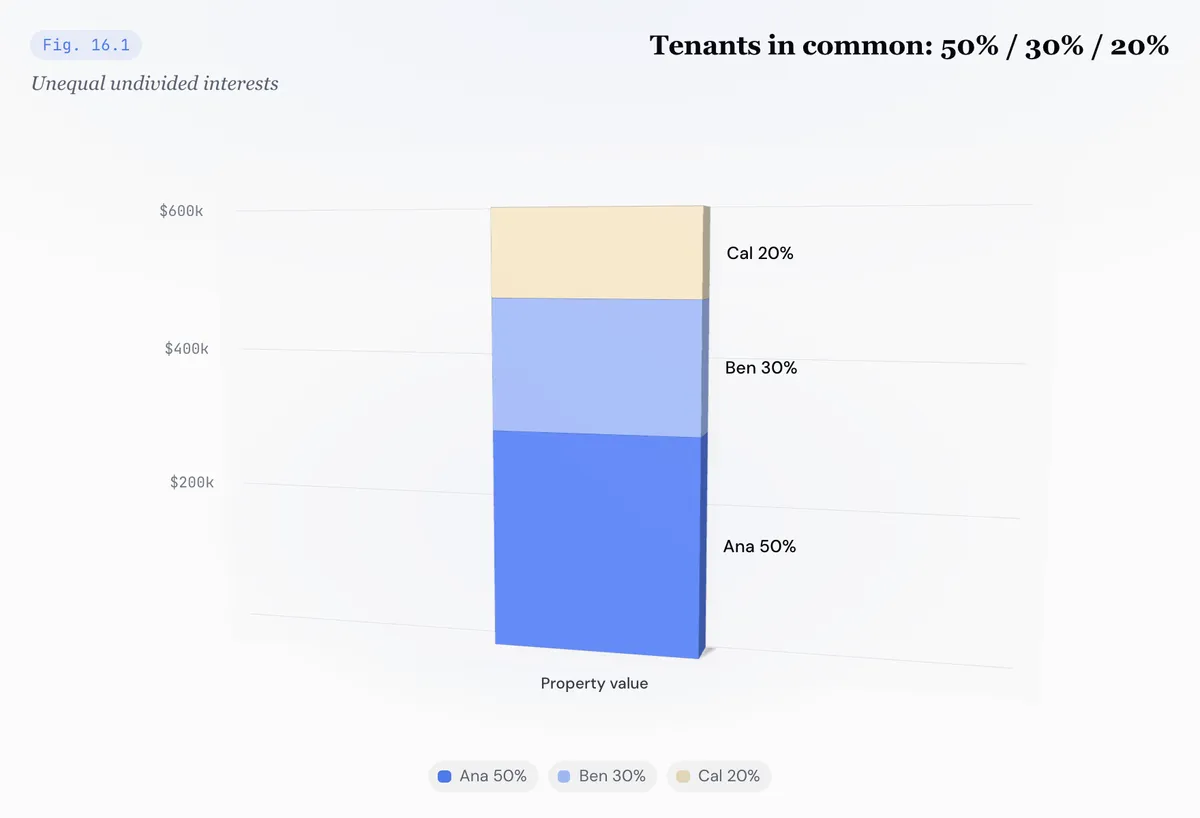
- Chapter 16Forms of ownershipWho holds title, and what happens when an owner dies
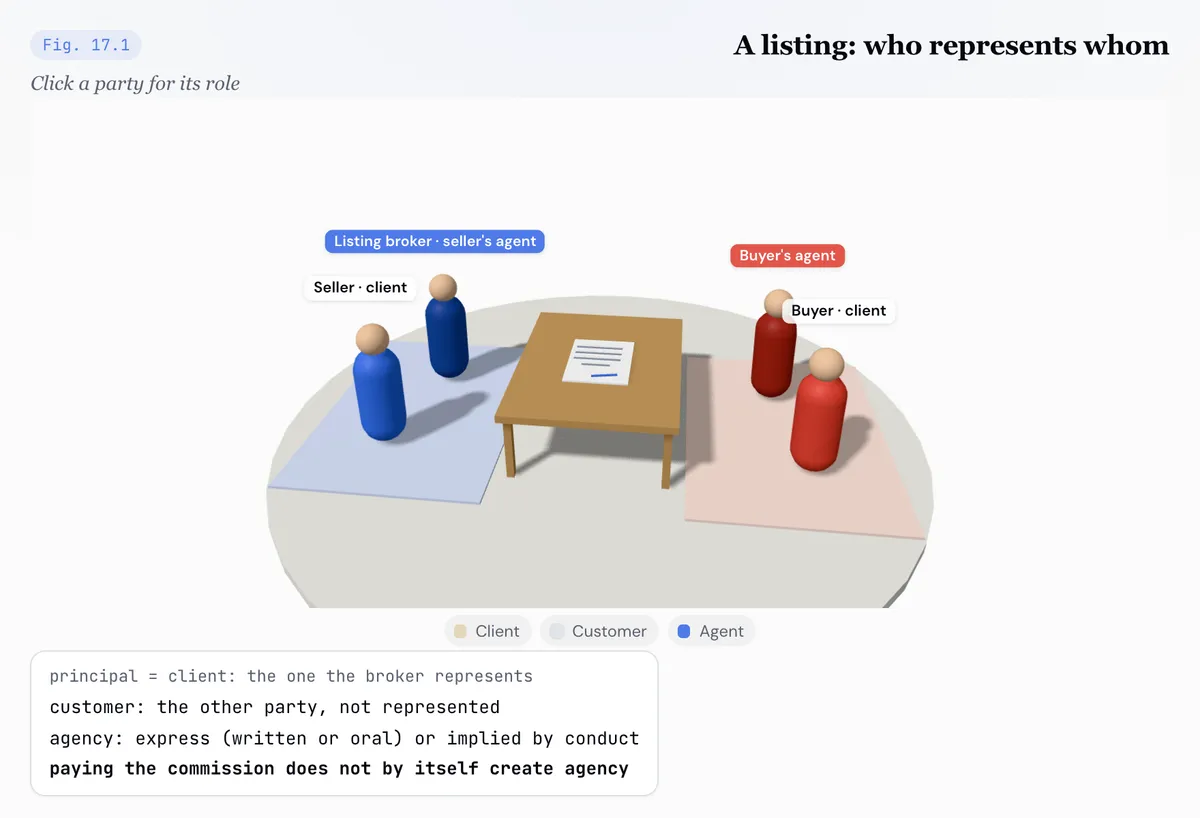
- Chapter 17Agency relationshipsWho the broker works for, and what each side is owed
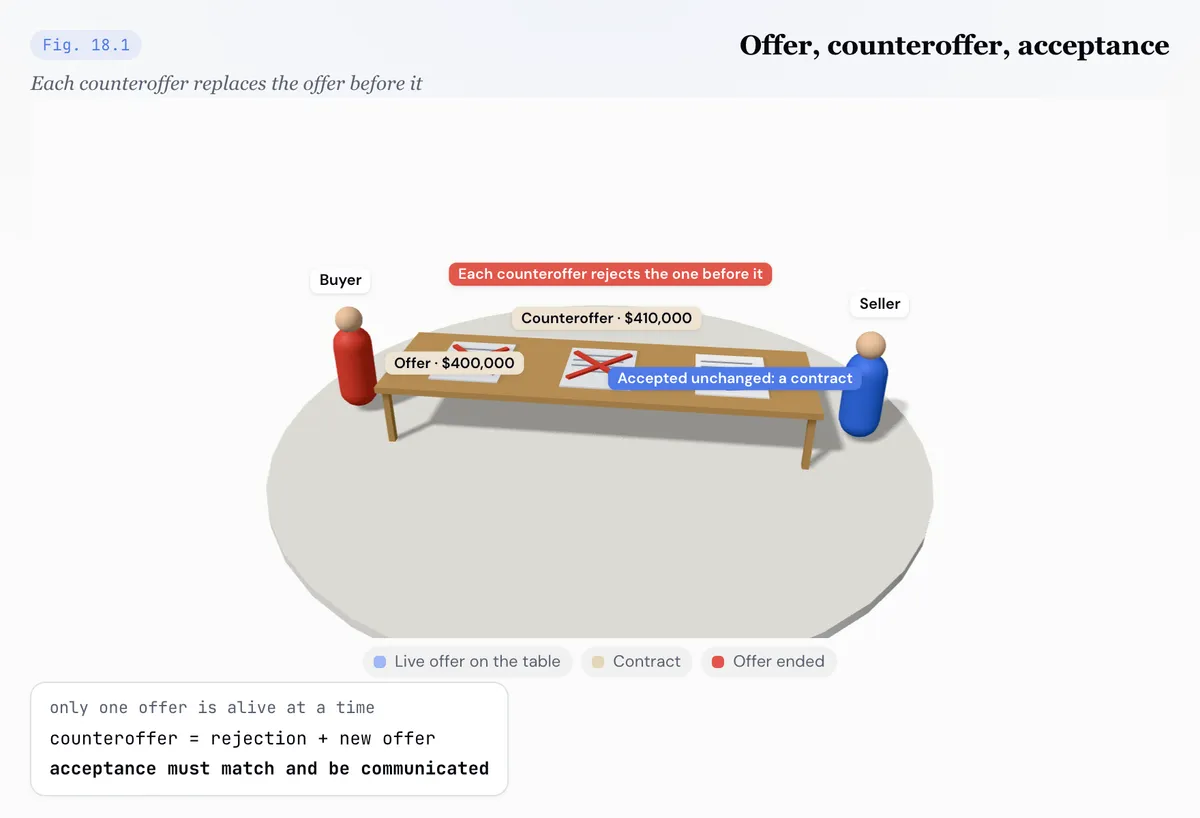
- Chapter 18Contracts and the transaction timelineFrom offer to closing, and what makes a contract count
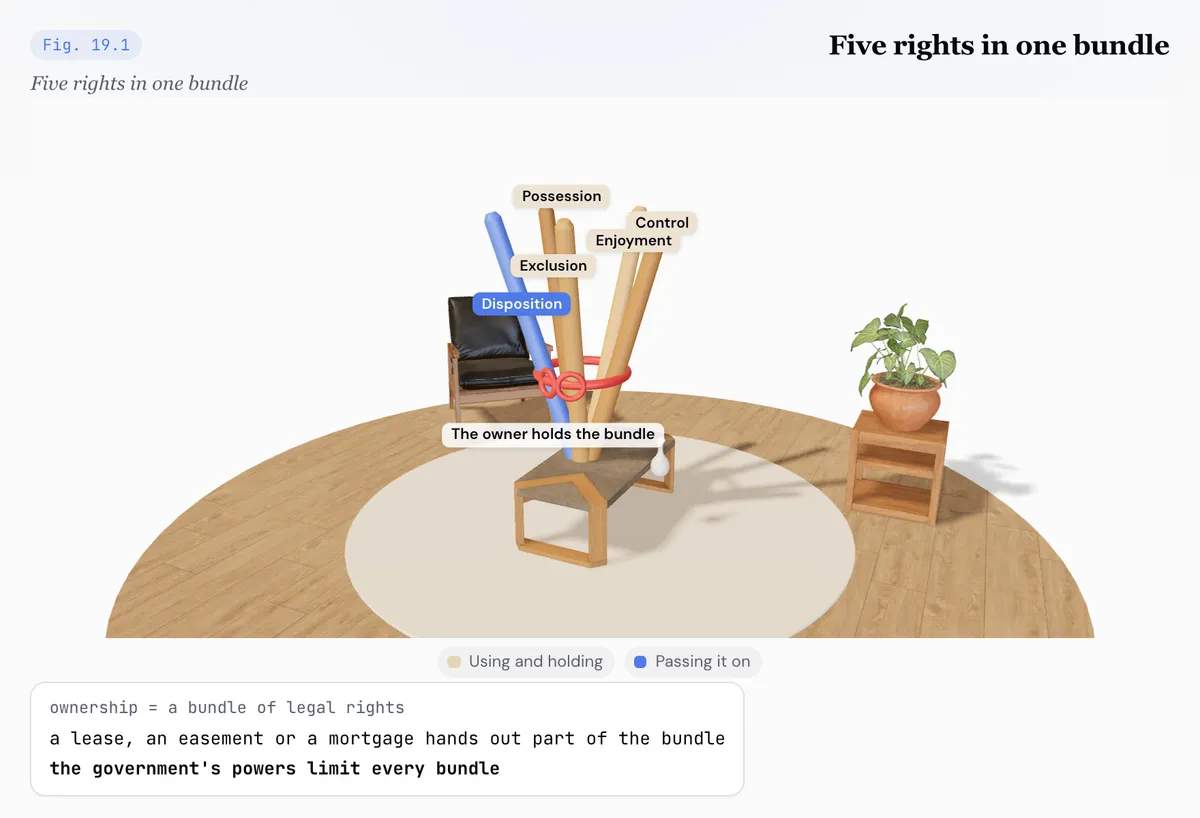
- Chapter 19Property rightsWhat an owner holds, and what goes with the land
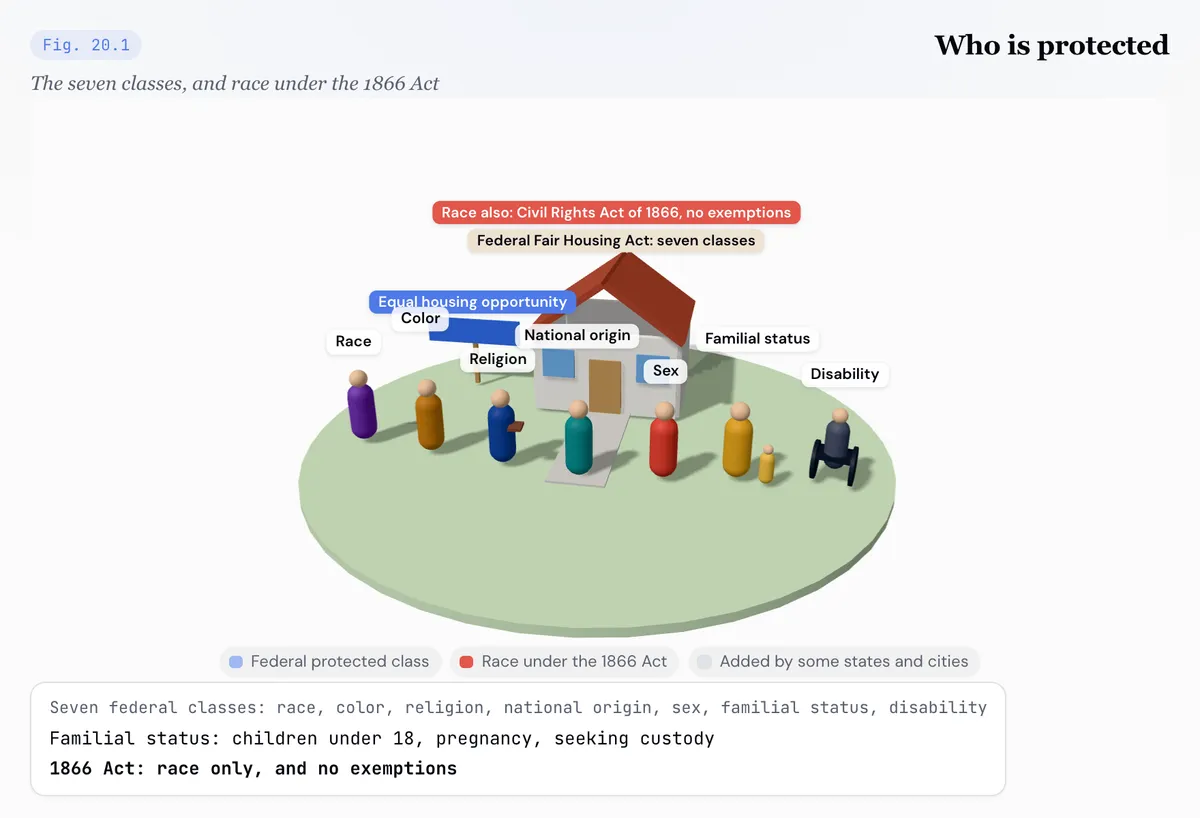
- Chapter 20Fair housingWho may not be turned away, and how discrimination hides
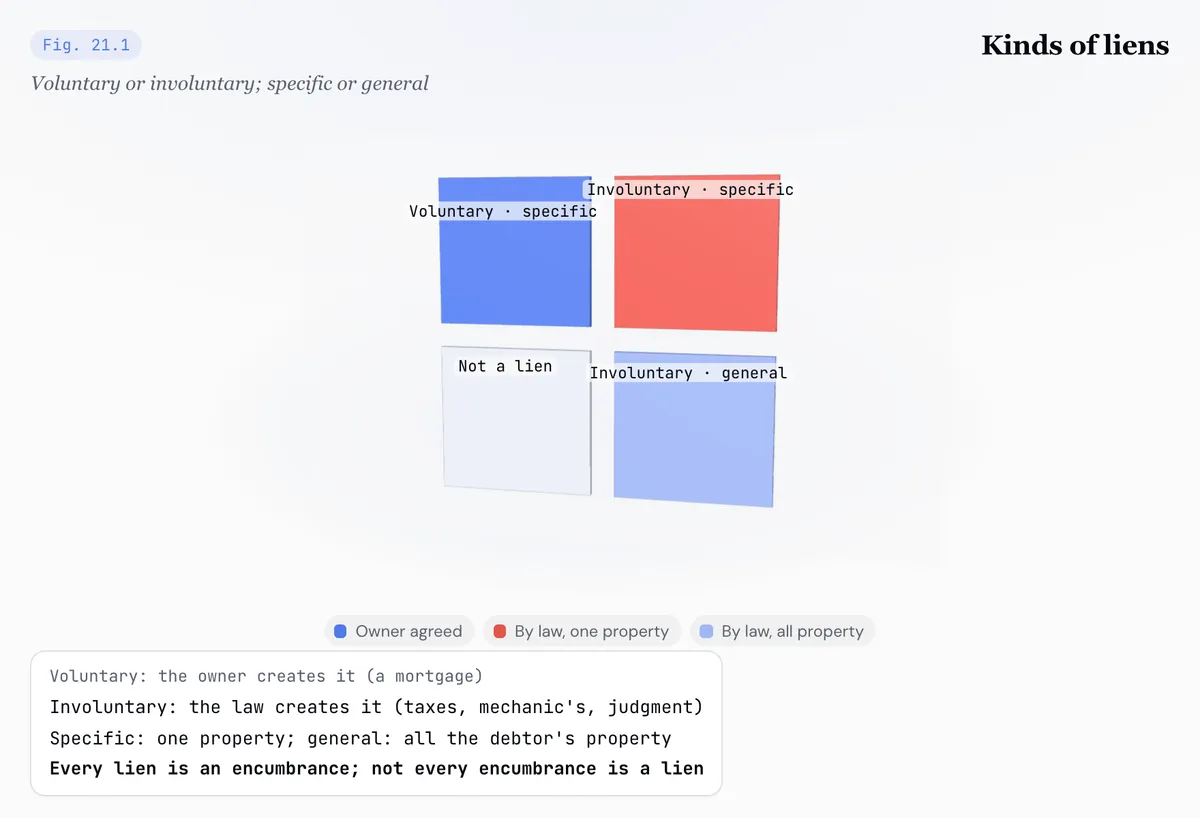
- Chapter 21Liens and foreclosureWho is paid first when a property is sold to pay its debts
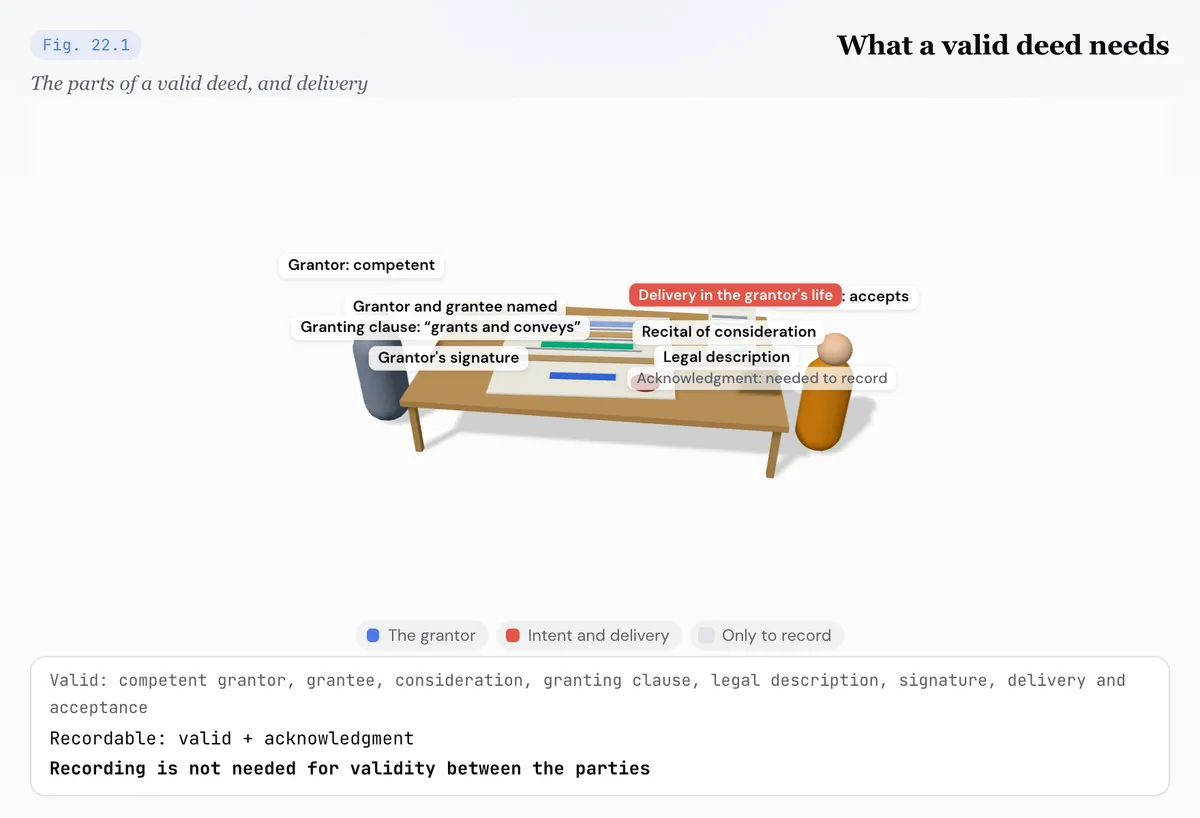
- Chapter 22Deeds, recording and titleHow ownership passes, and how a buyer knows it did
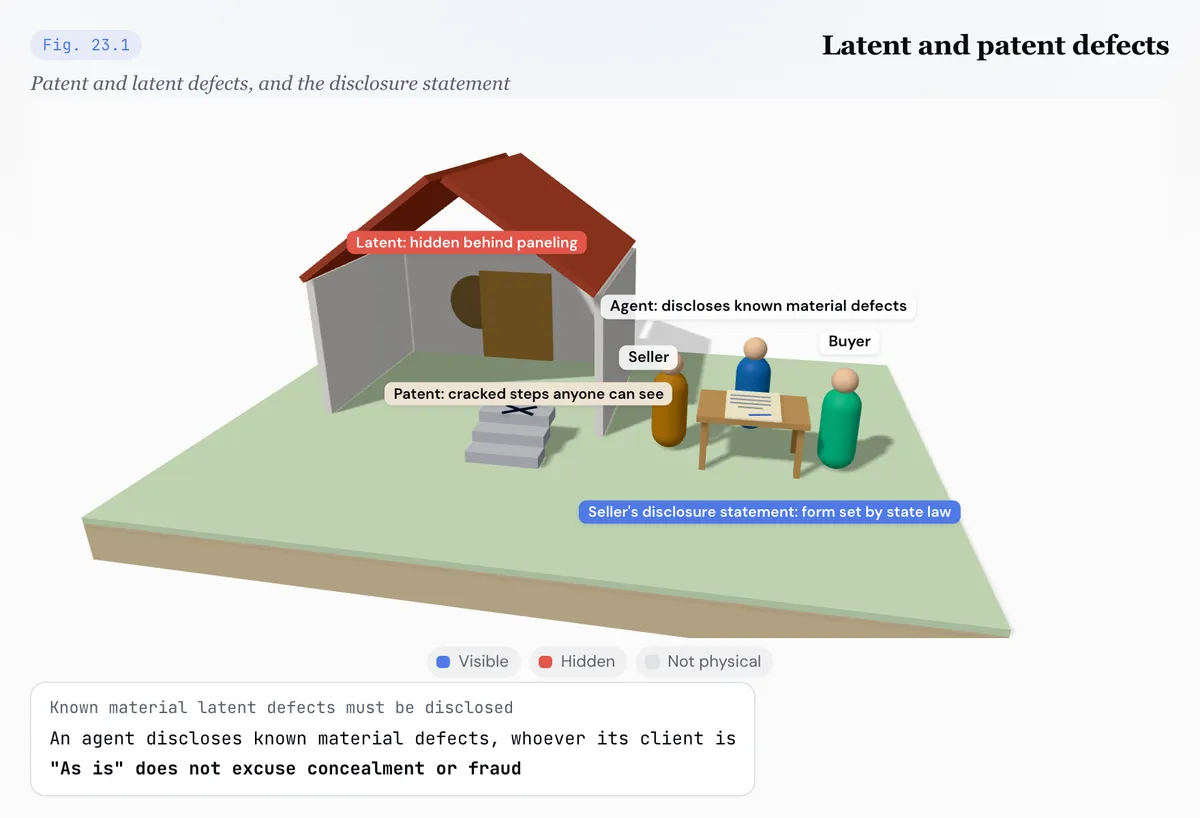
- Chapter 23Disclosures and environmental hazardsWhat a seller and an agent must reveal about a property
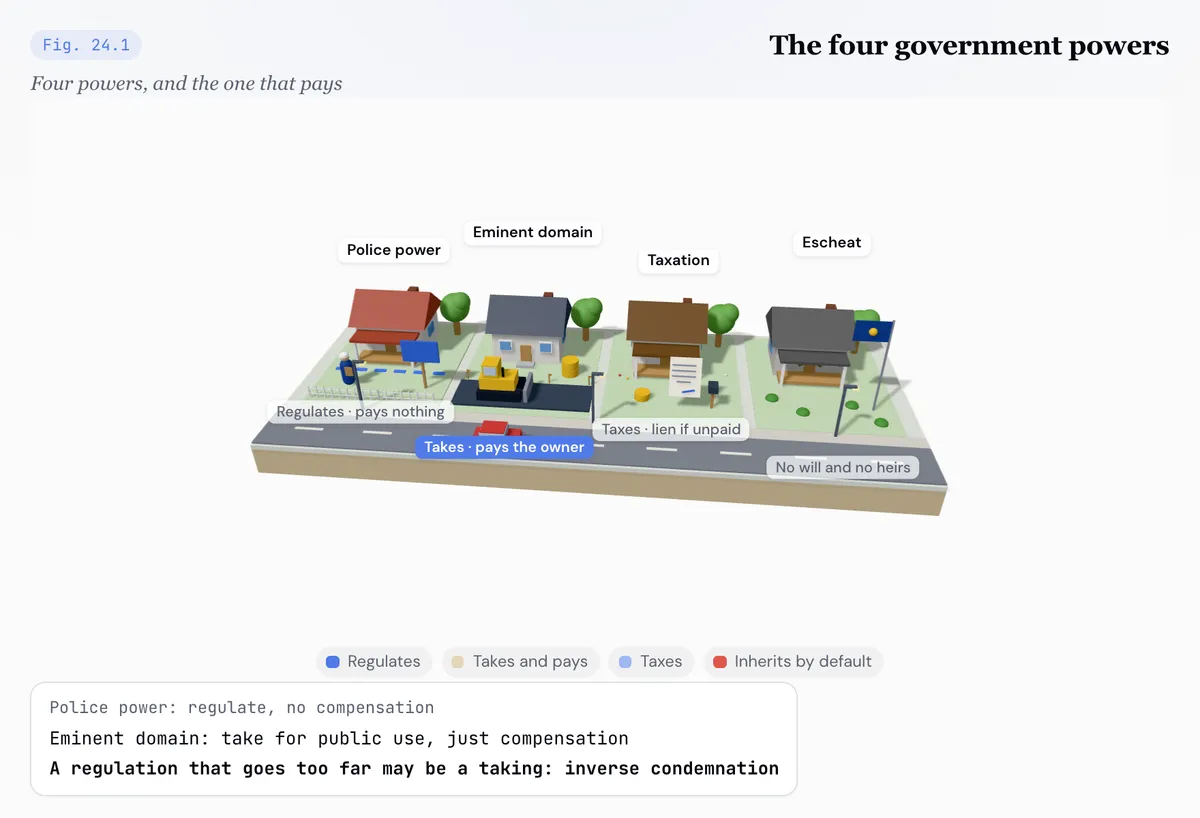
- Chapter 24Land use controlsWhat government and private restrictions let an owner do
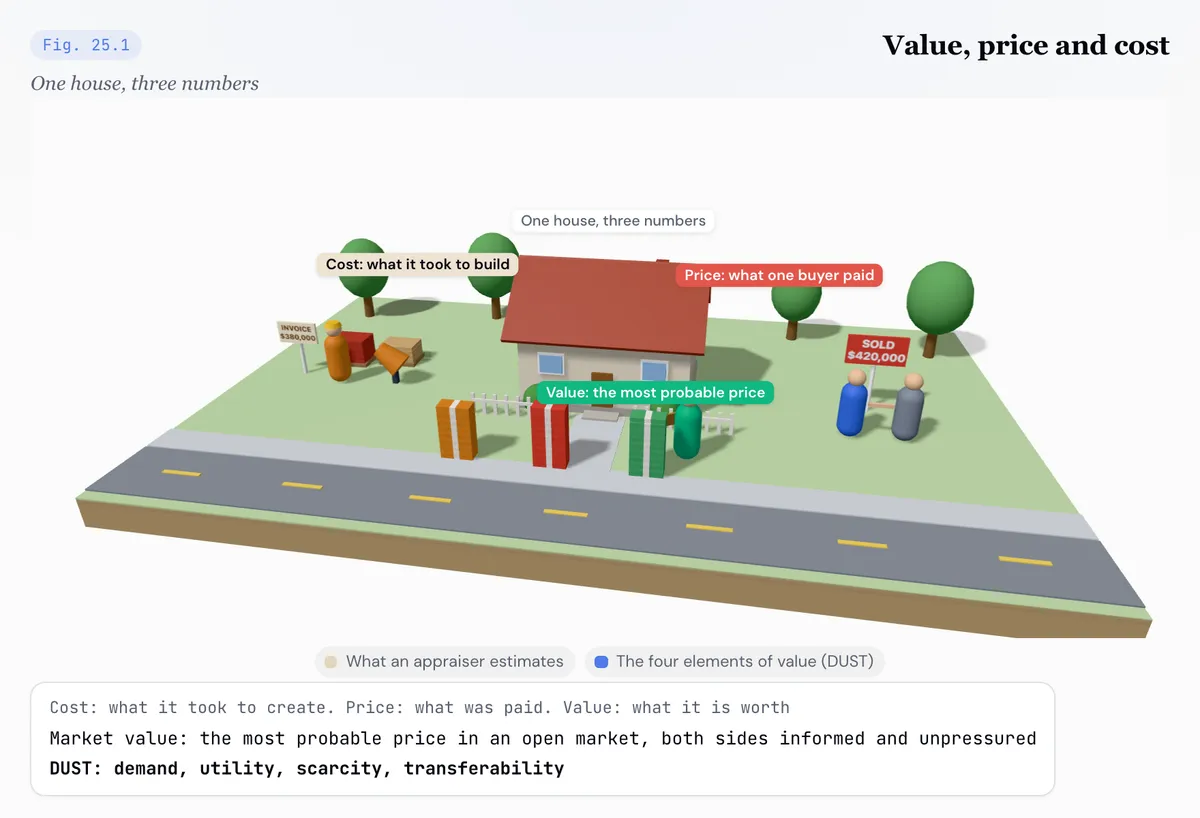
- Chapter 25Appraisal and valueWhat makes a property worth what it is, and how an appraiser shows it
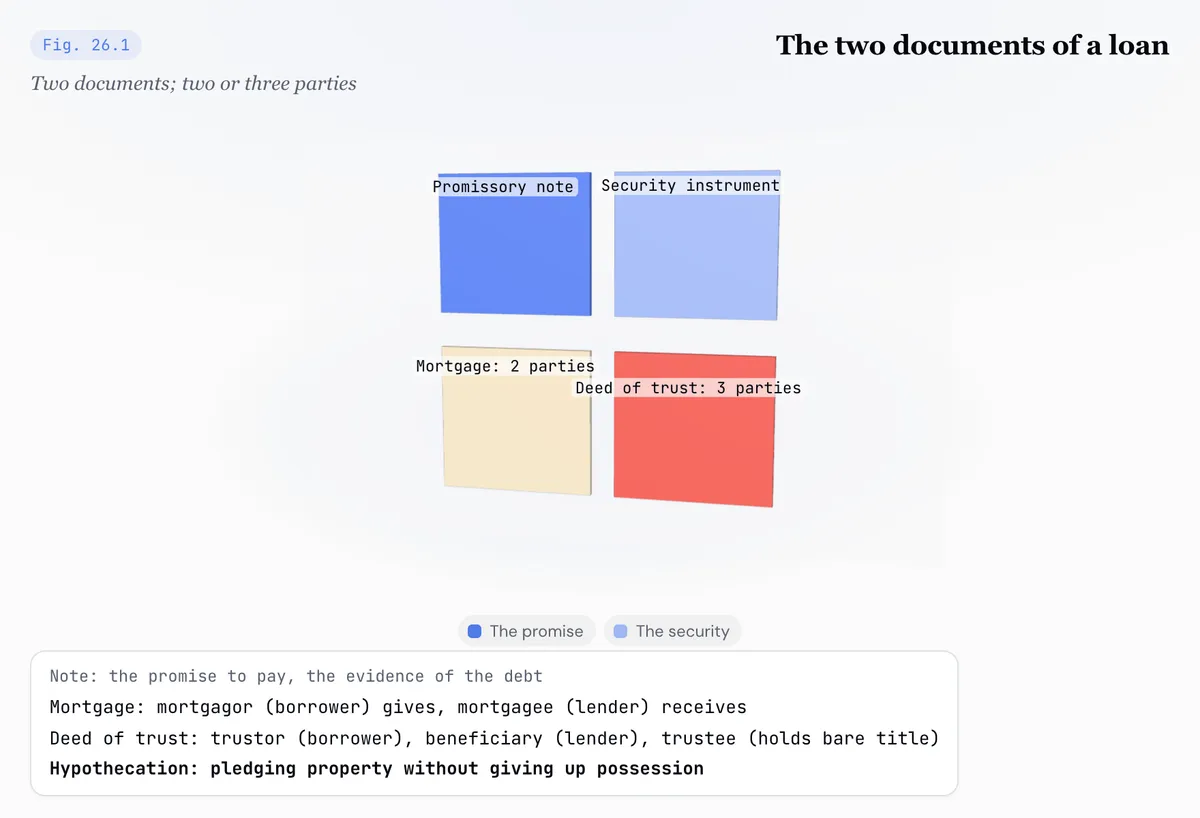
- Chapter 26Mortgages and lending lawsThe documents behind a loan, the loan programs and the federal rules
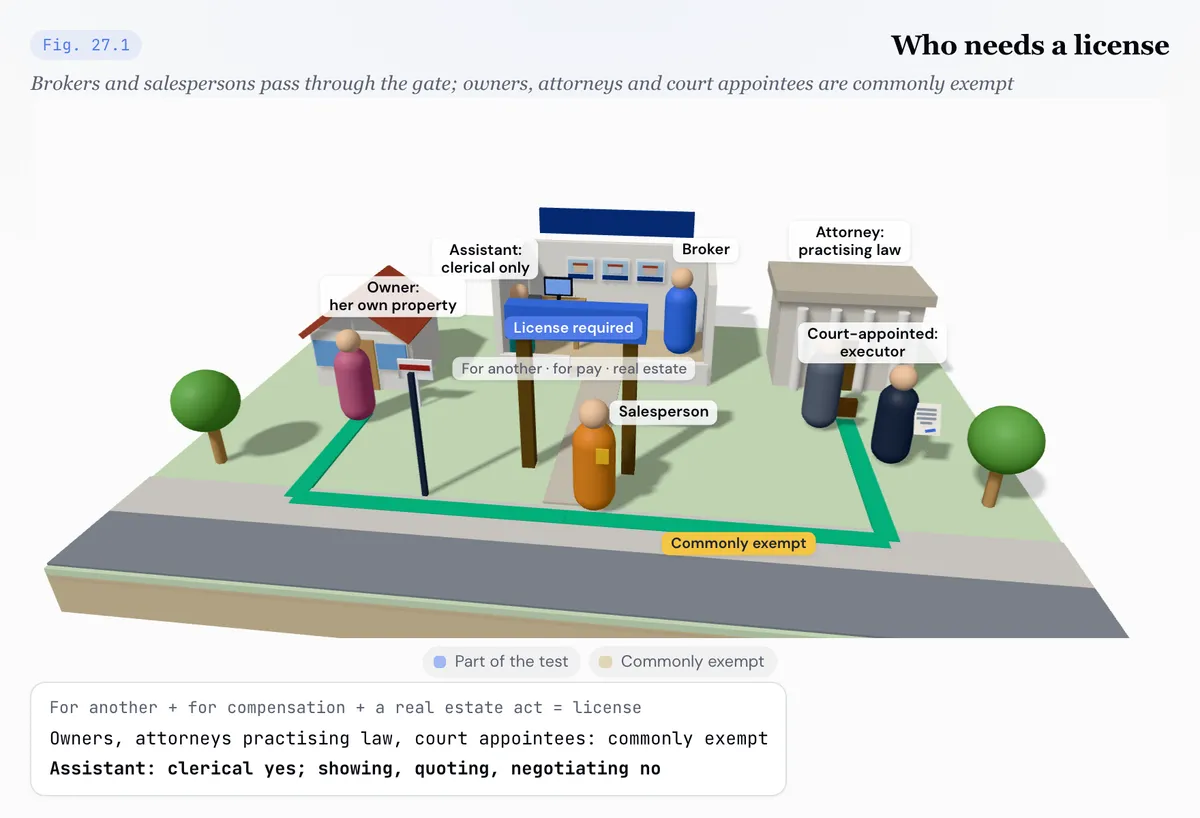
- Chapter 27License law and brokerage practiceWho needs a license, who supervises whom, and what a brokerage may not do
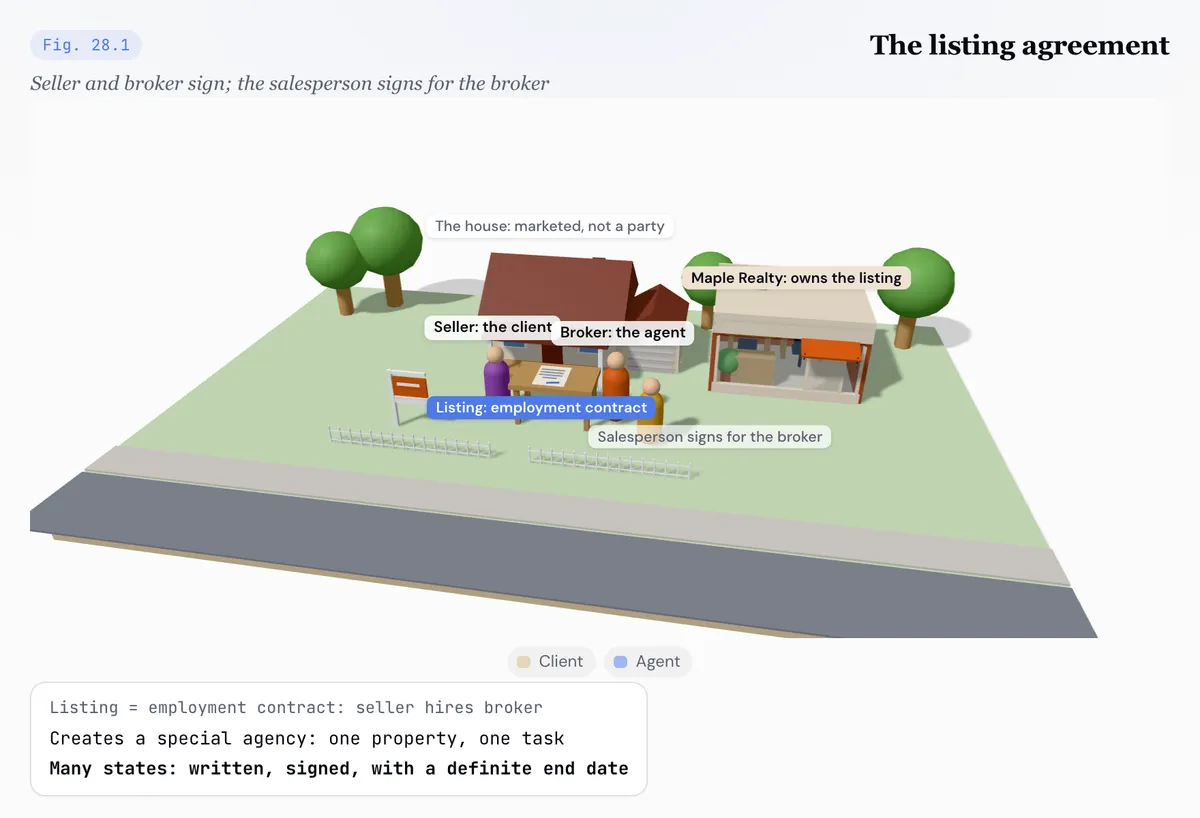
- Chapter 28Listing and buyer agreementsWhich agreement a broker signs, and who earns the commission
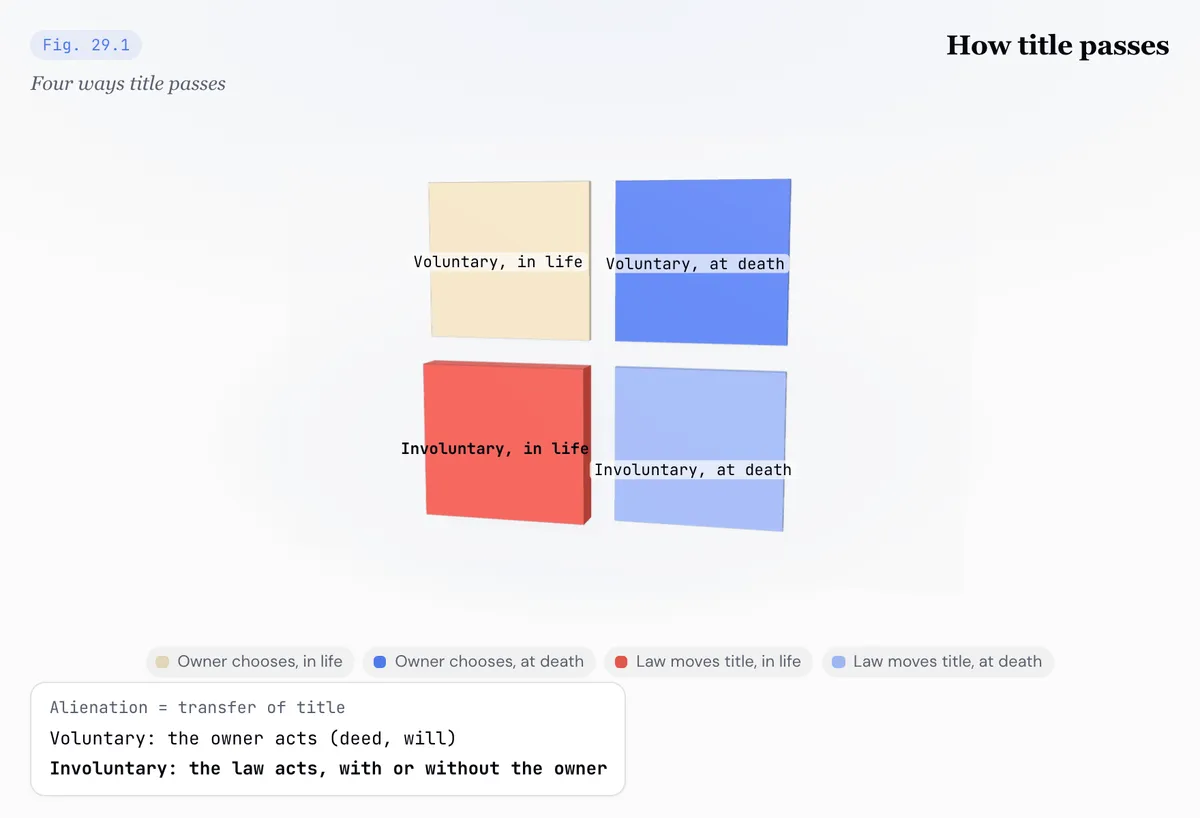
- Chapter 29How title passesWills, heirs, adverse possession and other ways land changes hands
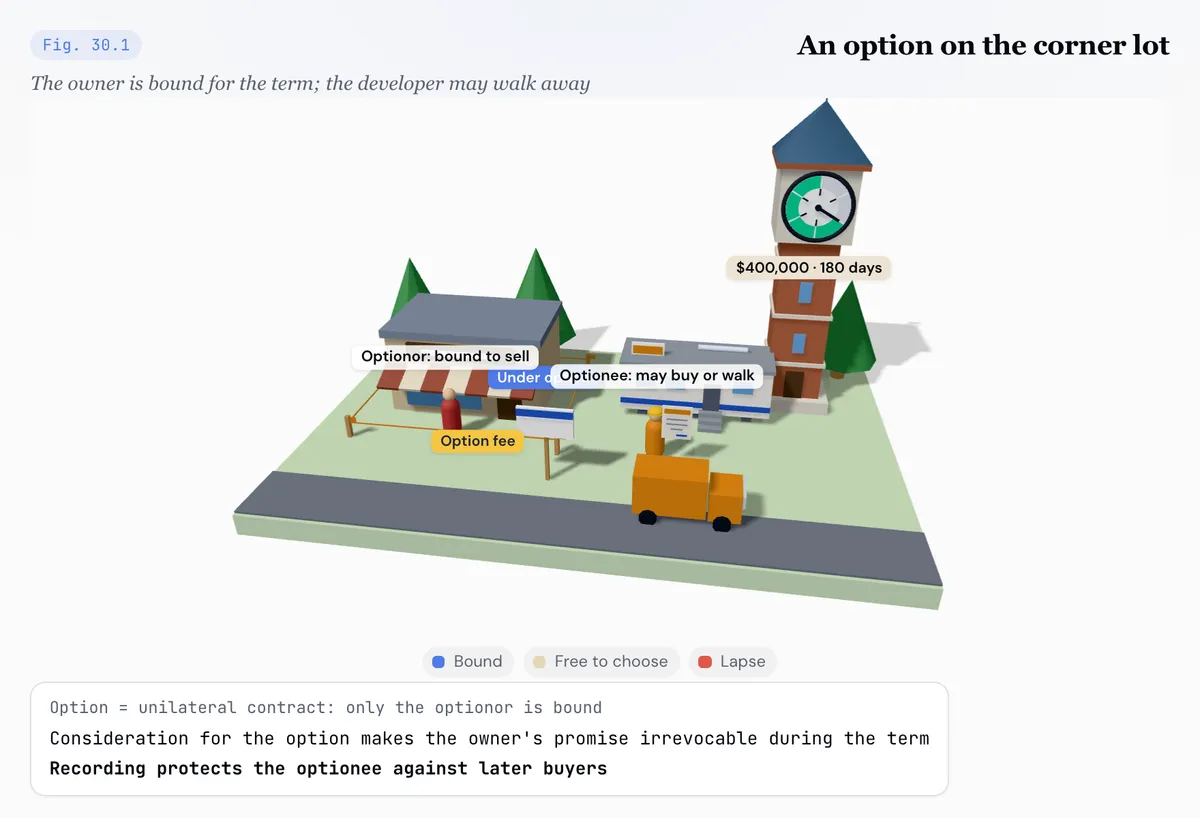
- Chapter 30Options and land contractsBuying the right to buy, and buying on installments