
California DMV flashcards for the permit test
Every card draws a real driving situation from the California Driver’s Handbook. Answer in your head, flip it, and the back draws the answer into the same scene, with the handbook section it comes from.
Flip the California cards
20 cards flip free. Mark each one and come back to the ones you missed.
Study one topic at a time
Each topic page lists its cards with the answers to the free ones.
Signals, Signs & Markings21 cards · 2 free to flipRight-of-Way & Pedestrians21 cards · 2 free to flip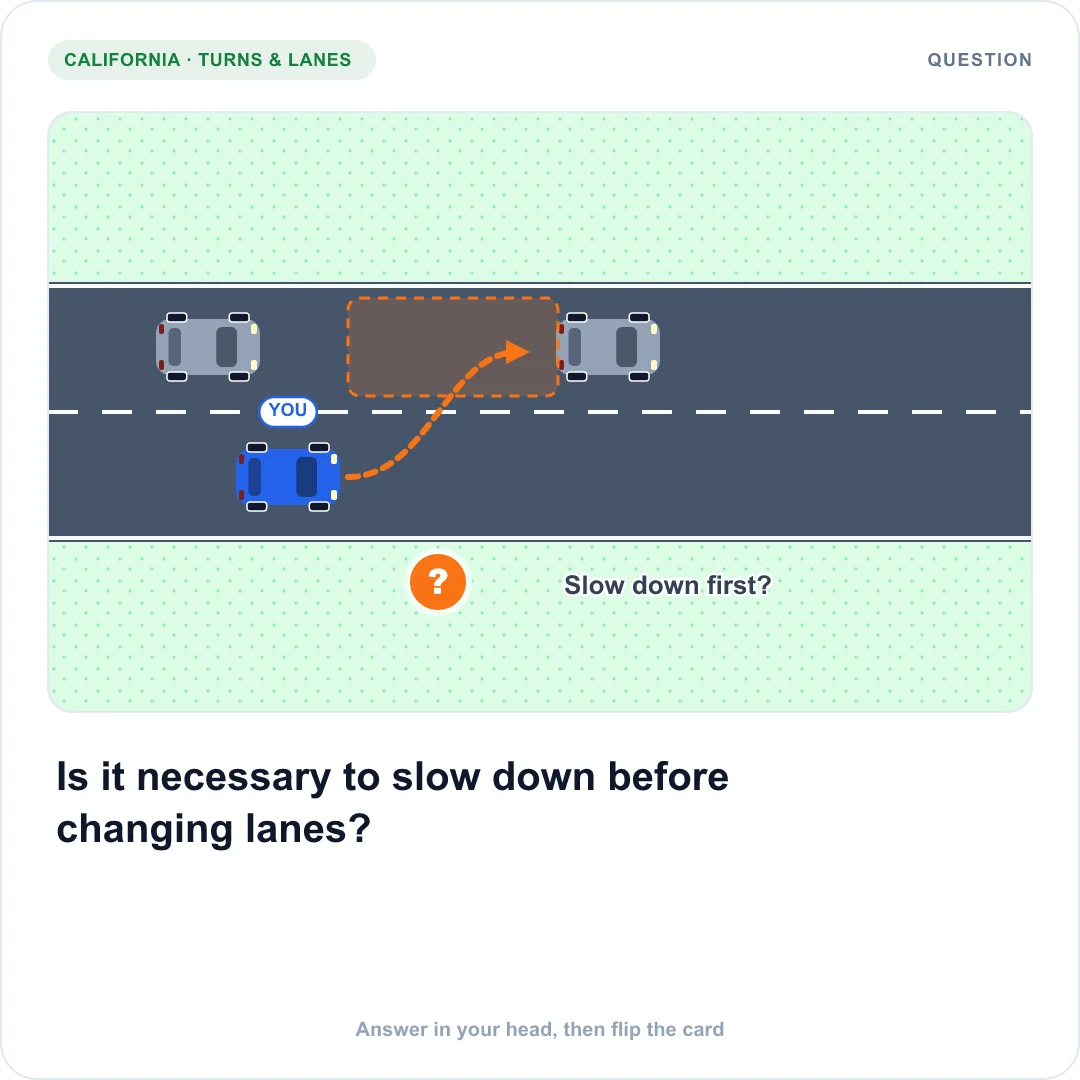 Turns, Lanes & Passing20 cards · 2 free to flip
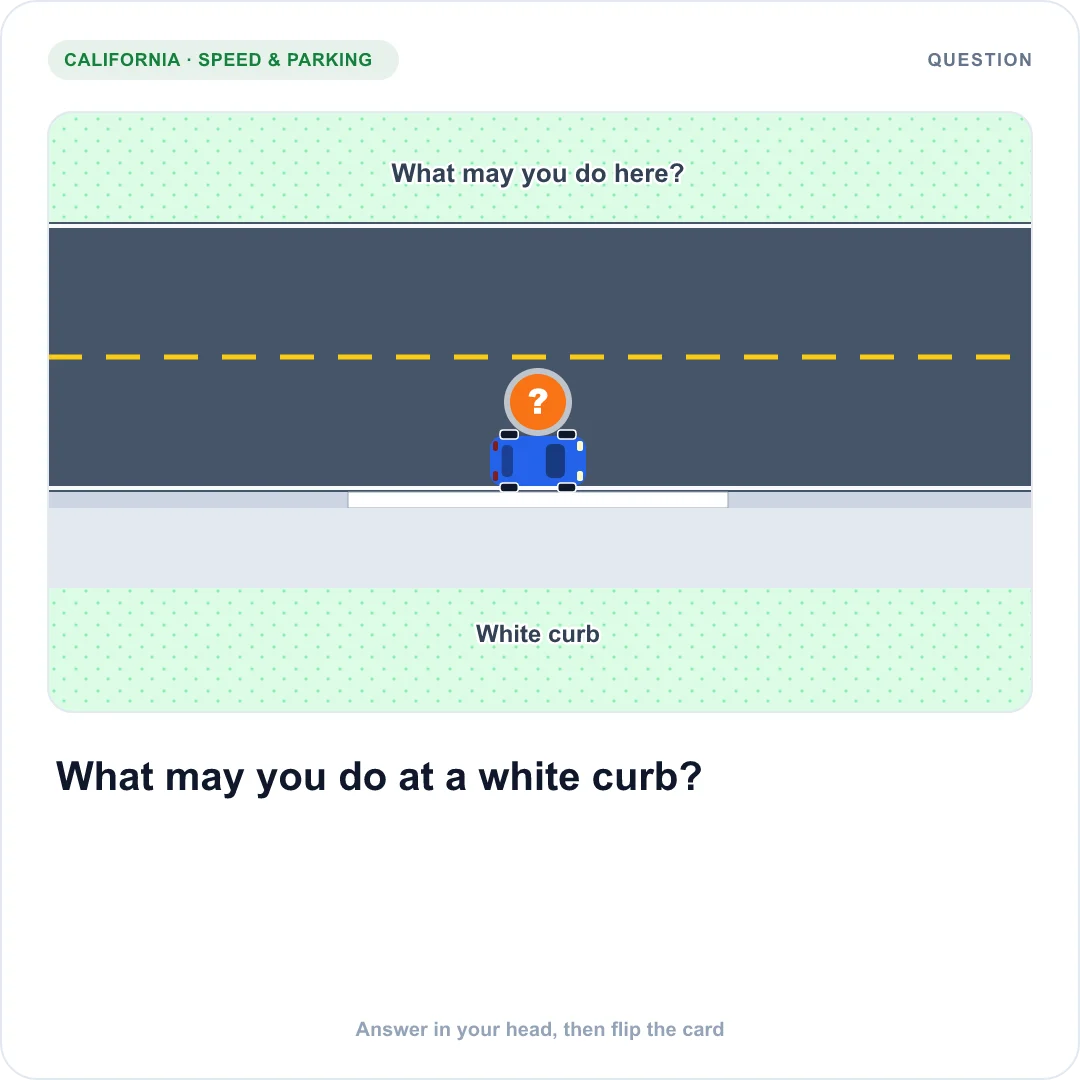 Speed Limits & Parking20 cards · 2 free to flip
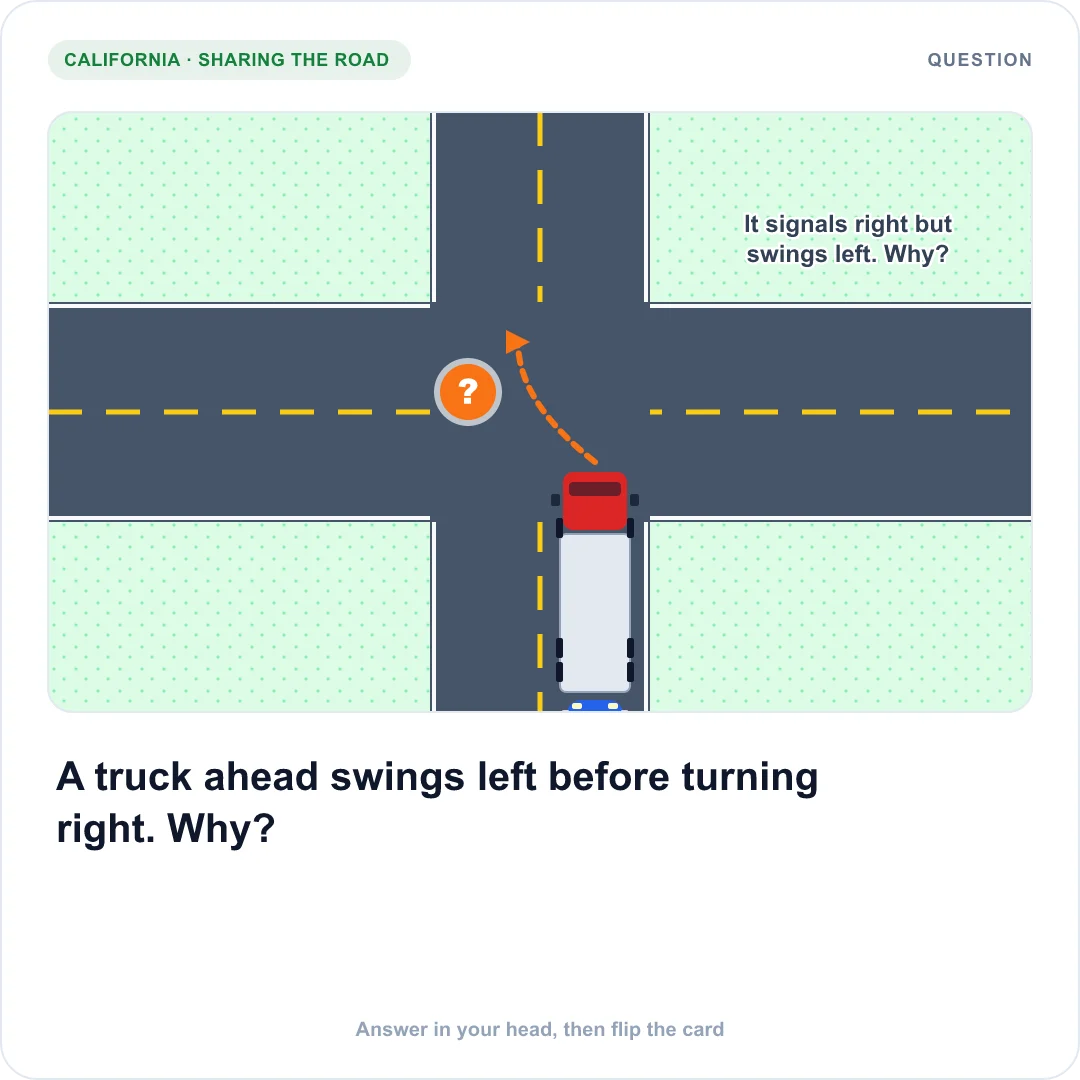 Sharing the Road20 cards · 2 free to flip
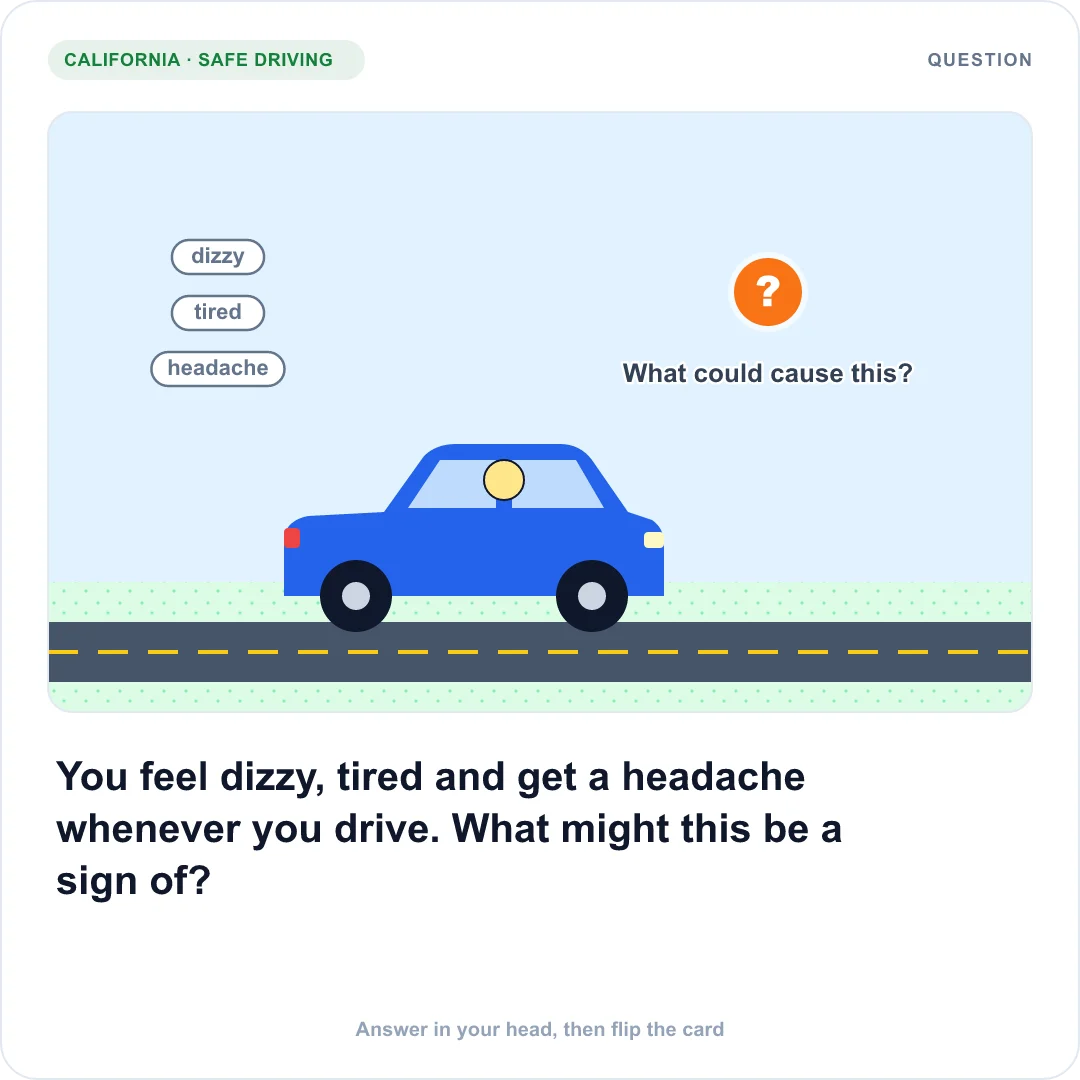 Safe Driving & Conditions20 cards · 2 free to flip
 Vehicle Control & Equipment20 cards · 2 free to flip
 Alcohol & Drugs20 cards · 2 free to flip
 Insurance, Collisions & Registration18 cards · 2 free to flip
 Licensing, Permits & Your Record20 cards · 2 free to flip
20 California rules these cards teach
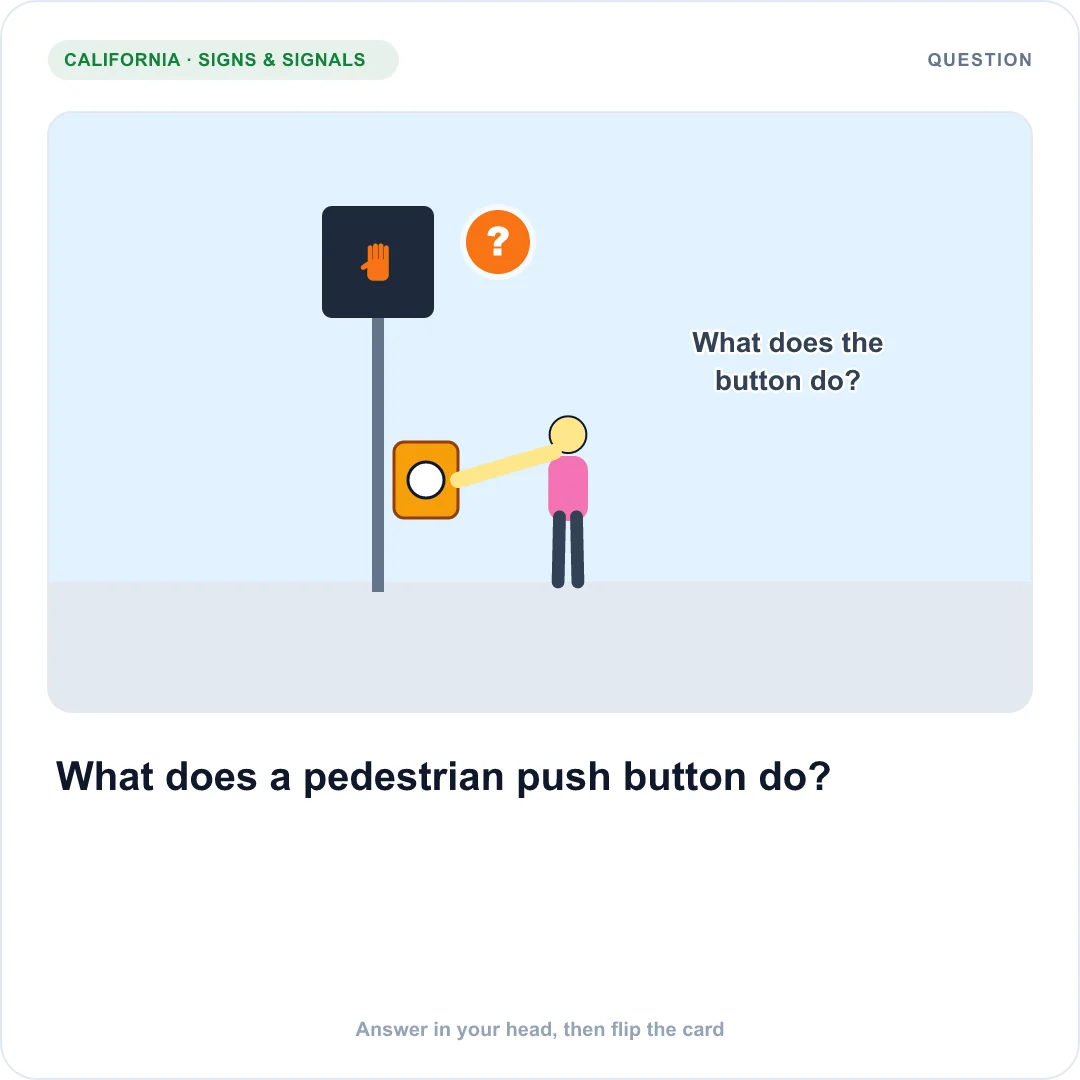
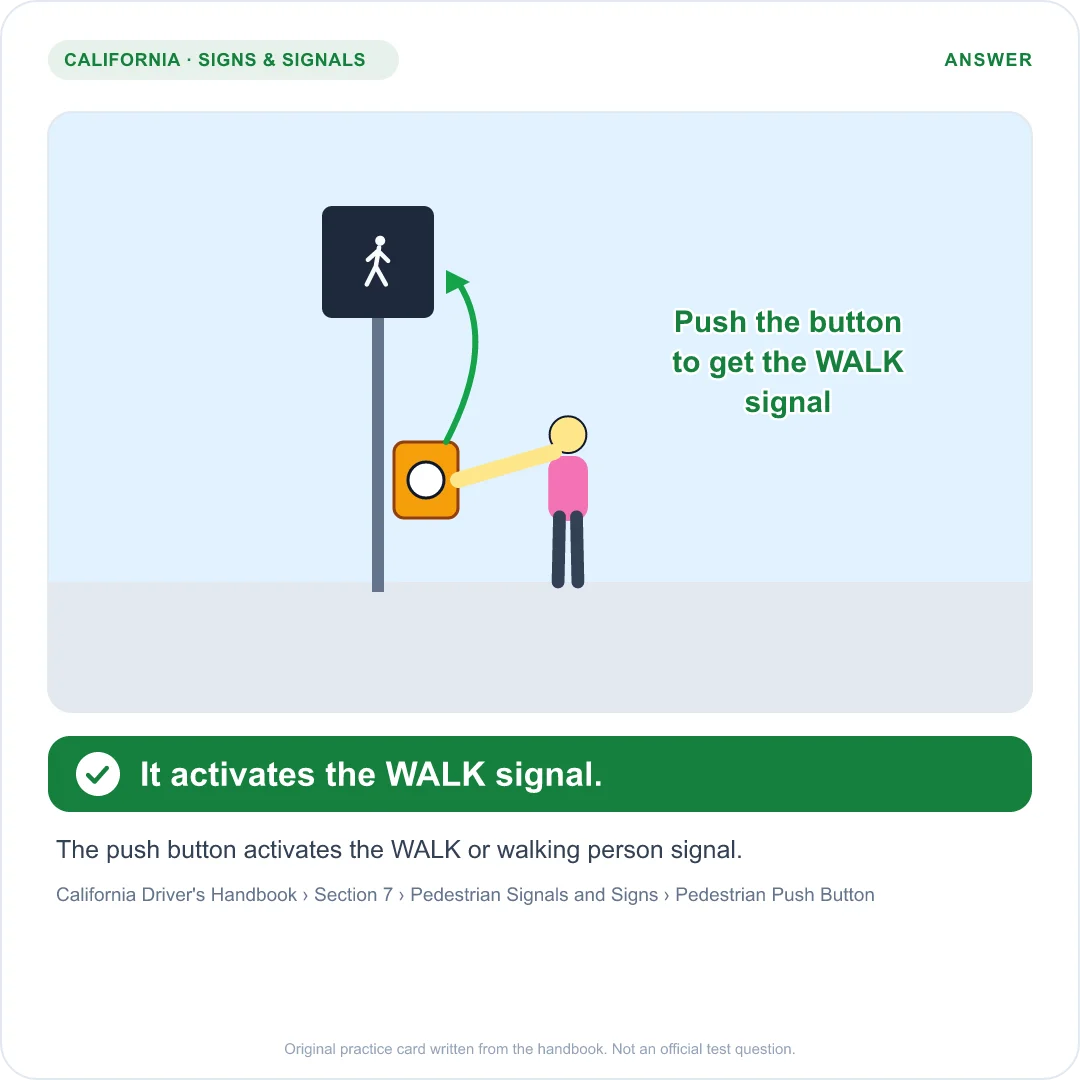
- The push button activates the WALK or walking person signal. (California Driver’s Handbook › Section 7 › Pedestrian Signals and Signs › Pedestrian Push Button)
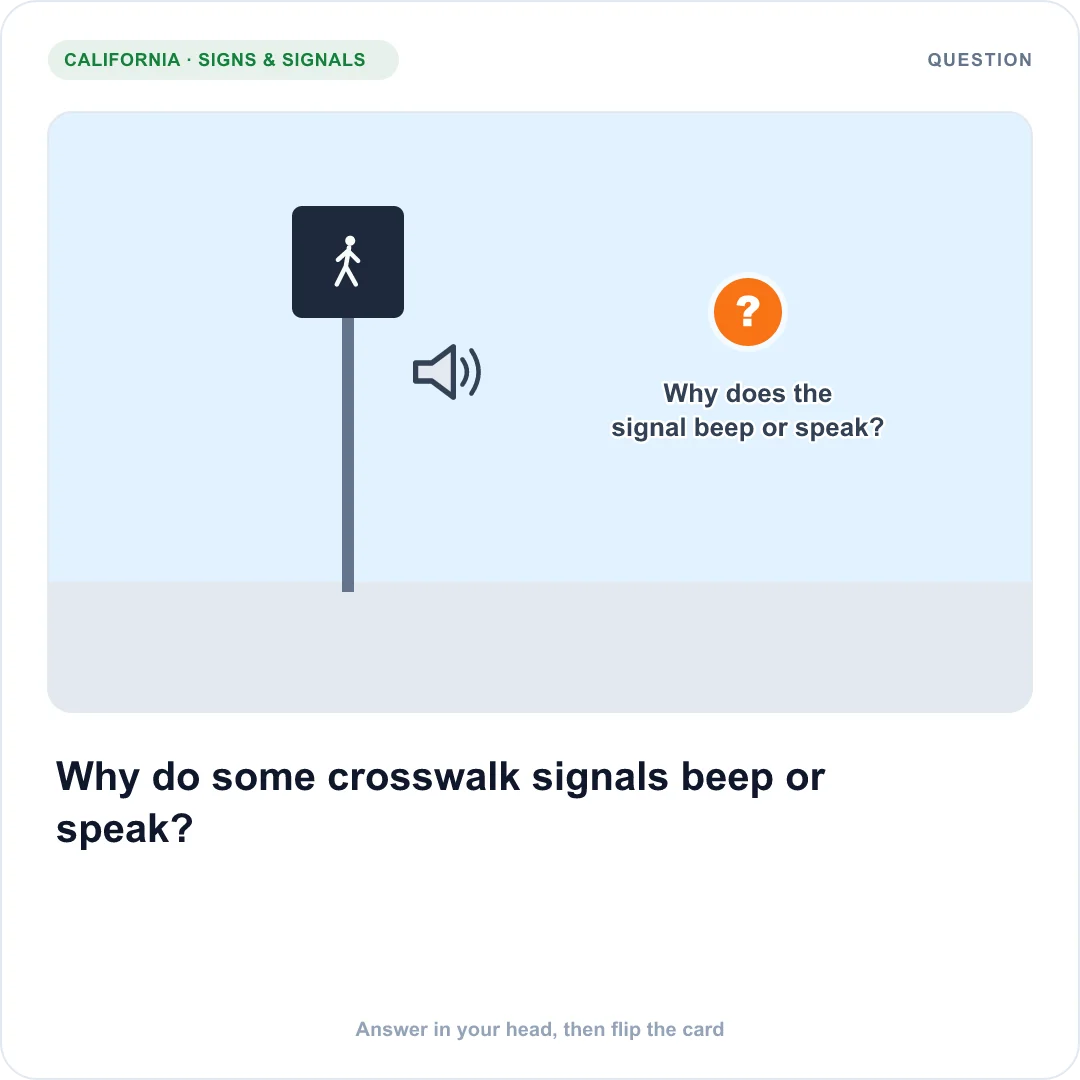
- Sounds such as beeping, chirping or verbal messages help blind or visually impaired pedestrians cross. (California Driver’s Handbook › Section 7 › Pedestrian Signals and Signs › Sounds)
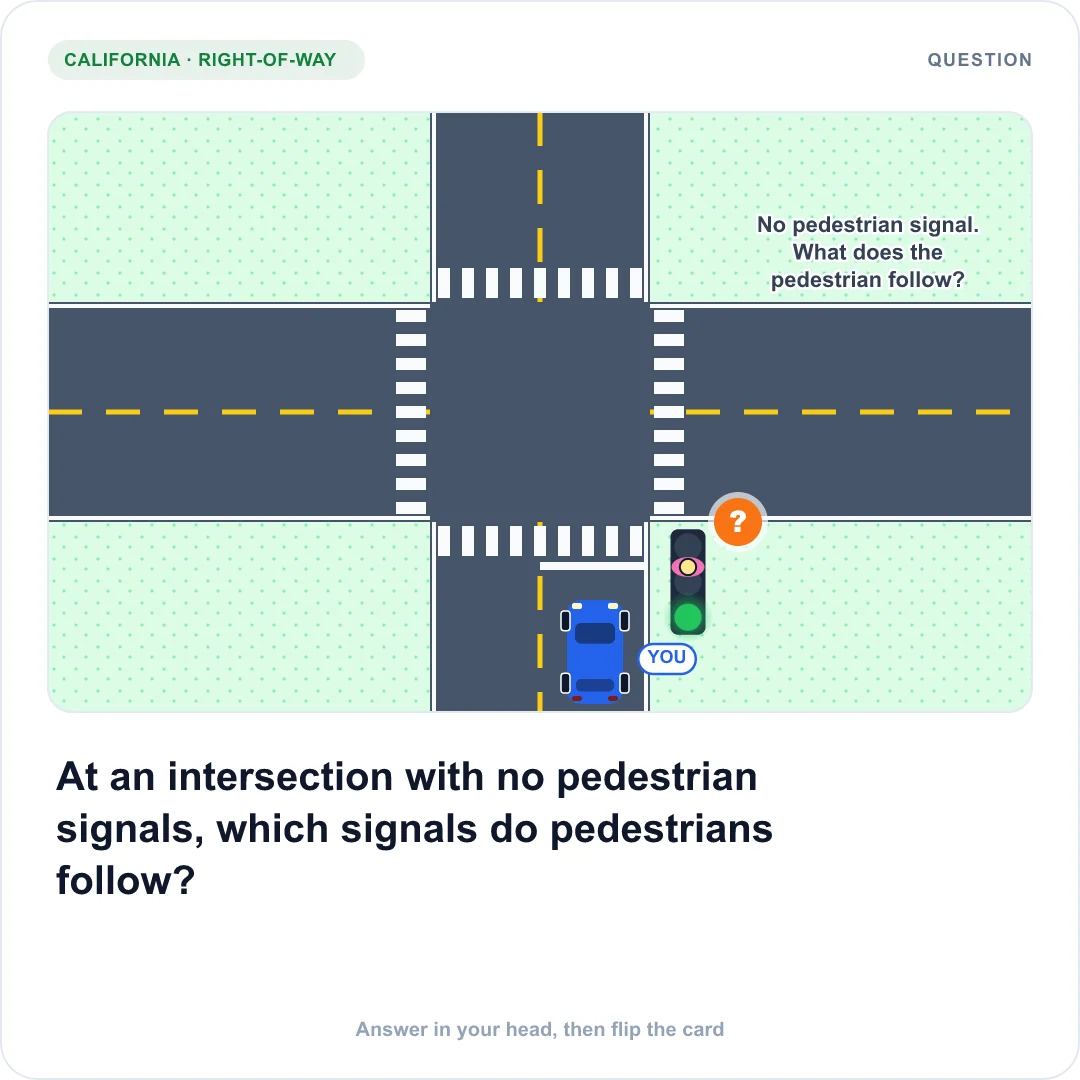
- When there are no pedestrian signals, pedestrians obey the vehicle traffic signals. (California Driver’s Handbook › Section 7 › Pedestrian Signals and Signs › No Pedestrian Signals)
- Do not pass a vehicle stopped at a crosswalk. (California Driver’s Handbook › Section 7 › Right-of-Way Rules › Pedestrians)
- It is not necessary to slow down before a lane change. (California Driver’s Handbook › Section 6 › Traffic Lanes › Changing Lanes)
- Never make a U-turn in front of a fire station, on a one-way street, at a railroad crossing, in a business district, or where you cannot see 200 feet each way. (California Driver’s Handbook › Section 6 › Turns › U-TURN)
- At a white curb, stop only long enough to pick up or drop off passengers. (California Driver’s Handbook › Section 6 (cont.) › Parking › Parking at Colored Curbs)
- Headed uphill, turn the wheels away from the curb (toward the center of the road) and let the car roll back until a wheel gently touches the curb. (California Driver’s Handbook › Section 6 (cont.) › Parking › Parking on a Hill)
- Rear wheels follow a shorter path than front wheels, so long vehicles swing wide. (California Driver’s Handbook › Section 7 (cont.) › Sharing the Road › Turning)
- When crossing devices or a person warn of a train, stop at least 15 feet from the nearest track. (California Driver’s Handbook › Section 7 (cont.) › Near Railroad or Light Rail Tracks)
- Tiredness, yawning, dizziness, nausea, headache and ringing ears can be signs of carbon monoxide poisoning. (California Driver’s Handbook › Section 8 (cont.) › Be Aware of Carbon Monoxide)
- During a traffic break, turn on your flashers, slow gradually to the officer’s speed, keep a safe distance, and do not drive past the patrol vehicle. (California Driver’s Handbook › Section 8 › Law Enforcement Traffic Breaks)
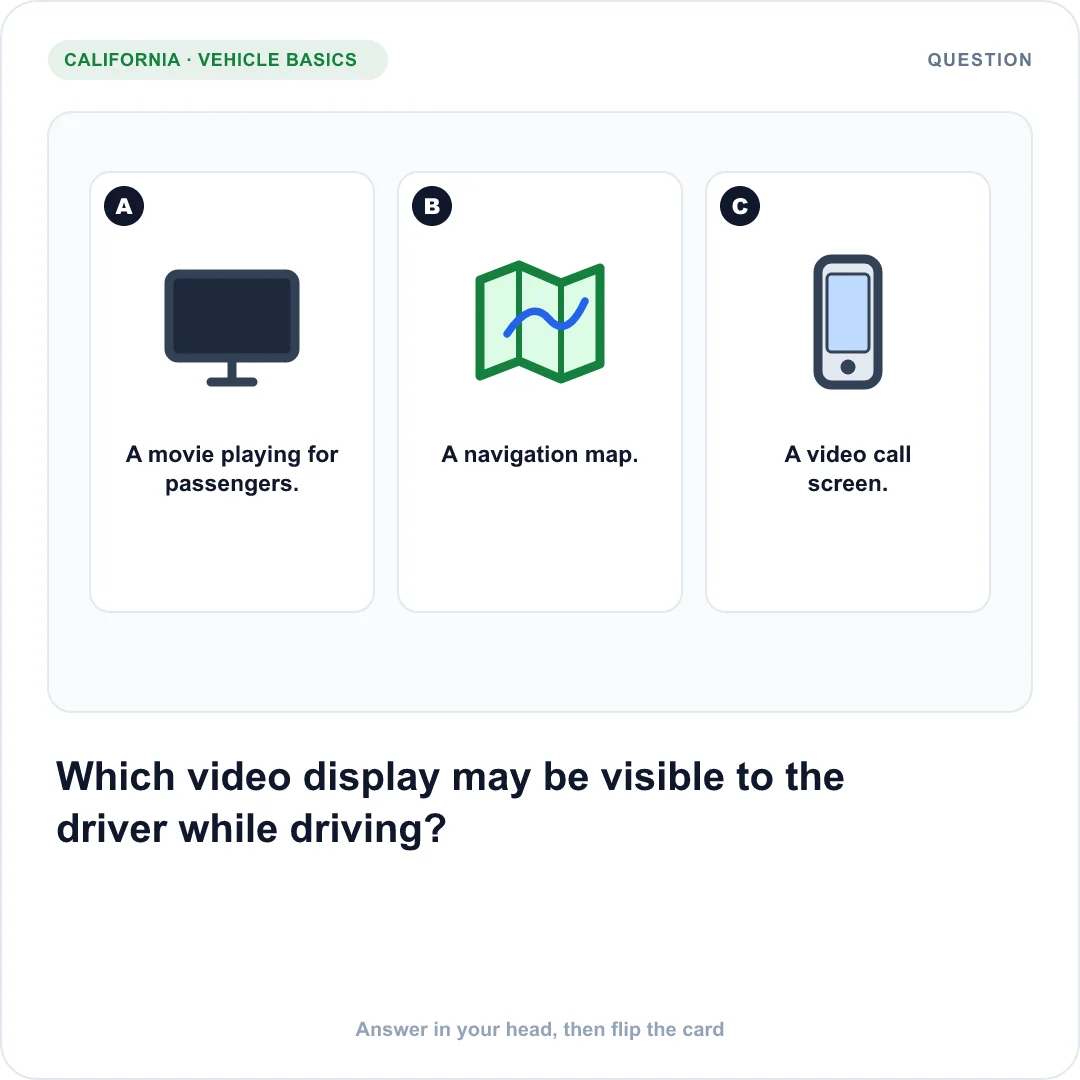
- A monitor visible to the driver may only show vehicle information, navigation, media player or radio. (California Driver’s Handbook › Section 7 (cont.) › Other Important Roadway Information)
- If your signal lights do not work, or sunlight makes them hard to see, use hand-and-arm signals. (California Driver’s Handbook › Section 5 › Signals, Horns, And Headlights › Signaling)
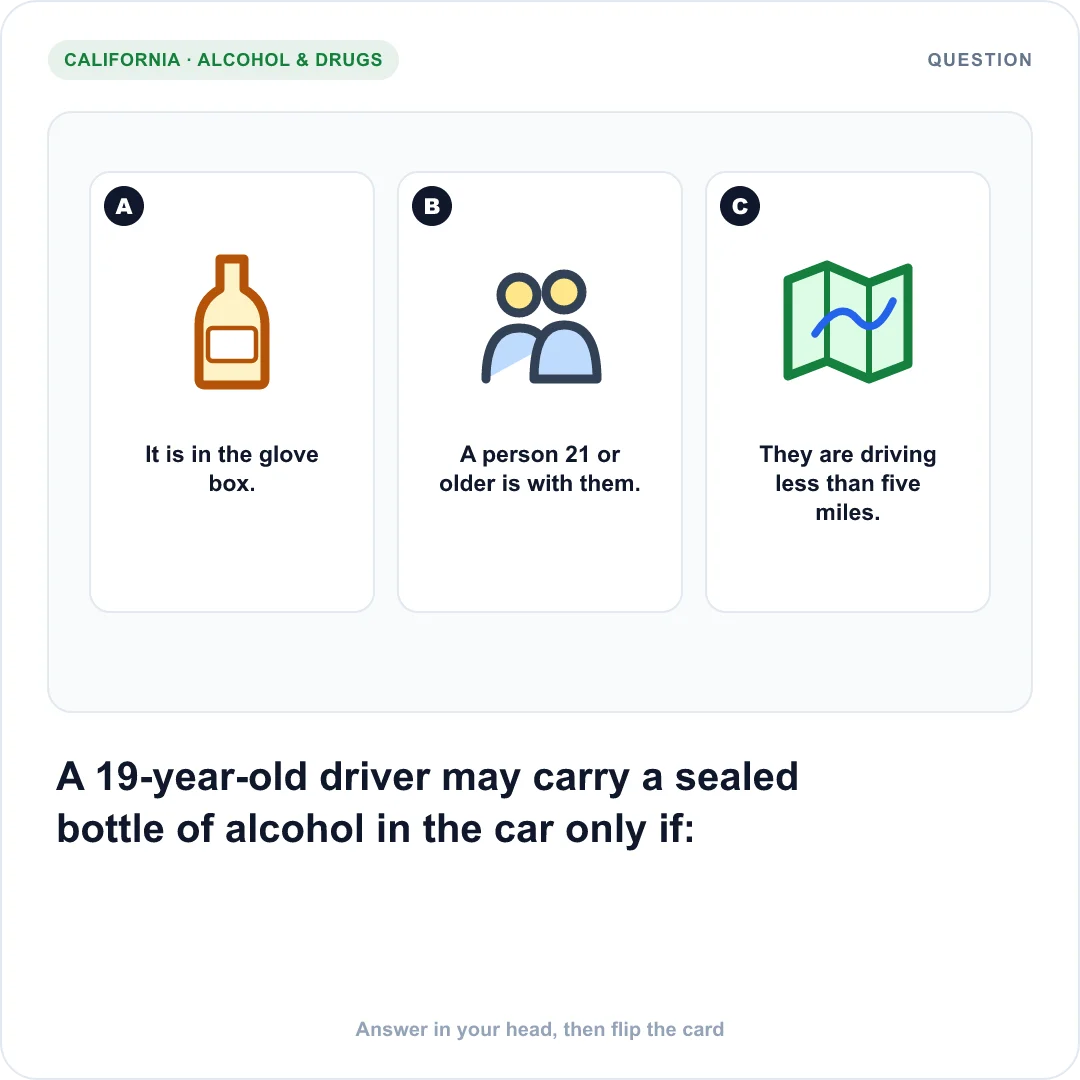
- Under 21, you may not carry alcohol in a vehicle unless someone 21 or older is with you, and it must be full, sealed and unopened. (California Driver’s Handbook › Section 9 › Drivers Under 21)
- Law enforcement can impound the vehicle for up to 30 days, and the court may fine you and suspend your license for one year. (California Driver’s Handbook › Section 9 › Drivers Under 21)
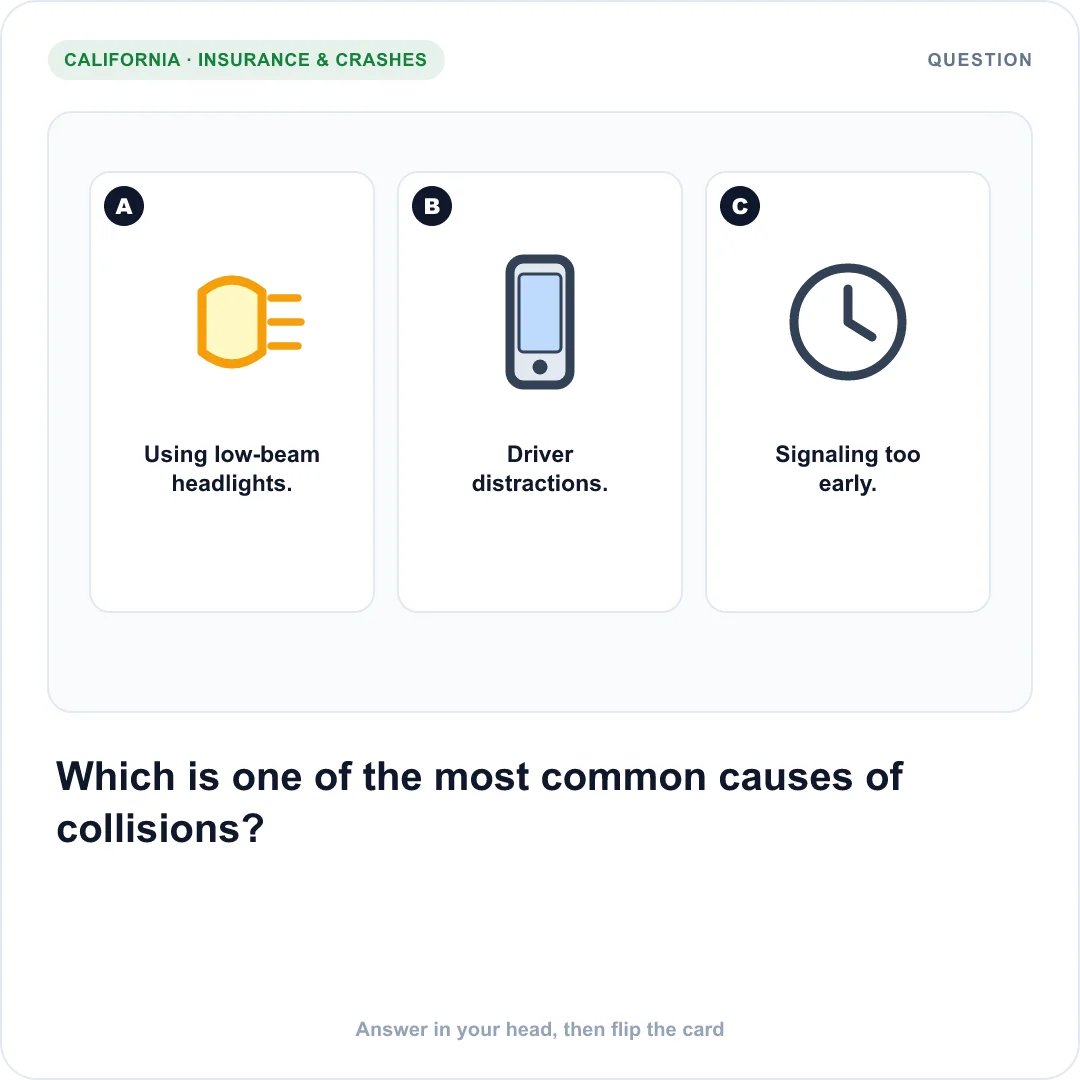
- Common causes include distractions, unsafe speed, improper turns, ignoring right-of-way rules and signals, and driving faster or slower than traffic. (California Driver’s Handbook › Section 10 › Collisions › Causes of Collisions)
- Securely attach a note with your name, phone number and address, and report the collision to law enforcement. (California Driver’s Handbook › Section 10 › What to Do if You Are in a Collision)
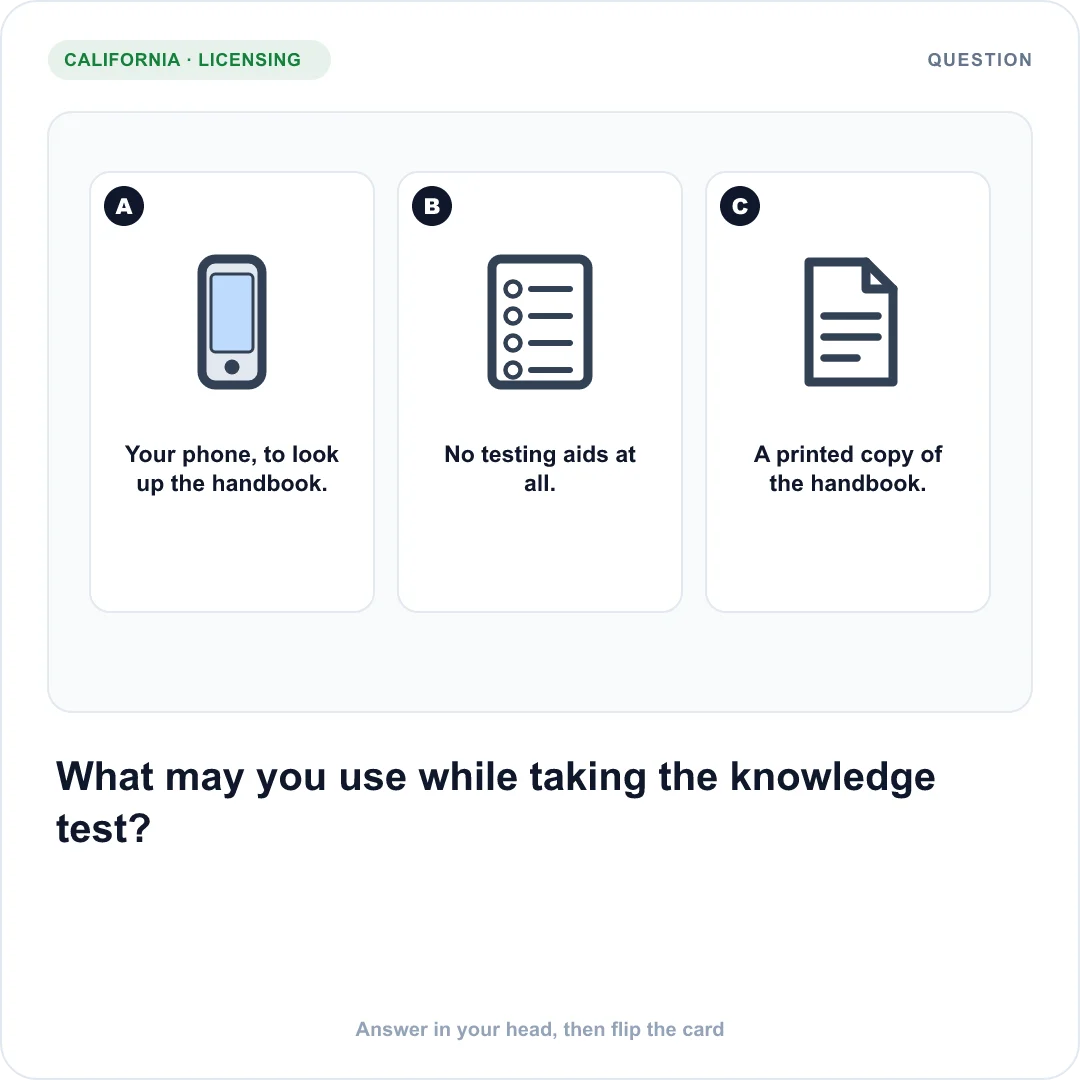
- Testing aids such as the handbook or a cell phone are not allowed during knowledge tests. (California Driver’s Handbook › Section 3 › Driver’s License Tests › Knowledge Test)
- To get a driver’s license under 18 you must be at least 16 and meet the permit, education and practice requirements. (California Driver’s Handbook › Section 2 › If you are under 18 years old)
Questions
Are these the real California DMV test questions?
No. They are original practice flashcards written from the California Driver’s Handbook. EstatePass is not affiliated with or endorsed by the California DMV, and these are not official test questions.
How many California flashcards are there?
200 cards across the topics of the California knowledge test. Each card draws the situation on the front and the answer on the back, with the handbook section it comes from.
Can I study them for free?
Yes. 20 cards (2 per topic) flip right on this page with no account. A free account opens all 200 in the study dashboard, where the cards you find hard come back sooner.
How should I use the flashcards?
Read the scene and answer in your head before you flip. Then mark whether you knew it, and go back to the ones you missed until they stick.
Original practice cards written from the California Driver’s Handbook. EstatePass is not affiliated with or endorsed by the California DMV; these are not official test questions.