
North Carolina's Homestead Exemption protects:
Question & Answer
Review the question and all answer choices
$35,000 of equity for residents
$1,000 plus $500 per dependent
The '$1,000 plus $500 per dependent' formula describes a different type of personal property exemption structure used in some other states and does not reflect North Carolina's homestead exemption, which is a flat $35,000 equity cap on real property.
Unlimited protection
Unlimited homestead protection exists in states like Florida and Texas, which have famously generous exemptions with no dollar cap — North Carolina is not among them, and confusing these states is a common error that this option is designed to catch.
No homestead exemption exists
North Carolina does have a homestead exemption, and it is constitutionally grounded, making 'no homestead exemption exists' entirely false; this option would only be correct for states that have formally abolished or never enacted such protections.
Why is this correct?
North Carolina's constitutional homestead exemption, codified under N.C. Gen. Stat. § 1C-1601, protects up to $35,000 of a resident's equity in their primary residence from forced sale by unsecured creditors, making answer A correct. The protection applies automatically to qualifying residents and does not require court approval to invoke, though it must be claimed in bankruptcy proceedings. This $35,000 figure has been the standard amount under North Carolina law and is a frequently tested number on the state real estate exam.
Continue Learning
Explore this topic in different formats
More Property Ownership Videos
Continue learning with related video lessons
Arizona is a community property state. This means:
2:25 • 0 views
Illinois recognizes which form of marital property ownership?
3:22 • 0 views
In Illinois, which deed provides the greatest protection to the buyer?
3:05 • 0 views
In North Carolina, a deed must be:
2:21 • 0 views
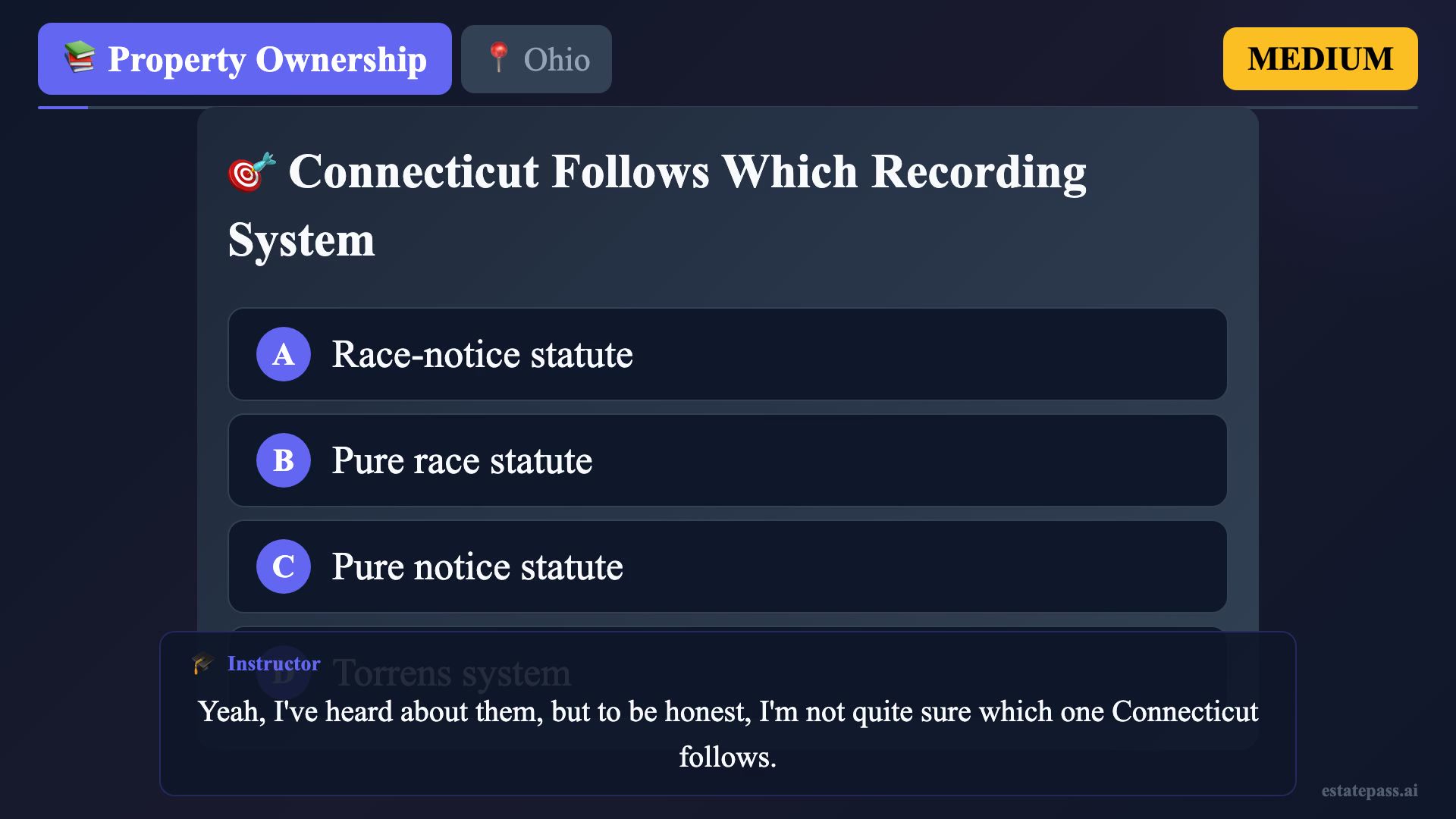
Connecticut follows which recording system?
2:14 • 0 views
Ready to Ace Your Real Estate Exam?
Access 2,000+ free video lessons covering all 11 exam topics.