
In North Carolina, a deed must be:
Question & Answer
Review the question and all answer choices
Witnessed by two people
North Carolina does not require a deed to be witnessed by two people as a condition for recording — while witnesses were historically required under older common law, modern North Carolina law replaced this with the notarial acknowledgment requirement for recording purposes.
Acknowledged before a notary to be recorded
Approved by a court
Court approval is not required for a standard deed transfer in North Carolina; court involvement is only necessary in specific circumstances such as probate proceedings, judicial sales, or guardian/conservator transactions, not routine real estate closings.
Filed with the state
Deeds in North Carolina are recorded at the county level with the Register of Deeds, not filed with the state government; there is no statewide deed filing requirement, making this answer factually incorrect.
Why is this correct?
Under N.C. Gen. Stat. § 47-38, a deed must be acknowledged before a notary public or other officer authorized to take acknowledgments in order to be eligible for recording with the county Register of Deeds. Acknowledgment is the formal declaration by the grantor before an authorized officer that they signed the deed voluntarily, and without it the Register of Deeds will refuse to record the instrument. Recording is critical in North Carolina because the state operates under a race-notice recording statute, meaning an unrecorded deed can be defeated by a subsequent purchaser who records first without notice.
Continue Learning
Explore this topic in different formats
More Property Ownership Videos
Continue learning with related video lessons
Arizona is a community property state. This means:
2:25 • 0 views
Illinois recognizes which form of marital property ownership?
3:22 • 0 views
In Illinois, which deed provides the greatest protection to the buyer?
3:05 • 0 views
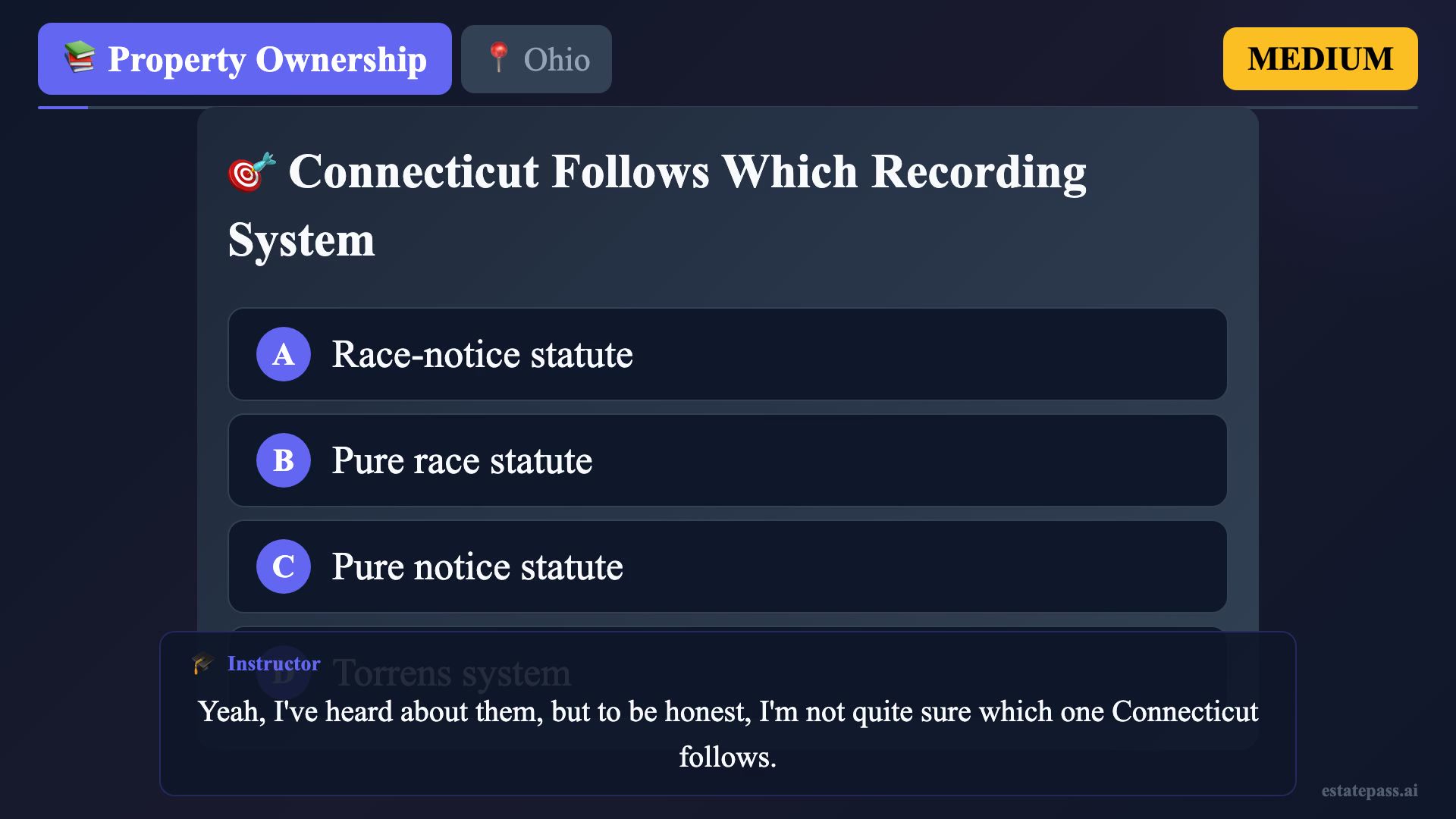
Connecticut follows which recording system?
2:14 • 0 views
A deed in Virginia must be:
2:21 • 0 views
Ready to Ace Your Real Estate Exam?
Access 2,000+ free video lessons covering all 11 exam topics.