
North Carolina's adverse possession period is:
Question & Answer
Review the question and all answer choices
7 years with color of title
Option A is only partially correct — while 7 years with color of title is accurate, this answer omits the critical 20-year track for possession without color of title, making it an incomplete and therefore incorrect answer.
20 years
Option B states only 20 years, which is accurate only for adverse possession without color of title — it ignores the 7-year shortened period available to those who possess under color of title, making this answer incomplete.
7 years with color of title, 20 years without
10 years
Option D, 10 years, does not correspond to either of North Carolina's statutory adverse possession periods and appears to be a distractor drawn from other states' statutes, such as California's general 5-year period or some states that use 10 years.
Why is this correct?
Option C is correct because North Carolina statutes explicitly create two separate adverse possession tracks: N.C. Gen. Stat. § 1-38 provides that a person holding under color of title (a written instrument such as a deed, even if defective) who has paid taxes and possessed the land for 7 years can perfect title by adverse possession, while N.C. Gen. Stat. § 1-40 provides a 20-year period for adverse possession without any color of title. Both tracks require the classic elements of actual, open, notorious, exclusive, hostile, and continuous possession, but the presence of a documentary claim dramatically shortens the required period.
Continue Learning
Explore this topic in different formats
More Property Ownership Videos
Continue learning with related video lessons
Arizona is a community property state. This means:
2:25 • 0 views
Illinois recognizes which form of marital property ownership?
3:22 • 0 views
In Illinois, which deed provides the greatest protection to the buyer?
3:05 • 0 views
In North Carolina, a deed must be:
2:21 • 0 views
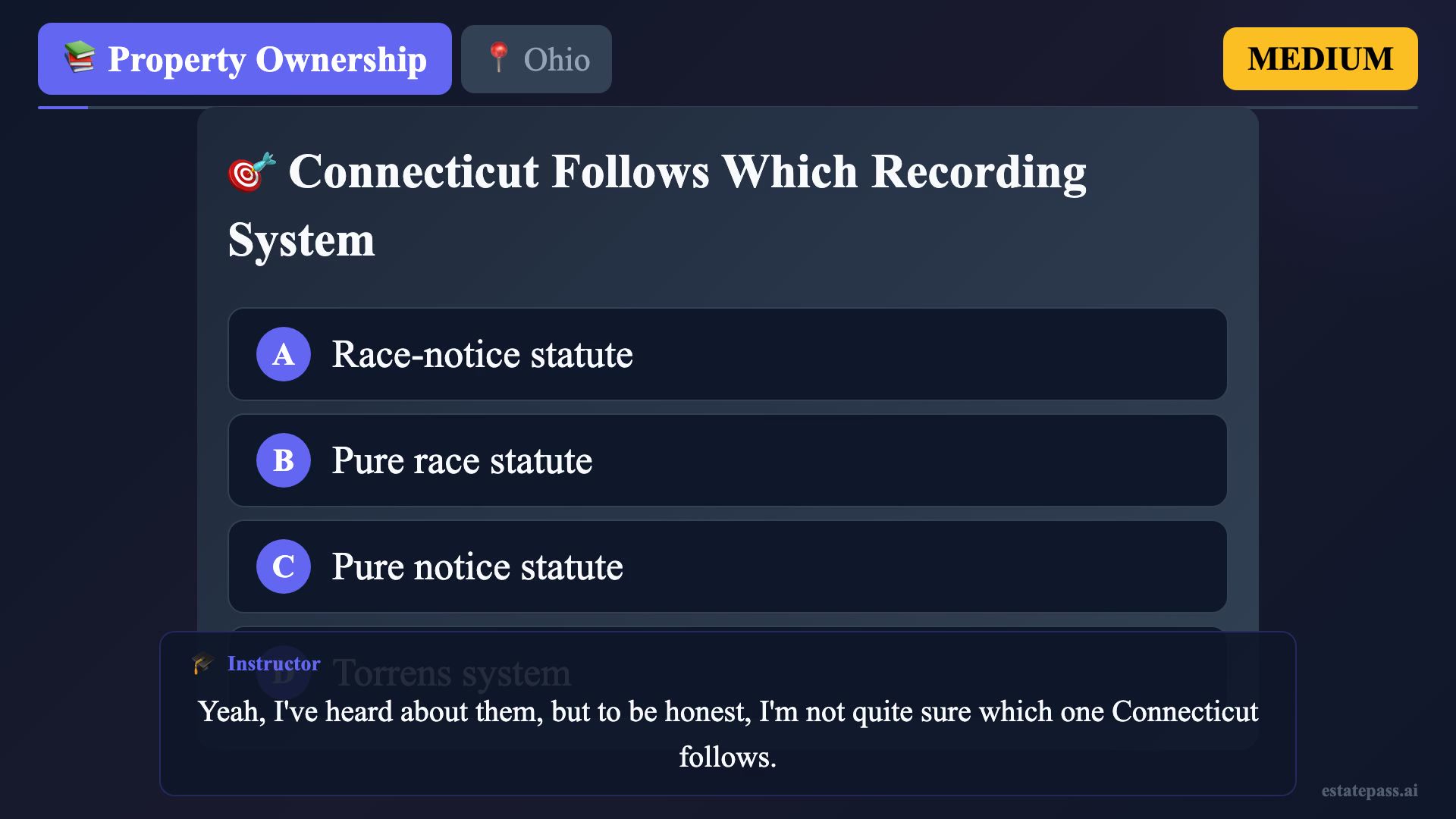
Connecticut follows which recording system?
2:14 • 0 views
Ready to Ace Your Real Estate Exam?
Access 2,000+ free video lessons covering all 11 exam topics.