
In Texas, mineral rights:
Question & Answer
Review the question and all answer choices
Always transfer with the surface rights
Mineral rights do not always transfer with surface rights in Texas — in fact, the entire premise of mineral rights law in Texas is that they can be and frequently are separated from surface rights, making this answer directly contrary to established Texas property law.
Cannot be severed from surface rights
Texas law explicitly allows mineral rights to be severed from surface rights, and this severability is one of the most important and frequently litigated aspects of Texas real property law; stating they cannot be severed contradicts both statute and a century of Texas case law.
Can be severed and sold separately from surface rights
Belong to the state
Mineral rights in Texas belong to the landowner, not the state — this is a critical distinction from states like Alaska or federal land situations where the government retains mineral rights; Texas's history as an independent republic and its land grant system resulted in private ownership of mineral rights being the default rule.
Why is this correct?
Under Texas property law, the mineral estate is considered a separate and distinct property interest that can be severed from the surface estate through a deed, reservation, or exception in a conveyance, as established by decades of Texas case law and codified in principles applied by Texas courts. Once severed, the mineral estate can be sold, leased, inherited, or encumbered independently of the surface, and Texas courts have consistently upheld the mineral estate as the 'dominant estate' when conflicts arise with surface owners. This severance is routinely accomplished through instruments like mineral deeds or reservations in warranty deeds.
Continue Learning
Explore this topic in different formats
More Property Ownership Videos
Continue learning with related video lessons

Arizona is a community property state. This means:
2:25 • 0 views
Illinois recognizes which form of marital property ownership?
3:22 • 0 views

In Illinois, which deed provides the greatest protection to the buyer?
3:05 • 0 views

In North Carolina, a deed must be:
2:21 • 0 views
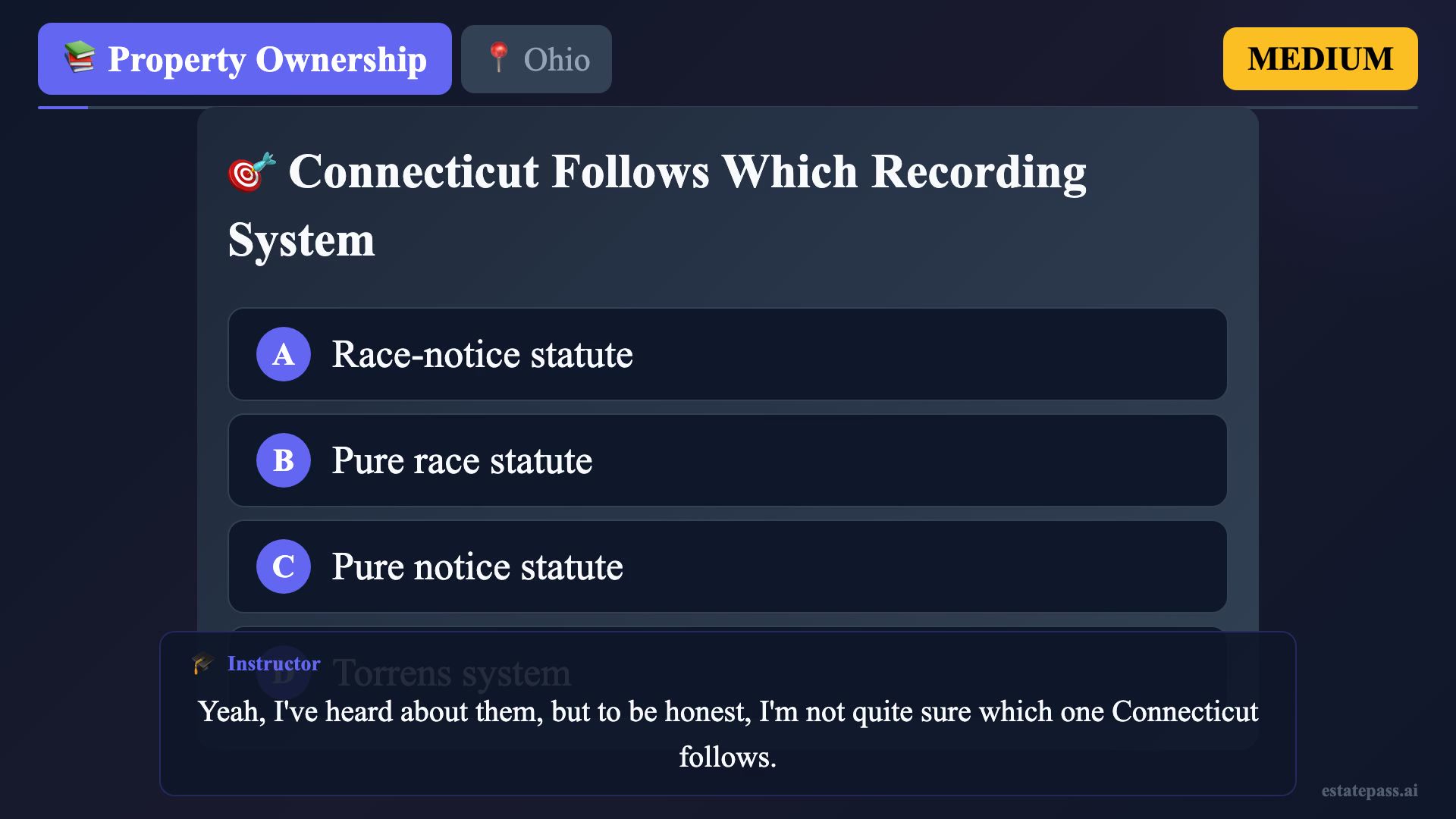
Connecticut follows which recording system?
2:14 • 0 views
Ready to Ace Your Real Estate Exam?
Access 2,000+ free video lessons covering all 11 exam topics.