
A Transfer Disclosure Statement (TDS) must be provided by:
Question & Answer
Review the question and all answer choices
The buyer's agent
The buyer's agent cannot provide the TDS because they represent the buyer's interests and typically lack the seller's intimate knowledge of the property's condition. Disclosure is the seller's legal responsibility, not the buyer's agent's duty.
The seller
The title company
Title companies handle document preparation and transfer of title but don't have the seller's knowledge of property defects. Their role is administrative, not disclosure-related.
The mortgage lender
Mortgage lenders provide financing and evaluate property for loan purposes but don't assume the seller's disclosure obligations. Their focus is on collateral value, not comprehensive property condition disclosure.
Why is this correct?
The seller is legally responsible for providing the Transfer Disclosure Statement because they possess firsthand knowledge of the property's condition and are required to disclose all known material defects. This responsibility stems from the principle of seller disclosure, which protects buyers from hidden issues that could affect property value or safety.
Continue Learning
Explore this topic in different formats
More Mandated Disclosures Videos
Continue learning with related video lessons
Megan's Law disclosures relate to:
2:55 • 0 views
A seller's agent who is aware of a material defect that the seller has not disclosed should:
2:45 • 0 views
A seller who fails to provide required disclosures may be liable for:
2:44 • 0 views
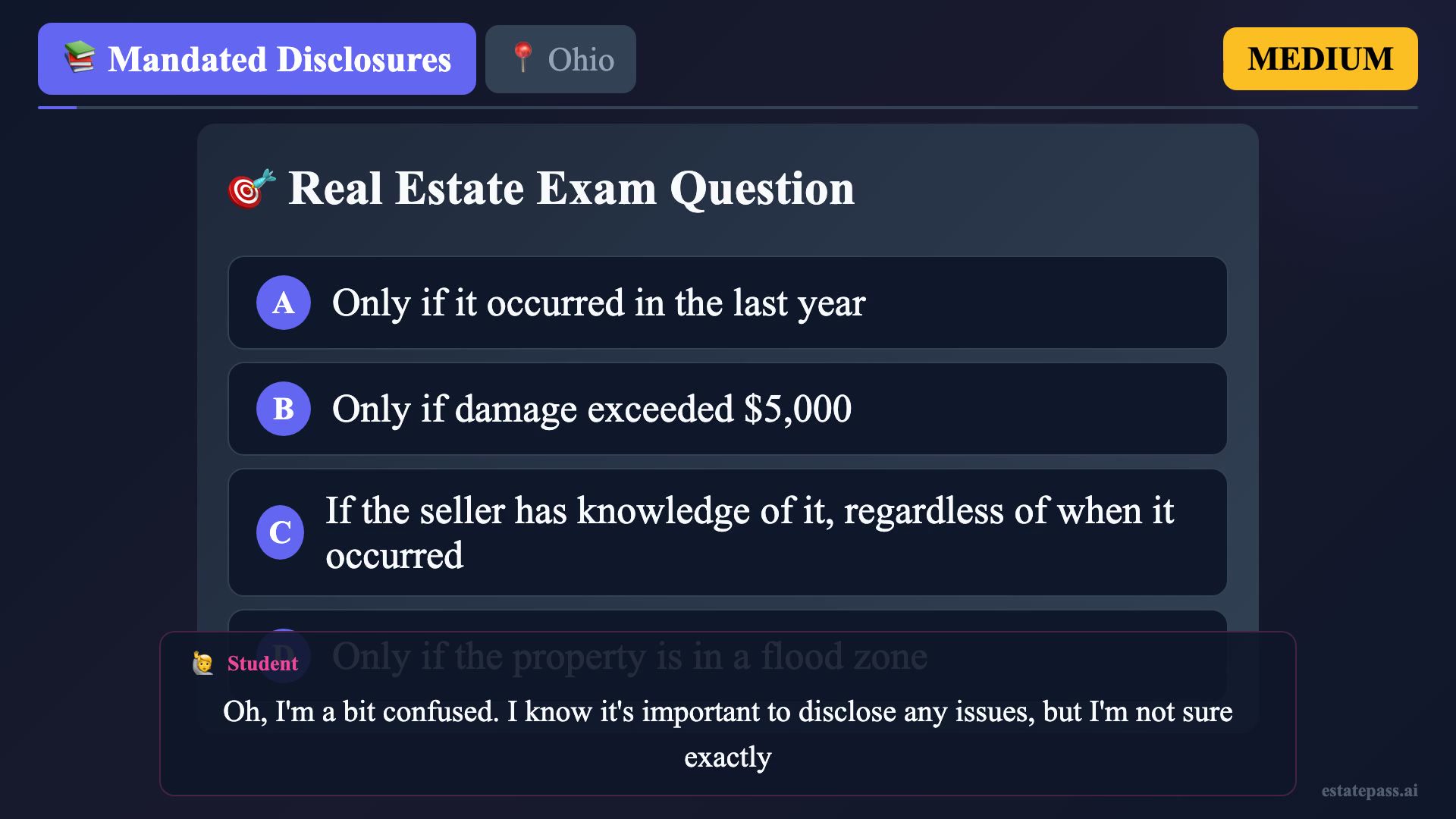
Water intrusion or past flooding must be disclosed:
2:54 • 0 views
The purpose of property disclosure requirements is to:
2:44 • 0 views
Ready to Ace Your Real Estate Exam?
Access 2,000+ free video lessons covering all 11 exam topics.