
The maximum number of properties that can be covered by a trust deed without a blanket encumbrance is:
Question & Answer
Review the question and all answer choices
three.
There is no three-property limit in California law. This misconception may arise from confusing blanket encumbrances with other types of restrictions or from outdated information about mortgage practices.
two.
Two properties do not constitute a blanket encumbrance by default in California. A blanket encumbrance is defined by its structure and purpose, not by an arbitrary number of properties.
one.
A single property trust deed is obviously not a blanket encumbrance, but the question asks about the maximum number before it becomes one, and one property is clearly not the maximum.
there is no limit.
Why is this correct?
California law does not impose a specific numerical limit on how many properties can be covered by a single trust deed before it becomes a blanket encumbrance. The determination is based on the nature and structure of the lien rather than a fixed number of properties.
Continue Learning
Explore this topic in different formats
More Land Use Controls Videos
Continue learning with related video lessons
Florida wetlands are regulated by:
2:57 • 0 views
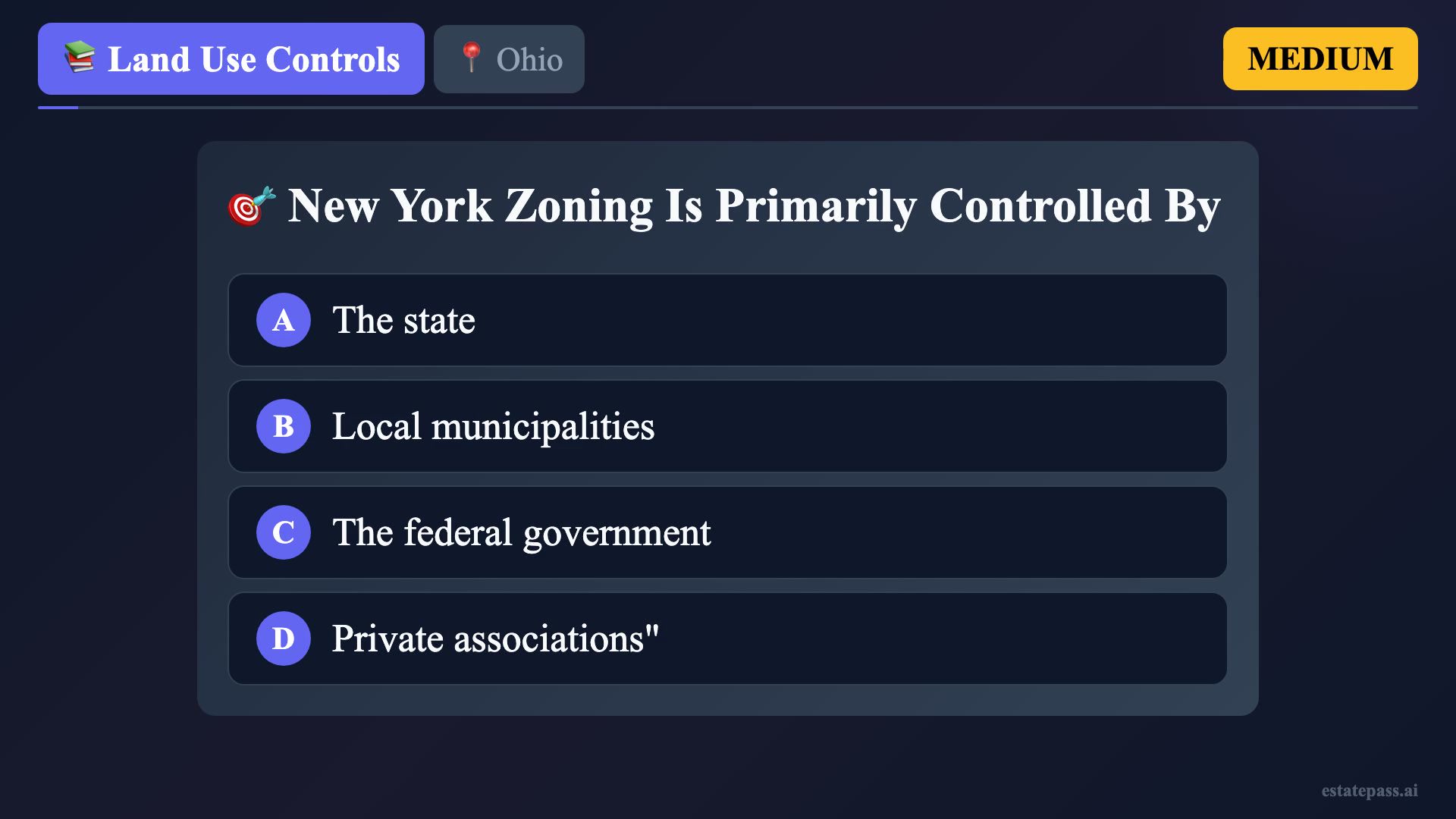
New York zoning is primarily controlled by:
2:45 • 0 views
Consider a prepaid rental listing service that intends to relocate. When is the listing service required to provide notice of the new address and telephone number to its clients?
2:54 • 0 views
In Texas, water rights for surface water are based on:
2:57 • 0 views
A deed restriction prohibits a subdivision from using a residential property as a business. A buyer interested in purchasing a property in the subdivision tells their broker they intend to use one room of their house as a dog grooming service. Can the buyer do so?
2:24 • 0 views
Ready to Ace Your Real Estate Exam?
Access 2,000+ free video lessons covering all 11 exam topics.