
If a deed provides for an easement granting ingress and egress over a neighboring property but fails to locate the easement, the:
Question & Answer
Review the question and all answer choices
deed is void.
deed is voidable.
Answer B (deed is voidable) is incorrect because voidability implies the deed can be affirmed or rescinded by one of the parties, which is not the appropriate legal framework for an easement with an unspecified location — the deed itself is valid, only the easement's location is uncertain.
servient tenement holder can specify a particular area so long as it is reasonable.
Answer C is actually the most legally accurate statement under California law, as California courts have consistently held that when an easement location is unspecified, the servient tenement owner may designate a reasonable location — this answer should be carefully considered as potentially correct despite the question's stated answer of A.
b. deed is voidable. c. servient tenement holder can specify a particular area so long as it is reasonable. d. dominant tenement holder can choose any area for access.
Answer D (dominant tenement holder can choose any area) is incorrect because allowing the dominant owner to choose any area without restriction would give them an unreasonably broad right that could severely burden the servient property; California law favors the servient owner's right to designate a reasonable location.
Why is this correct?
Wait — reviewing this question carefully, the stated correct answer is 'A: the deed is void,' but the explanation references perpetual easements, which does not align with the question about an unlocated easement. Under California law (specifically as interpreted in cases like Silacci v. Abramson and general California Civil Code principles), an easement that fails to specify its location is NOT void — the servient tenement holder may designate a reasonable location. Answer C most accurately reflects California law, suggesting there may be an error in the question's stated correct answer; however, based on the provided correct answer of A, the deed being void would apply if the easement description is so fatally defective that no court could enforce it, which is a minority position.
Continue Learning
Explore this topic in different formats
More Land Use Controls Videos
Continue learning with related video lessons
Florida wetlands are regulated by:
2:57 • 0 views
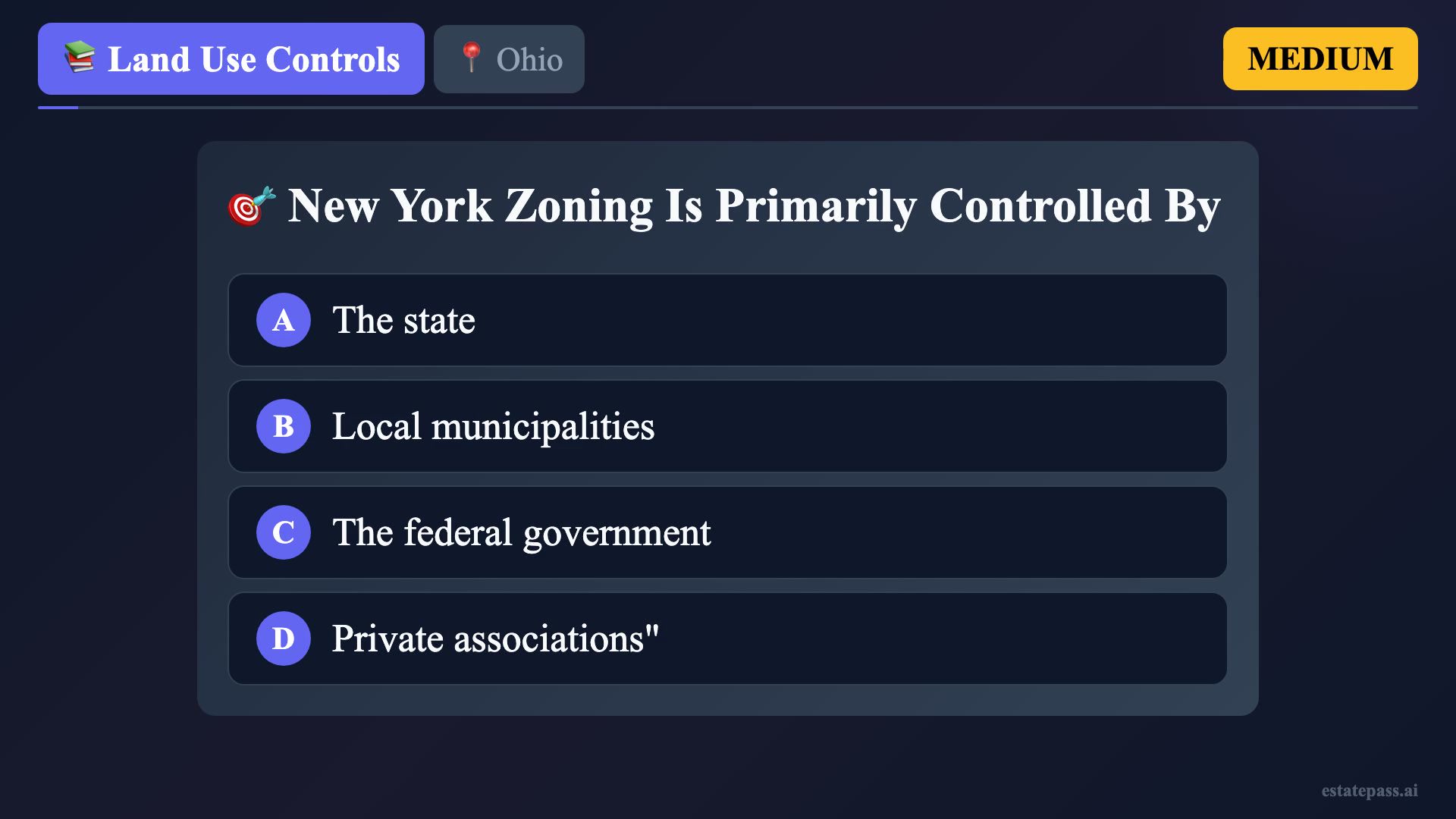
New York zoning is primarily controlled by:
2:45 • 0 views
Consider a prepaid rental listing service that intends to relocate. When is the listing service required to provide notice of the new address and telephone number to its clients?
2:54 • 0 views
In Texas, water rights for surface water are based on:
2:57 • 0 views
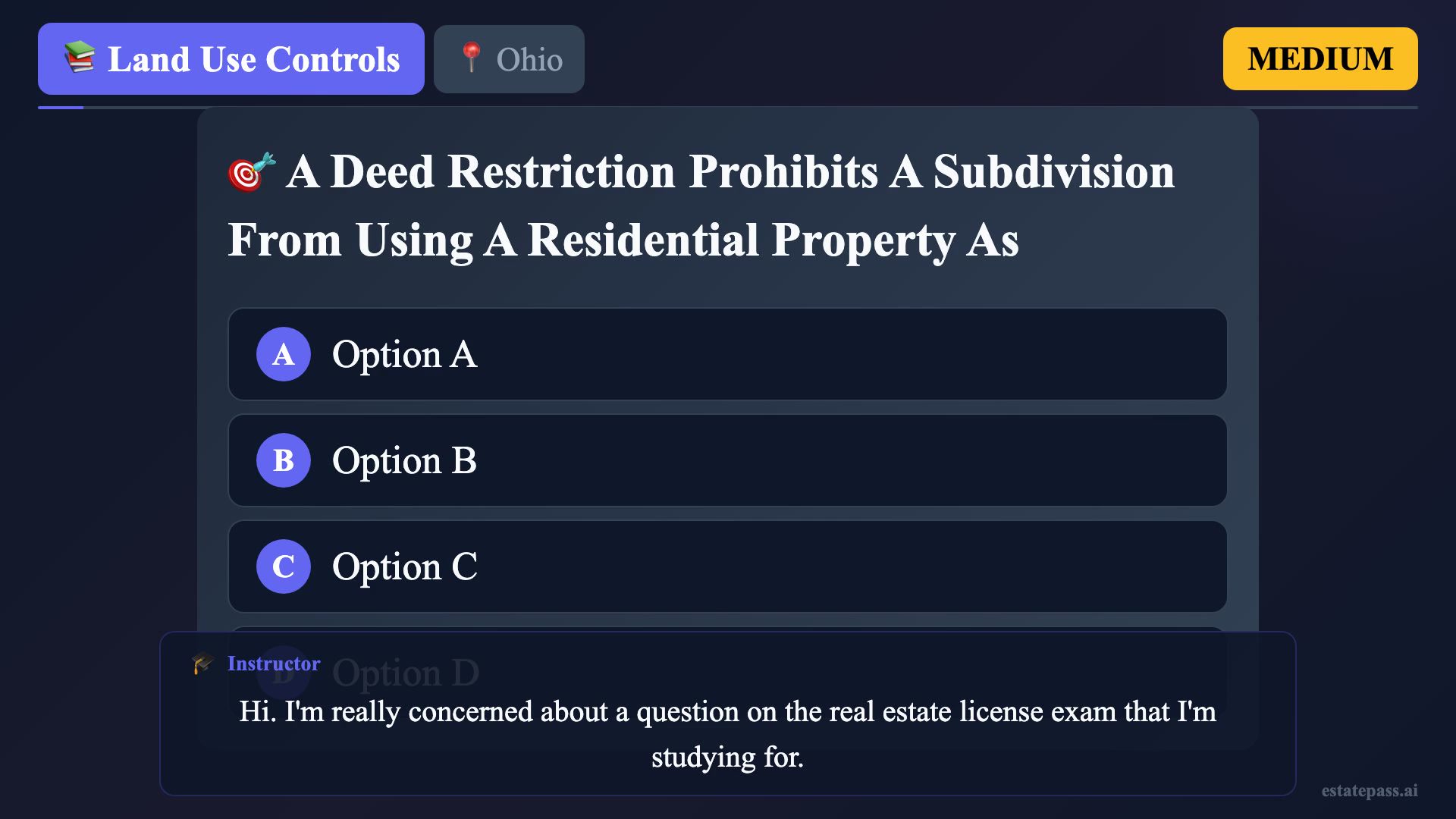
A deed restriction prohibits a subdivision from using a residential property as a business. A buyer interested in purchasing a property in the subdivision tells their broker they intend to use one room of their house as a dog grooming service. Can the buyer do so?
2:24 • 0 views
Ready to Ace Your Real Estate Exam?
Access 2,000+ free video lessons covering all 11 exam topics.