
In Ohio, dual agency requires:
Question & Answer
Review the question and all answer choices
Verbal consent
Verbal consent is insufficient under Ohio law because it creates no verifiable record and does not satisfy the statutory written consent requirement of ORC §4735.71; verbal agreements in agency relationships are notoriously difficult to prove and offer consumers little legal protection.
Written informed consent from both parties
Only seller consent
Requiring only seller consent ignores the buyer's equal right to know that their agent is also representing the opposing party; dual agency affects both parties' representation equally, so Ohio law protects both by requiring consent from each.
No disclosure
No disclosure would be a serious violation of Ohio license law and would expose the licensee to disciplinary action, license revocation, and potential civil liability; disclosure is the foundational consumer protection mechanism in dual agency situations.
Why is this correct?
Ohio Revised Code §4735.71 explicitly requires that a licensee acting as a dual agent obtain written informed consent from both the buyer and the seller prior to acting in that capacity. The written requirement creates a verifiable record that both parties were properly disclosed to and voluntarily agreed, which protects the licensee from future disputes and protects consumers from uninformed waivers of their rights.
Continue Learning
Explore this topic in different formats
More Agency Law Videos
Continue learning with related video lessons
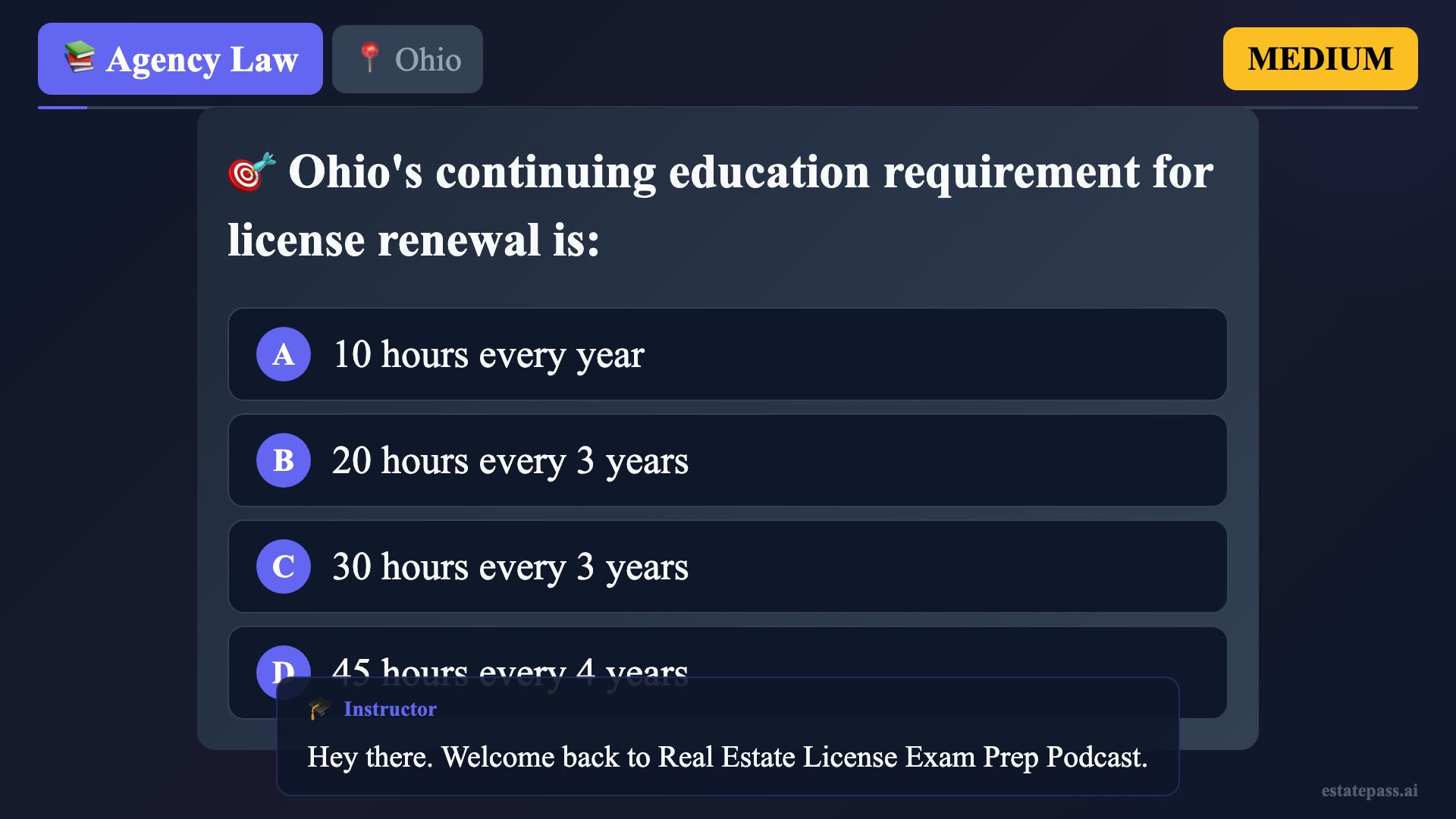
Ohio's continuing education requirement for license renewal is:
2:14 • 0 views
Ohio real estate licensees are regulated by the:
2:51 • 0 views
A seller's agent in Texas owes which duty to buyers?
2:47 • 0 views
South Dakota requires how many hours of pre-license education?
3:19 • 0 views
Which Illinois agency fiduciary duty survives beyond the end of an agency relationship?
2:17 • 0 views
Ready to Ace Your Real Estate Exam?
Access 2,000+ free video lessons covering all 11 exam topics.