
In Massachusetts, dual agency requires:
Question & Answer
Review the question and all answer choices
No consent needed
Dual agency always requires consent in Massachusetts. Without consent, the broker would be violating fiduciary duties to both parties, as they cannot fully represent conflicting interests simultaneously.
Written informed consent from both parties
Only verbal consent
Verbal consent is insufficient in Massachusetts. The law requires written documentation to ensure both parties understand the nature of dual agency and the potential conflicts involved.
Broker approval only
Broker approval alone is insufficient. Massachusetts law requires consent from both the buyer and seller, not just the broker's internal approval.
Why is this correct?
Massachusetts law specifically requires written informed consent from both parties in dual agency situations. This documentation protects all parties by creating a clear record that clients understand and agree to the potential conflicts of interest.
Continue Learning
Explore this topic in different formats
More Agency Law Videos
Continue learning with related video lessons
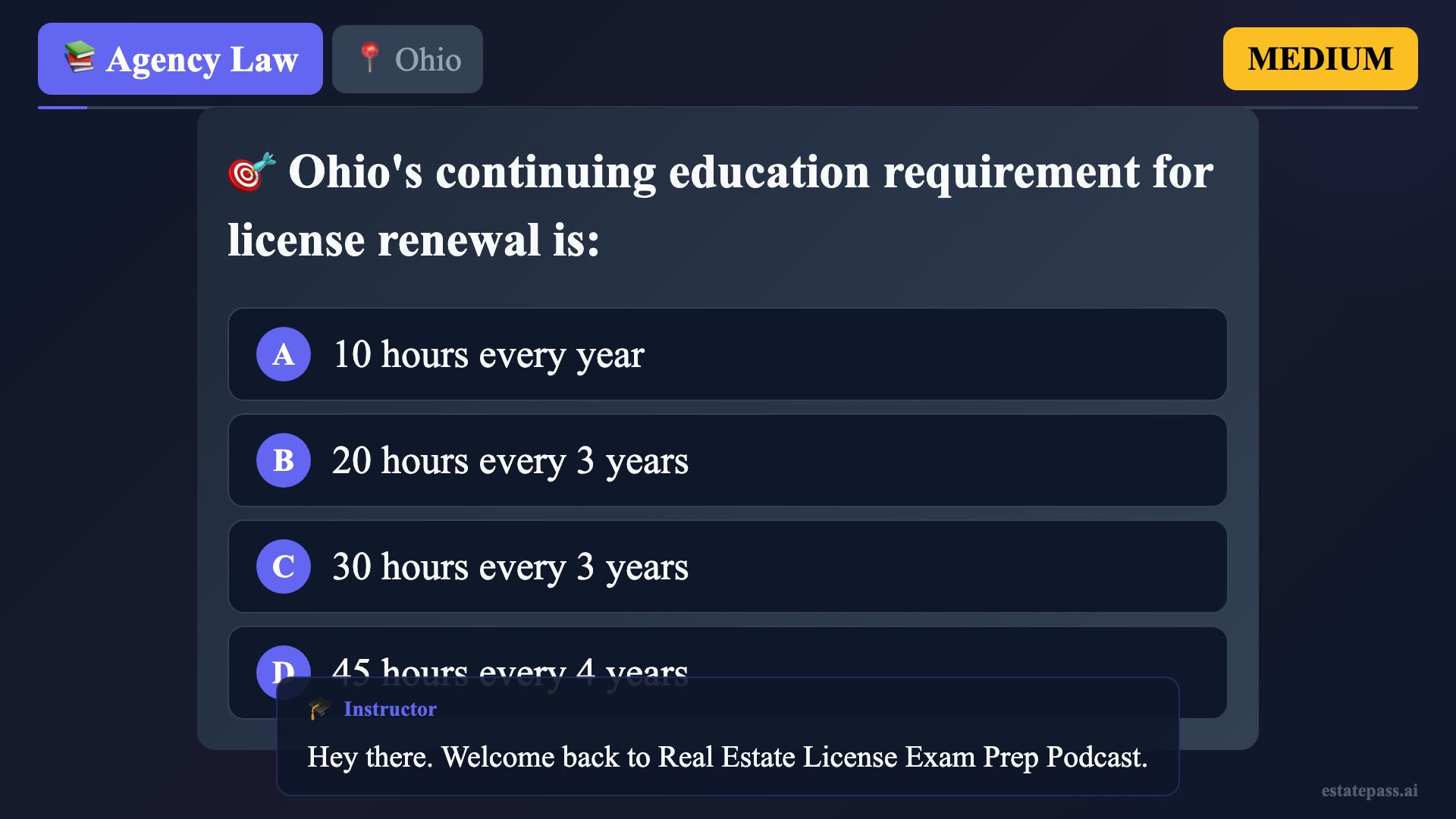
Ohio's continuing education requirement for license renewal is:
2:14 • 0 views
Ohio real estate licensees are regulated by the:
2:51 • 0 views
A seller's agent in Texas owes which duty to buyers?
2:47 • 0 views
South Dakota requires how many hours of pre-license education?
3:19 • 0 views
Which Illinois agency fiduciary duty survives beyond the end of an agency relationship?
2:17 • 0 views
Ready to Ace Your Real Estate Exam?
Access 2,000+ free video lessons covering all 11 exam topics.