
The return of land to the grantor or grant- or’s heirs when the grant is over is BEST described as
Question & Answer
Review the question and all answer choices
remainder.
A remainder is incorrect because it represents a future interest given to a third party (someone other than the grantor) that takes effect after a prior estate terminates. Remainders don't return to the grantor but pass to someone else.
reversion.
kickback.
A kickback is an illegal payment or rebate made in return for business referrals, which has no relation to property ownership interests or return of property to the grantor.
surrender.
Surrender refers to the voluntary relinquishment of a leasehold estate by the tenant to the landlord before the lease term expires, not the automatic return of property to the grantor when a grant ends.
Why is this correct?
Reversion is the correct answer because it specifically describes the return of property to the grantor when a lesser estate (like a life estate) ends. This occurs automatically by operation of law when the granted estate terminates, without requiring additional action.
Continue Learning
Explore this topic in different formats
More Real Estate Math Videos
Continue learning with related video lessons
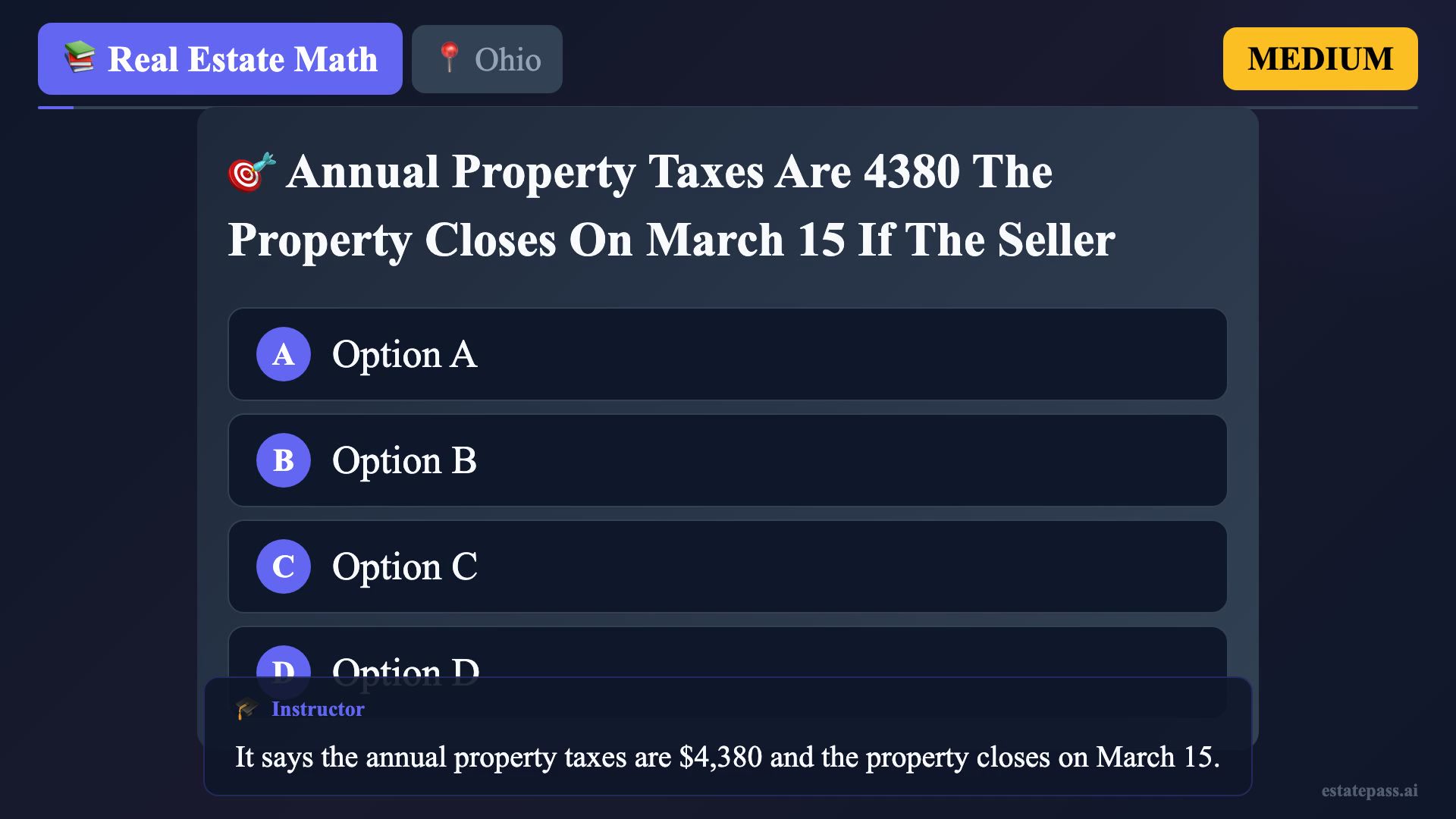
Annual property taxes are $4,380. The property closes on March 15. If the seller has NOT paid taxes for the current year, how much does the seller owe at closing? (Use 365 days)
3:08 • 0 views
A property sells for $325,000. If the commission is 6%, split equally between listing and selling brokers, what does each broker receive?
2:42 • 0 views
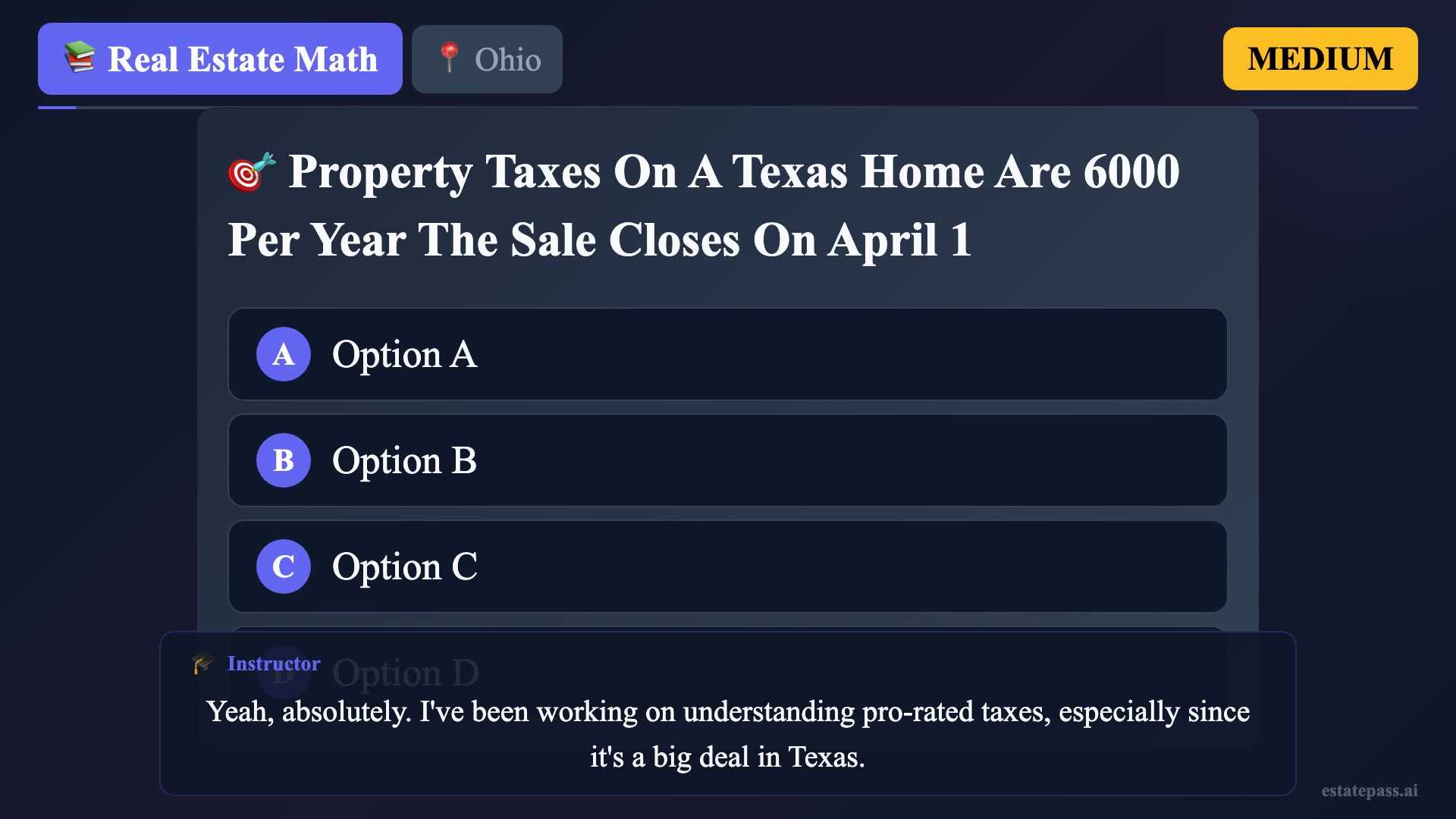
Property taxes on a Texas home are $6,000 per year. The sale closes on April 1. How much does the seller owe for prorated taxes?
2:56 • 0 views
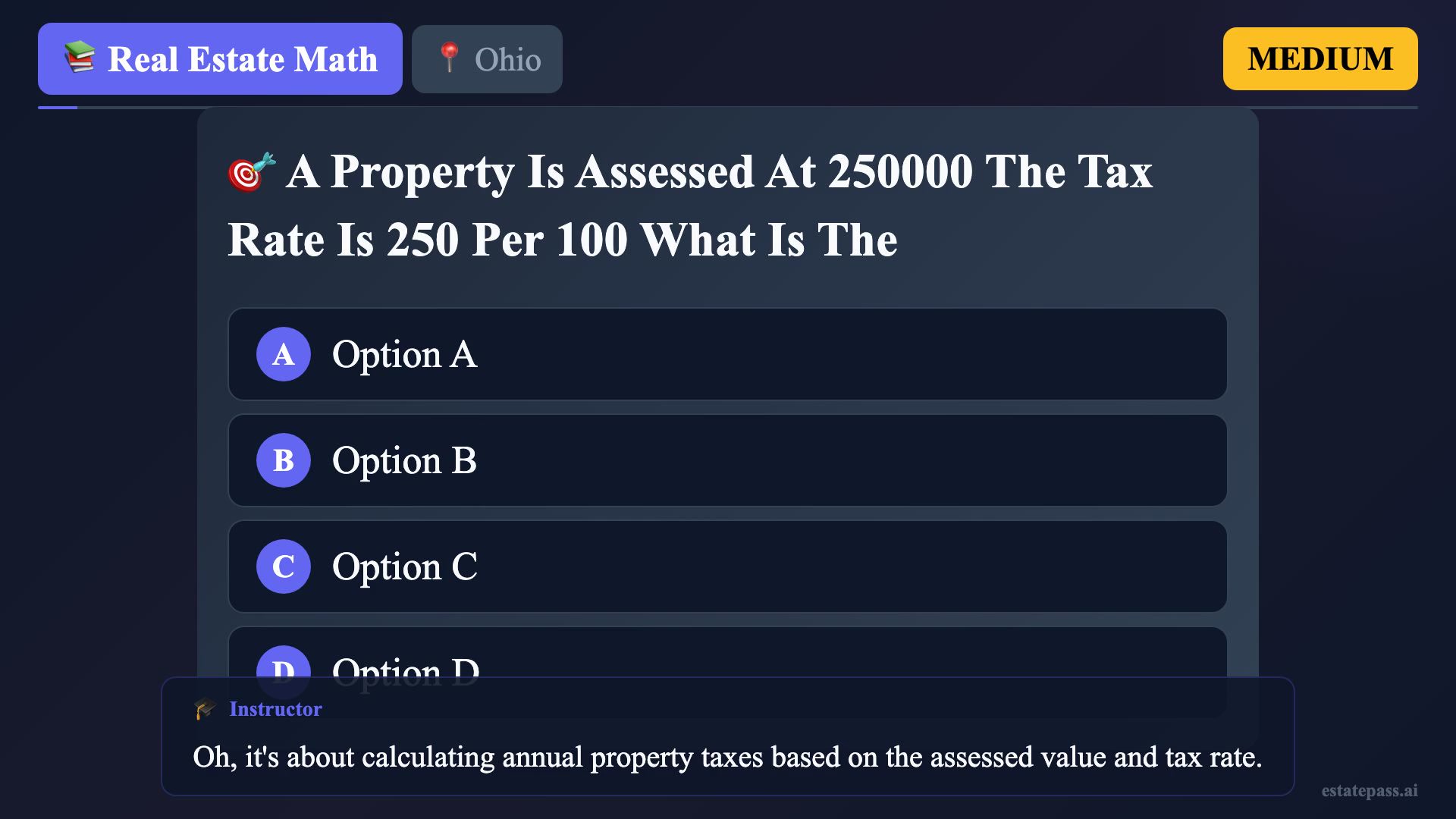
A property is assessed at $250,000. The tax rate is $2.50 per $100. What is the annual tax?
2:50 • 0 views

Any individual may contact the Real Estate Commissioner to:
3:00 • 0 views
Ready to Ace Your Real Estate Exam?
Access 2,000+ free video lessons covering all 11 exam topics.