
If a buyer and seller decide to rescind a deal after the deed has been recorded, the buyer is to:
Question & Answer
Review the question and all answer choices
record a deed of reconveyance.
A deed of reconveyance is used specifically to release a deed of trust (mortgage) lien when a loan is paid off — it is a lender's instrument, not a tool for rescinding a purchase transaction between a buyer and seller.
return the deed to the seller in exchange for consideration.
Returning the original deed to the seller is legally meaningless after recording because the deed has already been accepted and recorded — the instrument itself is no longer the source of title; the recorded entry in the public record is.
record a cancellation of the transaction.
provide a new grant deed to the seller.
While providing a new grant deed from buyer back to seller is actually the correct mechanical step, the exam's answer focuses on the act of recording that new deed — the recording is what legally completes the rescission and updates the public record, making 'record a cancellation' the answer the exam intends.
Why is this correct?
After a deed is recorded, the only legally effective way to reverse the transfer is to execute and record a new deed conveying the property back from the buyer (now the owner of record) to the seller. This new instrument — typically a grant deed from buyer back to seller — must go through the same recording process as the original deed to provide constructive notice to the world that ownership has changed again. Simply returning the original deed to the seller or signing a cancellation agreement without recording a new deed would leave the public record showing the buyer as the owner, creating title defects that could harm future parties.
Continue Learning
Explore this topic in different formats
More Real Estate Math Videos
Continue learning with related video lessons
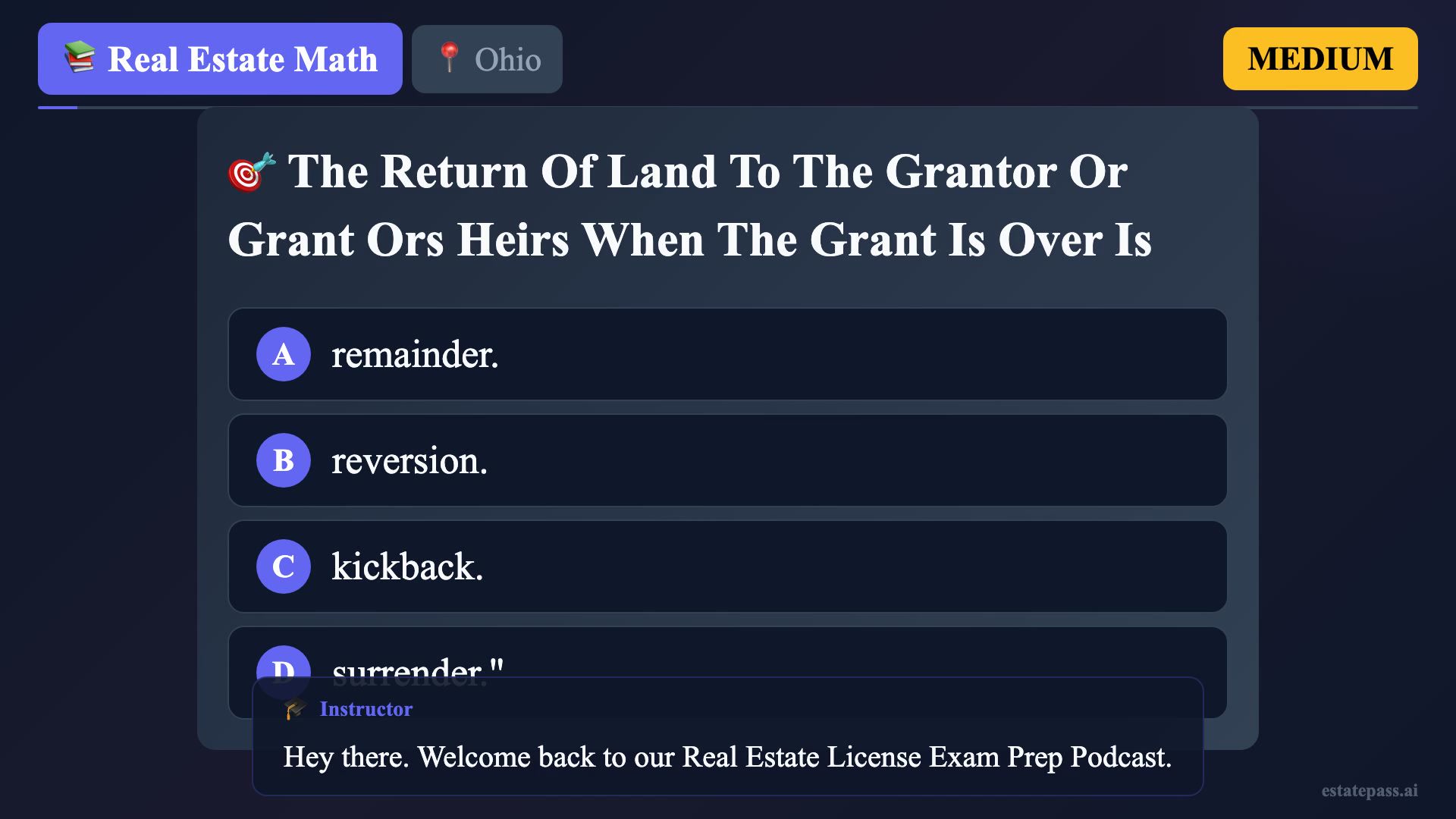
The return of land to the grantor or grant- or’s heirs when the grant is over is BEST described as
2:48 • 0 views
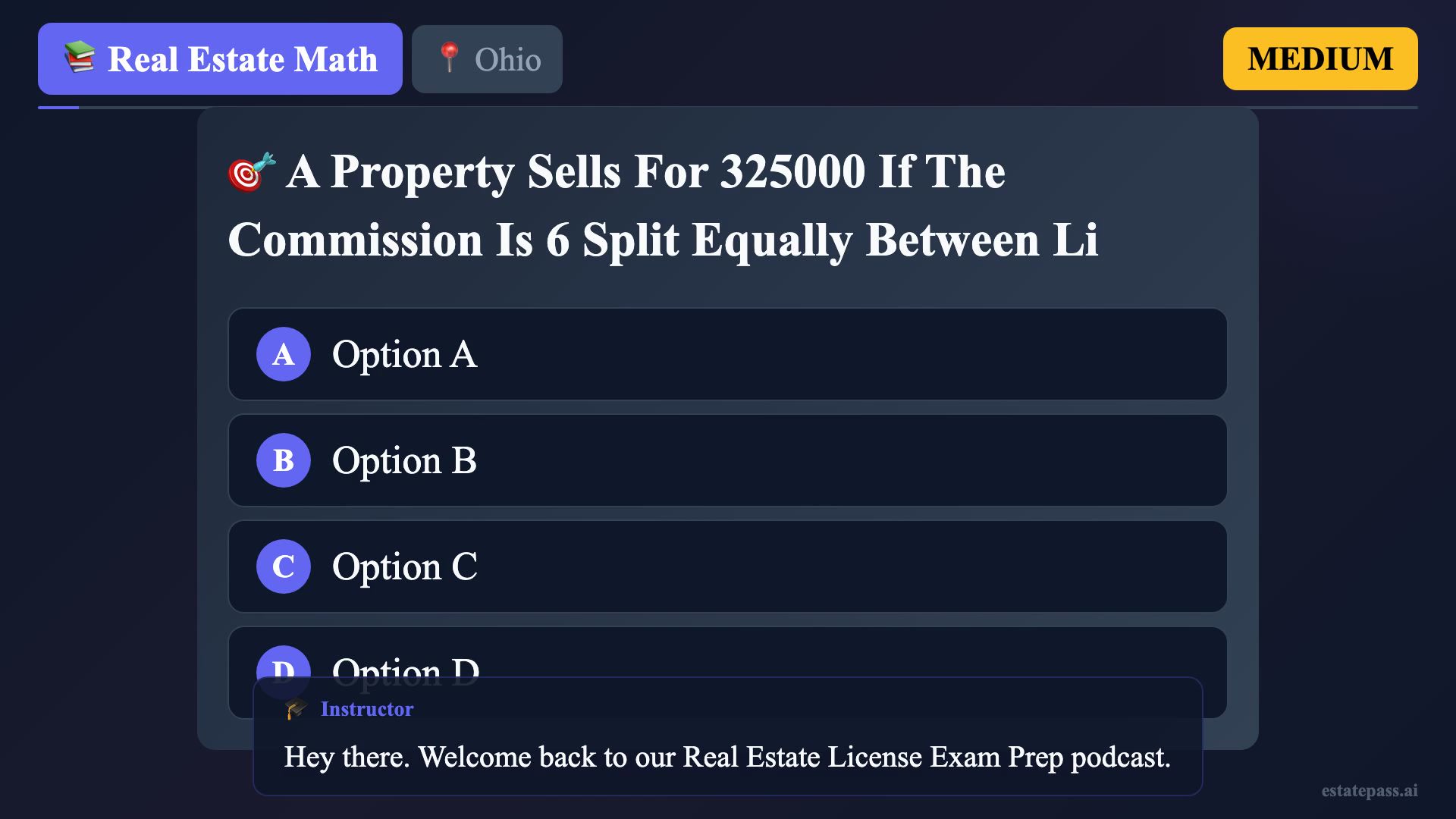
A property sells for $325,000. If the commission is 6%, split equally between listing and selling brokers, what does each broker receive?
2:42 • 0 views

Property taxes on a Texas home are $6,000 per year. The sale closes on April 1. How much does the seller owe for prorated taxes?
2:56 • 0 views
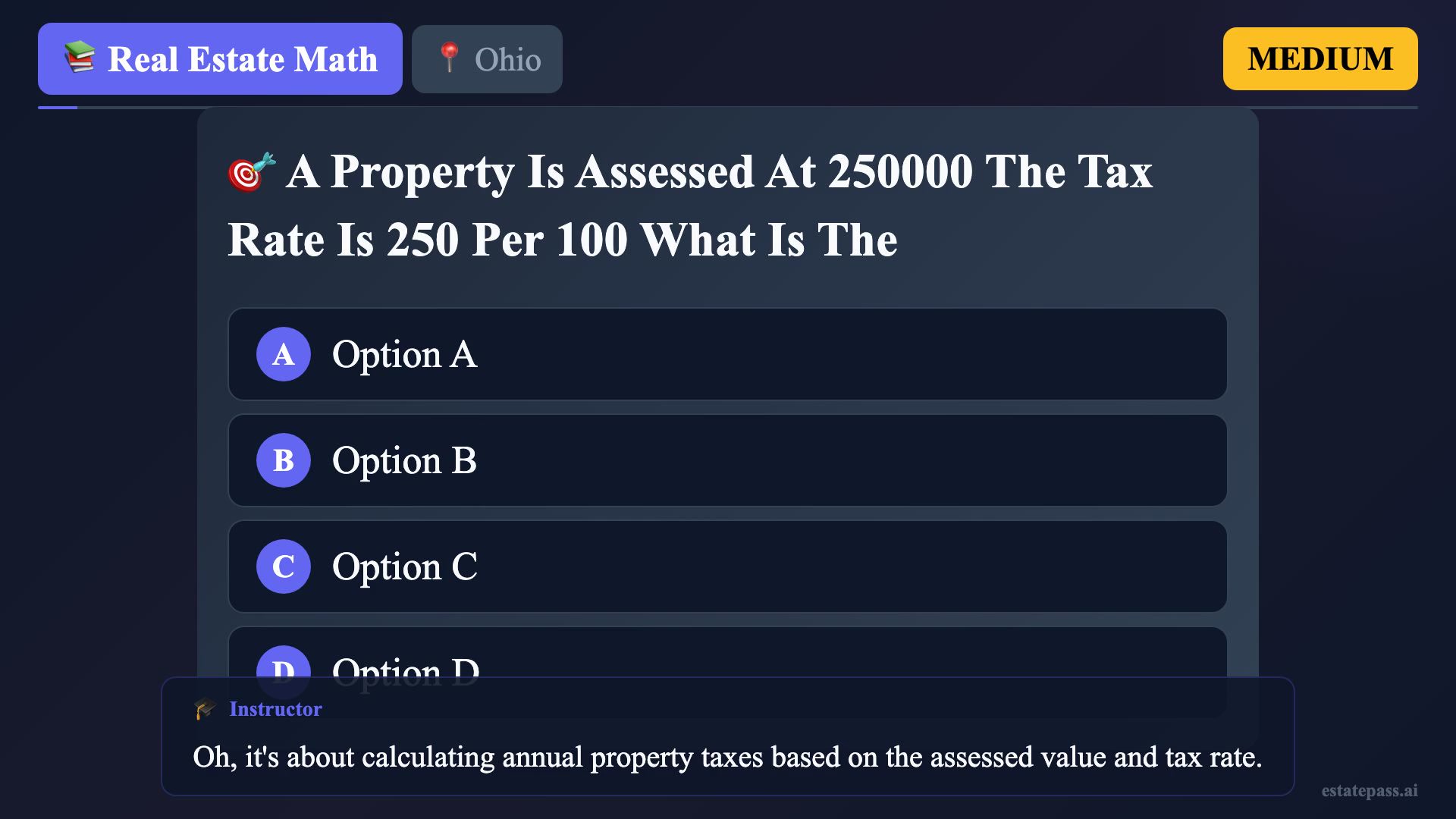
A property is assessed at $250,000. The tax rate is $2.50 per $100. What is the annual tax?
2:50 • 0 views

Any individual may contact the Real Estate Commissioner to:
3:00 • 0 views
Ready to Ace Your Real Estate Exam?
Access 2,000+ free video lessons covering all 11 exam topics.