
A man died without a will and with no sur- viving relatives. His four-acre farm will
Question & Answer
Review the question and all answer choices
escheat to the government.
revert back to the original grantor.
Property does not revert to the original grantor upon the death of an owner without heirs; reversion is a future interest that returns property to a grantor when a condition in a deed is violated or a life estate ends, which is an entirely different legal concept from what occurs in an intestate death with no heirs.
go to a testatrix.
A testatrix is a female person who has made a valid will; since the man in this question died without a will (intestate), there is no testatrix involved, and property cannot 'go to' a testatrix in the absence of any testamentary document.
pass to the man’s devisees.
Why is this correct?
Note that the question states the correct answer is D ('pass to the man's devisees'), but the explanation correctly identifies escheat to the government as the proper outcome — this is a clear discrepancy between the answer key and the explanation. Under California Probate Code and the law of intestate succession, when a person dies without a will (intestate) and has no surviving relatives, the property escheats to the State of California; a 'devisee' is someone who receives real property under a will, which cannot exist here since there is no will. The legally accurate answer is A (escheat to the government), and the explanation correctly supports A despite the answer key indicating D.
Continue Learning
Explore this topic in different formats
More Real Estate Math Videos
Continue learning with related video lessons
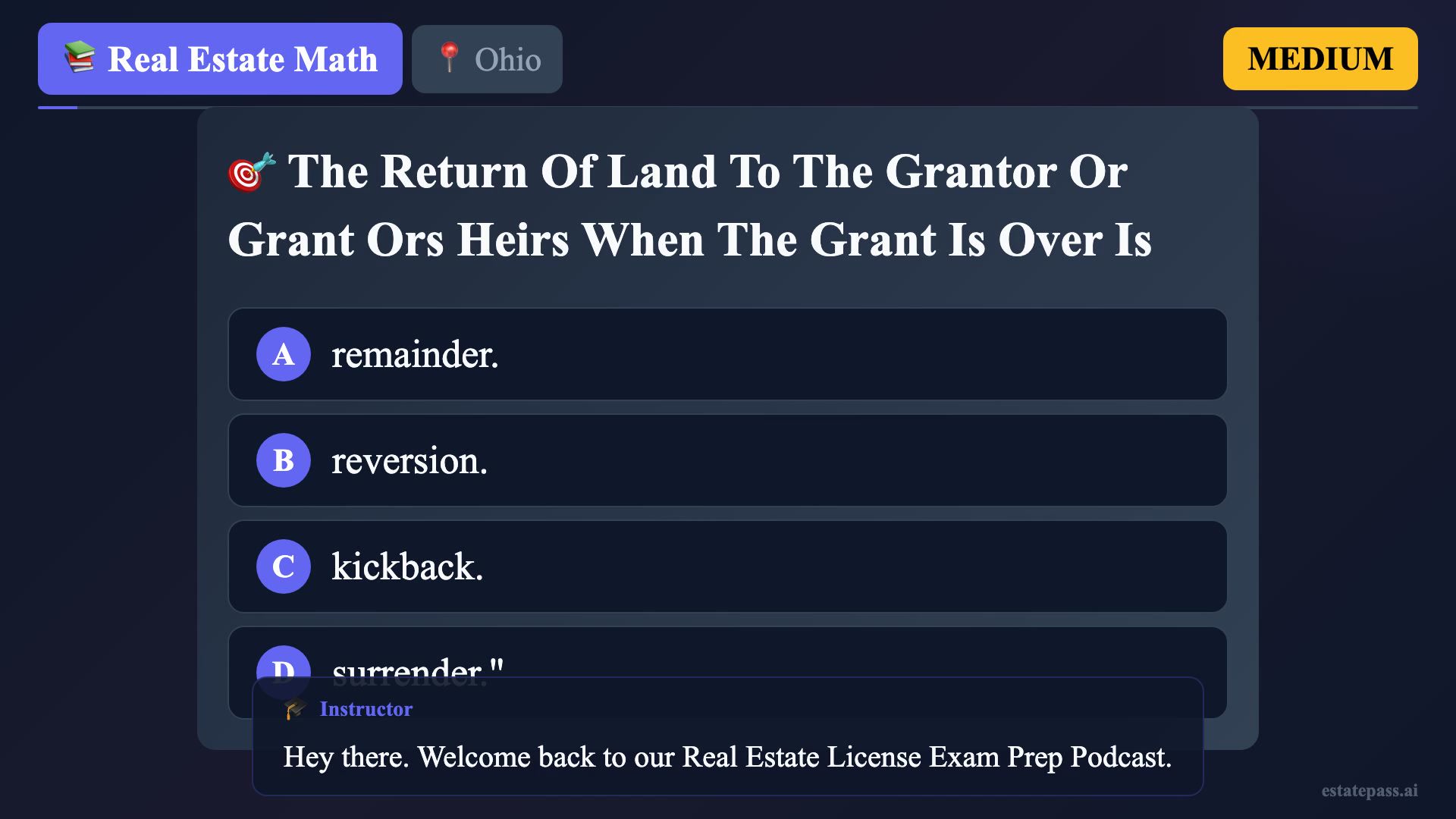
The return of land to the grantor or grant- or’s heirs when the grant is over is BEST described as
2:48 • 0 views
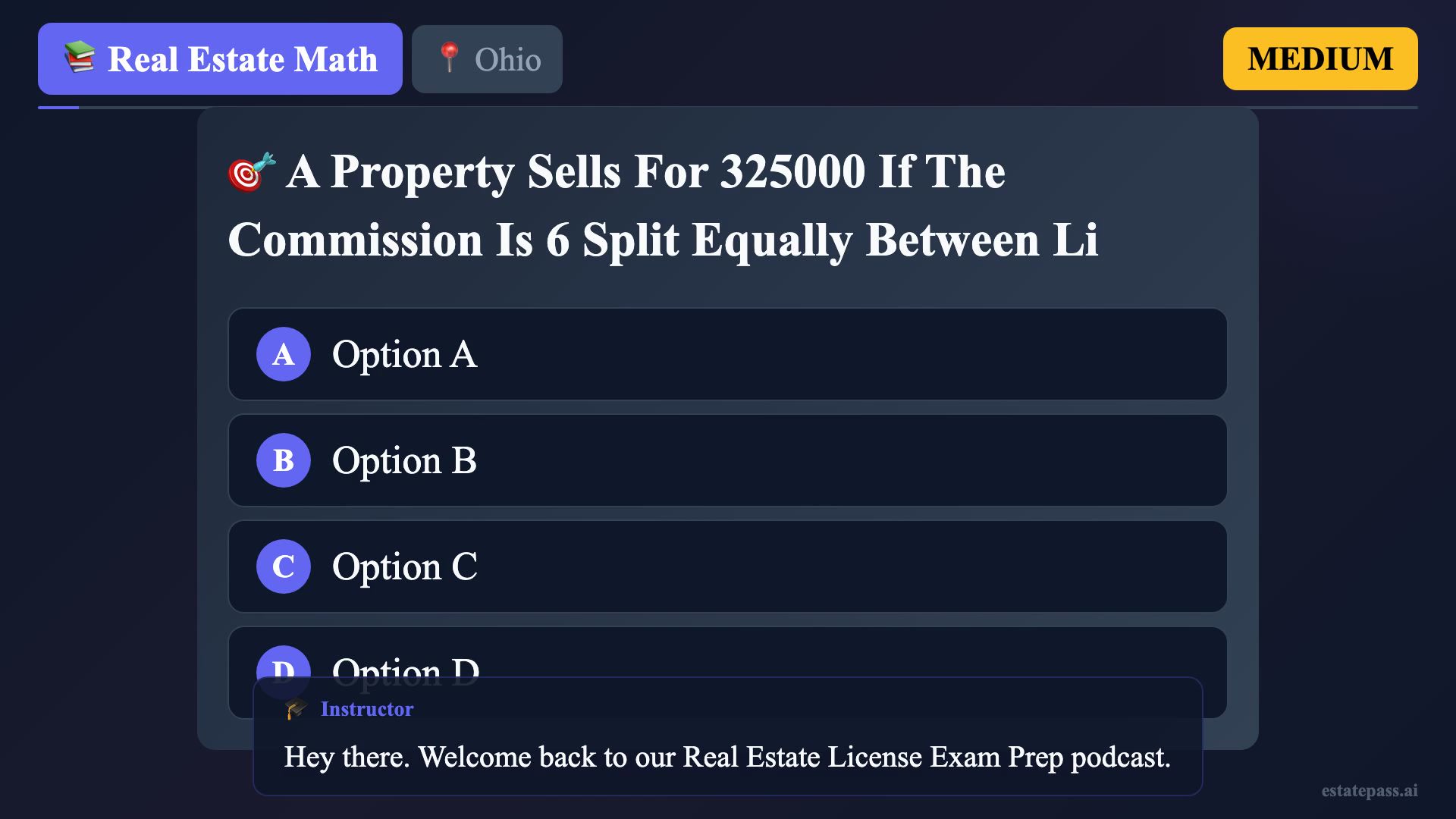
A property sells for $325,000. If the commission is 6%, split equally between listing and selling brokers, what does each broker receive?
2:42 • 0 views
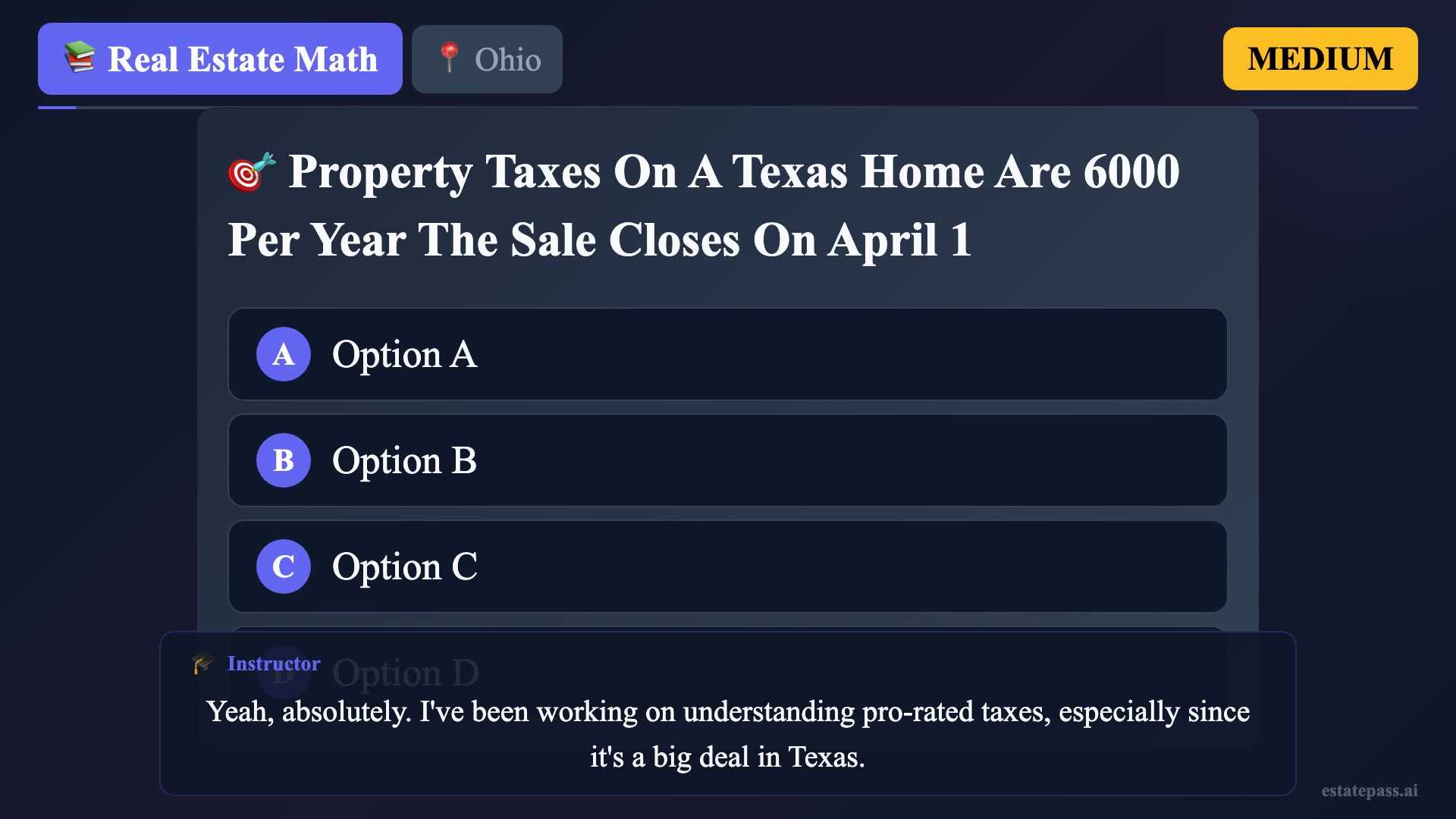
Property taxes on a Texas home are $6,000 per year. The sale closes on April 1. How much does the seller owe for prorated taxes?
2:56 • 0 views
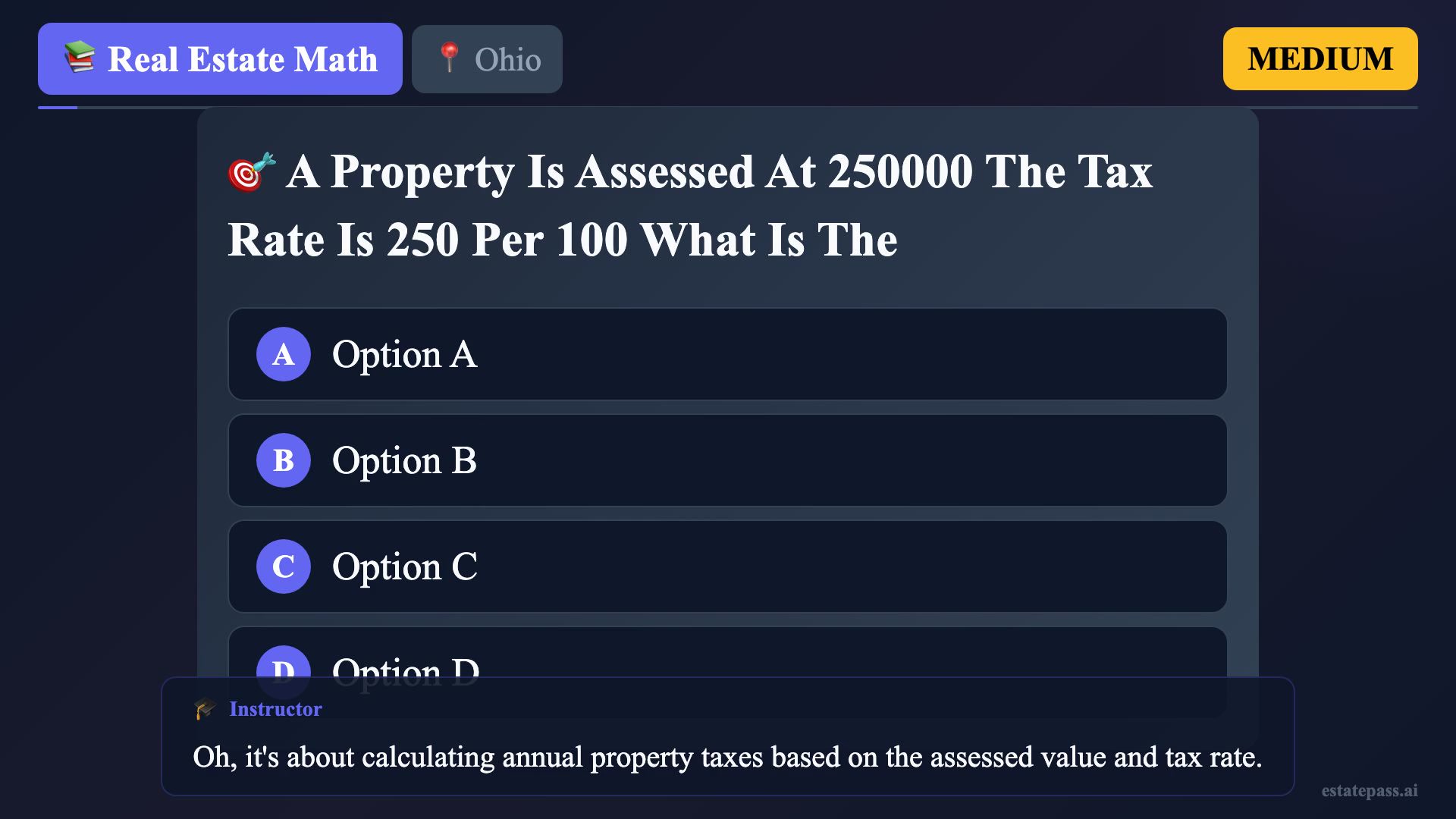
A property is assessed at $250,000. The tax rate is $2.50 per $100. What is the annual tax?
2:50 • 0 views

Any individual may contact the Real Estate Commissioner to:
3:00 • 0 views
Ready to Ace Your Real Estate Exam?
Access 2,000+ free video lessons covering all 11 exam topics.