
A deed in Virginia must be:
Question & Answer
Review the question and all answer choices
Only signed
A deed that is only signed but not acknowledged and recorded is legally incomplete for purposes of protecting the grantee against third-party claims; while it may create some rights between the parties, it fails to provide the constructive notice that recording gives to the world at large.
Signed, acknowledged, and recorded to protect against third parties
Approved by the state
Virginia does not require state government approval for the validity or recording of a deed; deeds are recorded at the local circuit court clerk's office and do not pass through any state-level approval process, making this option factually incorrect.
Witnessed by two people
While some states and some specific instruments (such as wills) require witnesses, Virginia does not require two witnesses for a deed to be valid and recordable; the acknowledgment before a notary public serves the authentication function that witnesses might serve in other contexts.
Why is this correct?
Option B is correct because Virginia Code § 55.1-300 et seq. establishes that a deed must be signed by the grantor, acknowledged before a notary or other authorized officer, and recorded in the clerk's office of the circuit court where the property is located in order to be effective against third parties. A deed that is signed but not acknowledged and recorded is valid between the immediate parties but provides no protection against a subsequent purchaser who records their deed first without notice of the prior unrecorded transfer.
Continue Learning
Explore this topic in different formats
More Property Ownership Videos
Continue learning with related video lessons
Arizona is a community property state. This means:
2:25 • 0 views
Illinois recognizes which form of marital property ownership?
3:22 • 0 views
In Illinois, which deed provides the greatest protection to the buyer?
3:05 • 0 views
In North Carolina, a deed must be:
2:21 • 0 views
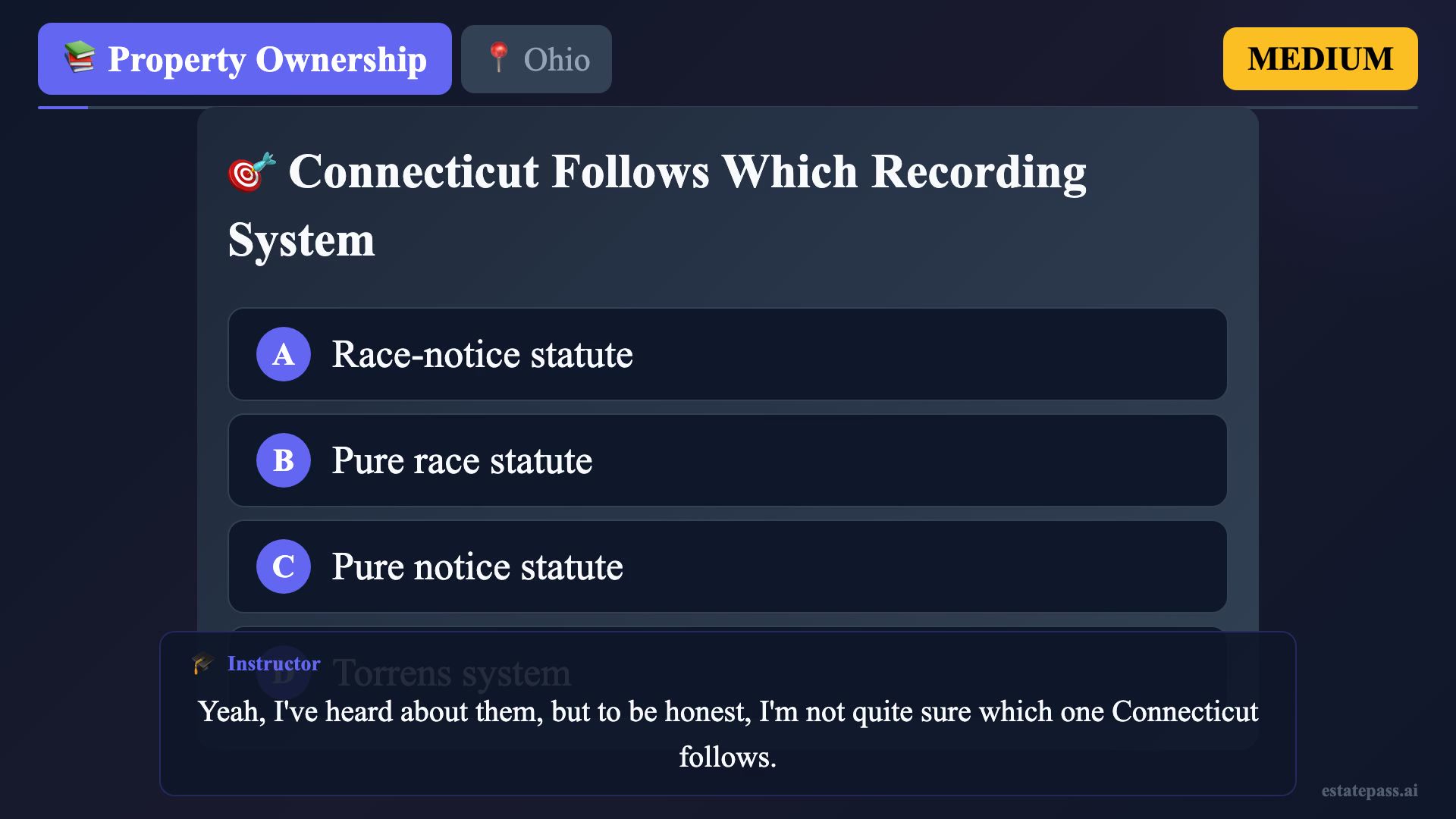
Connecticut follows which recording system?
2:14 • 0 views
Ready to Ace Your Real Estate Exam?
Access 2,000+ free video lessons covering all 11 exam topics.