
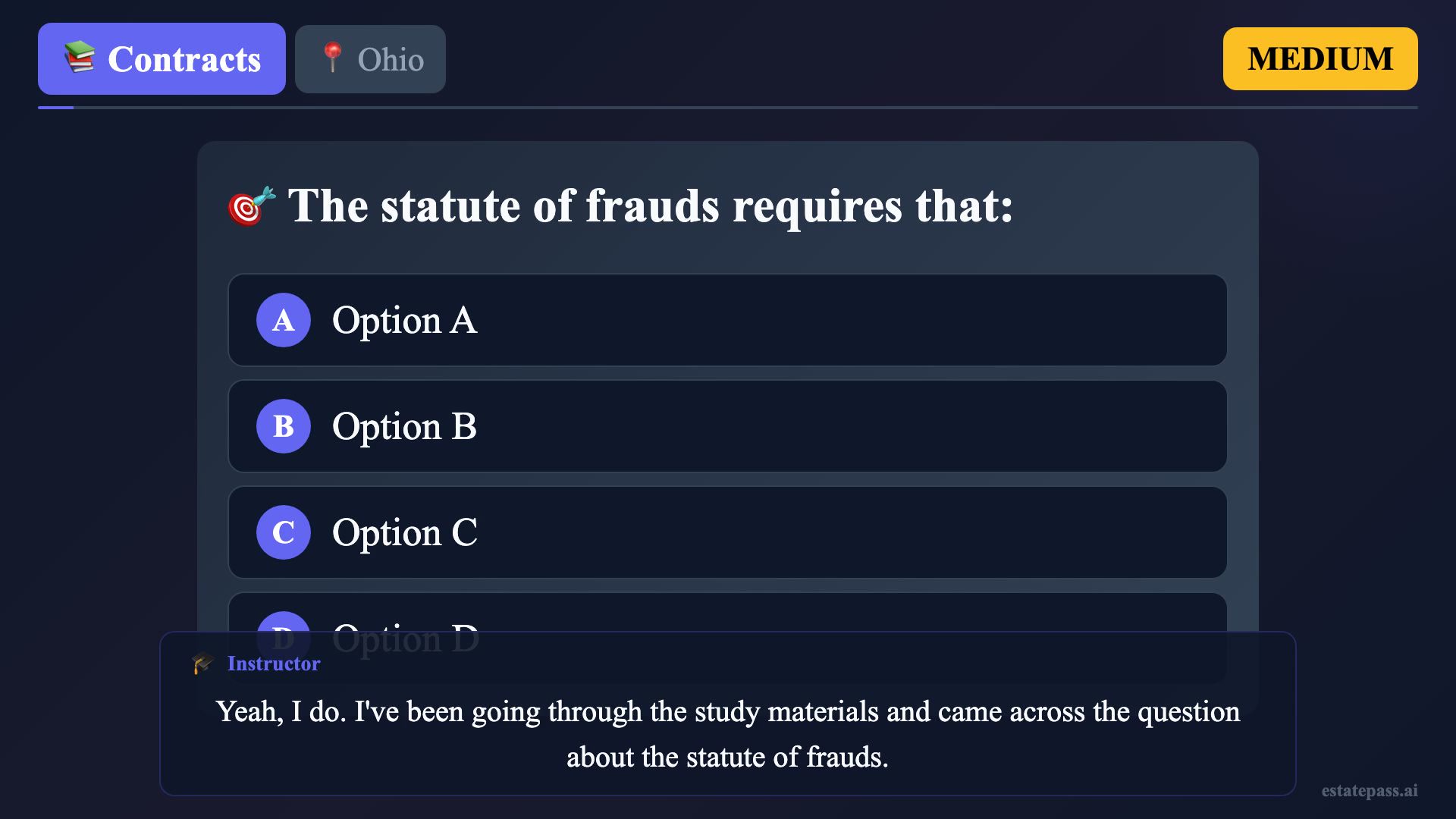
In Virginia, the Statute of Frauds requires real estate contracts to be:
Question & Answer
Review the question and all answer choices
Verbal
Verbal contracts for real estate are generally unenforceable under the Statute of Frauds. This misconception likely stems from confusion with personal property contracts, which can sometimes be oral if the value is below certain thresholds.
In writing and signed
Notarized
While notarization is often required for deeds and some real estate documents, it is not a requirement of the Statute of Frauds for basic contracts to be enforceable. Notarization provides additional authentication but is not the minimum standard.
Witnessed
Witnessing contracts may provide evidence of the agreement's existence but is not a requirement of the Statute of Frauds. Some contracts may benefit from witnesses, but it is not the minimum legal requirement for enforceability.
Why is this correct?
Virginia's Statute of Frauds requires real estate contracts to be in writing and signed to be enforceable. This meets the minimum legal requirement for creating a valid contract for the sale of real property, distinguishing it from personal property contracts which may sometimes be oral.
Continue Learning
Explore this topic in different formats
More Contracts Videos
Continue learning with related video lessons
Ready to Ace Your Real Estate Exam?
Access 2,000+ free video lessons covering all 11 exam topics.