
When a dual agency is established in a targeted sales transaction, the broker and their agents may not pass on any information from one party to the other relating to:
Question & Answer
Review the question and all answer choices
the price the buyer may be willing to pay. b. the terms of payment the seller may be willing to accept.
A is incorrect because while the buyer's maximum price is protected information, this option alone is incomplete. Dual agency restrictions apply to both parties' confidential information, not just the buyer's.
the terms of payment the seller may be willing to accept. c. Both a. and b.
B is incorrect because it only addresses the seller's terms while ignoring the buyer's price information. Dual agency limitations protect both parties equally, making this option incomplete.
Both a. and
Neither a. nor b.
D is incorrect because dual agency does impose restrictions on information sharing. The broker cannot freely pass along confidential information between the parties they represent.
Why is this correct?
Answer C is correct because California law prohibits dual agents from disclosing confidential information from either party to the other. Both the buyer's maximum price and the seller's minimum acceptable terms are considered confidential information that could be used to negotiate against the client's best interests.
Continue Learning
Explore this topic in different formats
More Agency Law Videos
Continue learning with related video lessons
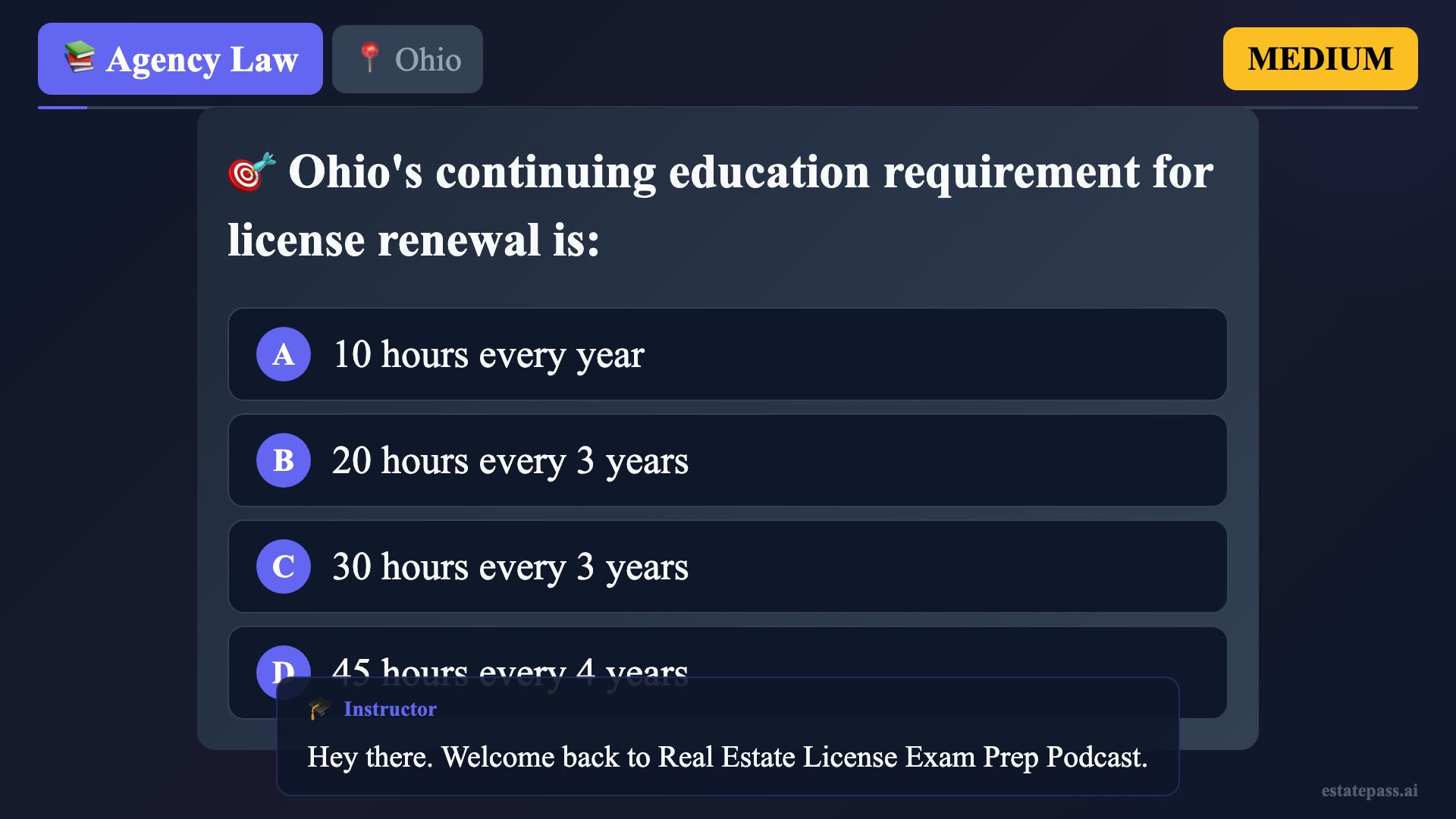
Ohio's continuing education requirement for license renewal is:
2:14 • 0 views
Ohio real estate licensees are regulated by the:
2:51 • 0 views
A seller's agent in Texas owes which duty to buyers?
2:47 • 0 views
South Dakota requires how many hours of pre-license education?
3:19 • 0 views
Which Illinois agency fiduciary duty survives beyond the end of an agency relationship?
2:17 • 0 views
Ready to Ace Your Real Estate Exam?
Access 2,000+ free video lessons covering all 11 exam topics.