Agency LawMEDIUMFREE

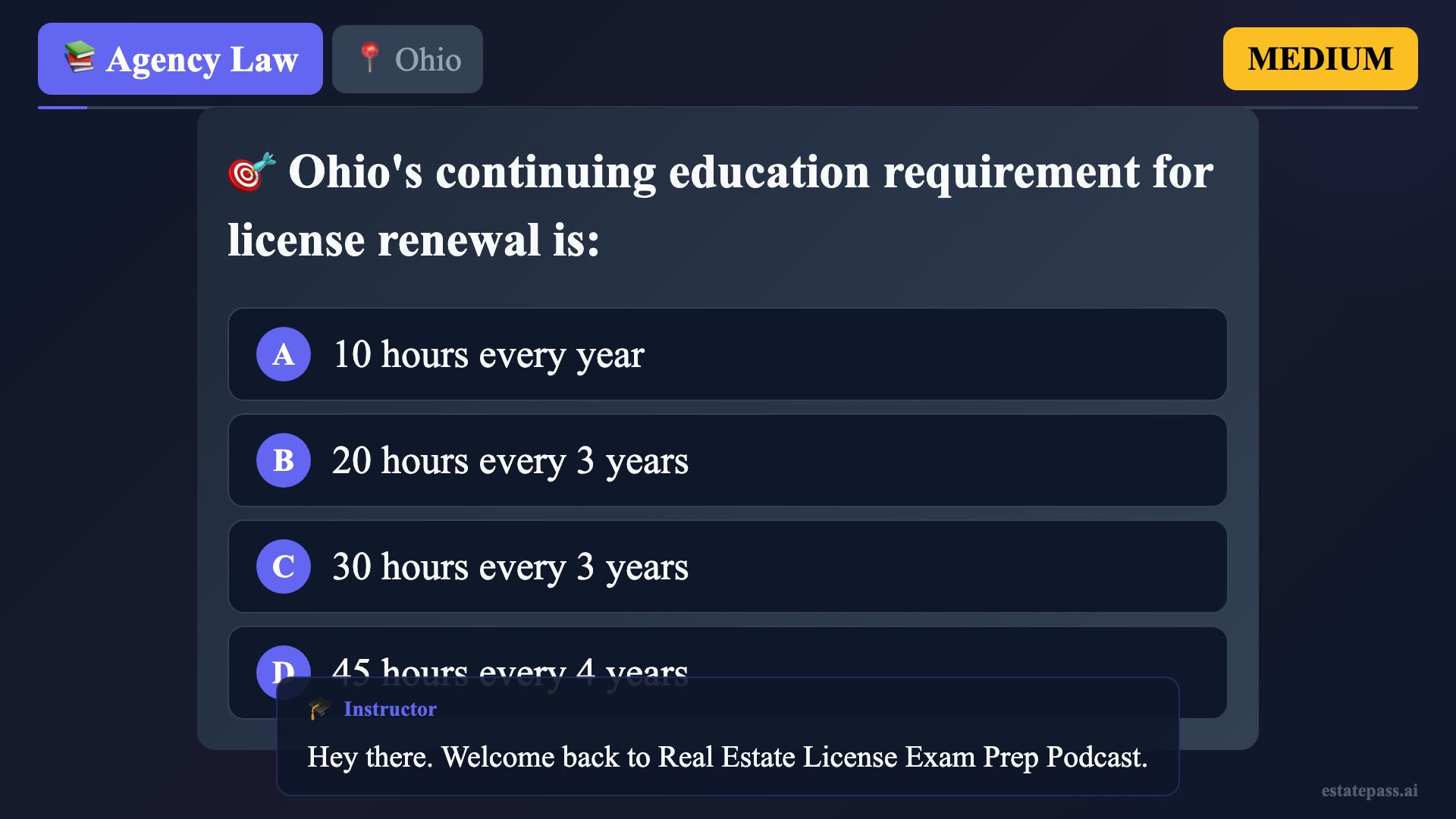
North Carolina's continuing education requirement is:

3-5 min
0 views

Question & Answer

Review the question and all answer choices

A

8 hours annually

Correct Answer
B

12 hours annually during first 2 years, then 8 hours

This option incorrectly suggests a tiered system with higher requirements for the first two years, which doesn't align with North Carolina's consistent annual requirement. Many states do have different requirements for new licensees, but NC does not follow this pattern.

C

24 hours every 2 years

This option describes a biennial cycle (every 2 years) with 24 hours, which is common in many states but not North Carolina. NC requires annual renewal rather than biennial.

D

30 hours every 3 years

This option describes a triennial cycle (every 3 years) with 30 hours, which is not how North Carolina structures its continuing education requirements. The state maintains an annual renewal schedule.

Why is this correct?

CORRECT_ANSWER

Deep Analysis

AI-powered in-depth explanation of this concept

Continuing education requirements are fundamental to real estate practice because they ensure licensees stay current with evolving laws, regulations, and industry best practices. This question specifically tests knowledge of North Carolina's renewal requirements, which is crucial for maintaining licensure. The core concept here is understanding the annual CE obligation versus multi-year cycles. When analyzing the options, we must recognize that North Carolina follows an annual renewal cycle with consistent requirements, unlike some states with tiered systems based on experience years. Option A correctly identifies the 8-hour annual requirement. This question is challenging because other states have different cycles (every 2 or 3 years) or tiered requirements based on experience level, which can confuse test-takers. Understanding CE requirements connects to broader knowledge about state-specific regulations, license renewal processes, and the importance of ongoing professional development in real estate.

Knowledge Background

Essential context and foundational knowledge

Continuing education requirements exist to ensure real estate professionals maintain competence and stay updated with industry changes. North Carolina's Real Estate Commission mandates 8 hours of approved continuing education annually for active license renewal. This includes topics like recent legal updates, ethical practices, and evolving industry standards. The requirement applies to both brokers and brokers-in-charge, with provisional brokers having additional post-licensing requirements during their first three years. This annual requirement helps ensure licensees remain knowledgeable about state-specific laws and regulations that affect their daily practice and protect consumers.

Memory Technique
rhyme

NC requires CE, eight hours yearly, keep your license current, clearly and dearly.

Recite this rhyme when encountering questions about North Carolina's continuing education requirements to remember the 8-hour annual obligation.

Exam Tip

For state-specific continuing education questions, focus first on identifying the state and whether it uses annual, biennial, or triennial renewal cycles. North Carolina is annual with consistent requirements.

Real World Application

How this concept applies in actual real estate practice

Maria is a successful real estate broker in Charlotte with 15 years of experience. As her renewal date approaches in March, she realizes she hasn't completed her continuing education yet. She quickly enrolls in an 8-hour online course covering recent changes in fair housing laws and updated contract forms. After completing the course and passing the final exam, she receives her certificate of completion, which she submits with her renewal application. This annual requirement ensures Maria stays current with regulations, even with her extensive experience, ultimately protecting both her clients and her license.

Ready to Ace Your Real Estate Exam?

Access 2,000+ free video lessons covering all 11 exam topics.