
In Pennsylvania, earnest money deposits must be placed in escrow within:
Question & Answer
Review the question and all answer choices
The end of the next business day
24 hours
While '24 hours' sounds precise and protective, it is not the standard Pennsylvania uses; the state's regulation specifically references 'the end of the next business day,' which accounts for weekends and holidays and is therefore a more practical and legally accurate standard.
A reasonable time as agreed in writing
A 'reasonable time as agreed in writing' is a contractual flexibility standard used in some other contexts, but Pennsylvania law does not leave the escrow deposit timeline to the parties' discretion — it imposes a mandatory statutory deadline to ensure uniform consumer protection regardless of what the parties might negotiate.
5 business days
Five business days is far too long under Pennsylvania law and would create an unacceptable window during which the funds are unprotected; this timeframe is sometimes confused with other states' requirements or with certain lender-related deadlines, but it does not apply to earnest money escrow deposits in Pennsylvania.
Why is this correct?
Under Pennsylvania's Real Estate Seller Disclosure Law and the regulations promulgated by the State Real Estate Commission (49 Pa. Code § 35.324), a licensee who receives earnest money must deposit it into an escrow account by the end of the next business day following the execution of the agreement of sale. This specific timeframe is codified to create an unambiguous deadline that protects both buyer and seller from any delay in securing the deposit.
Continue Learning
Explore this topic in different formats
More Agency Law Videos
Continue learning with related video lessons
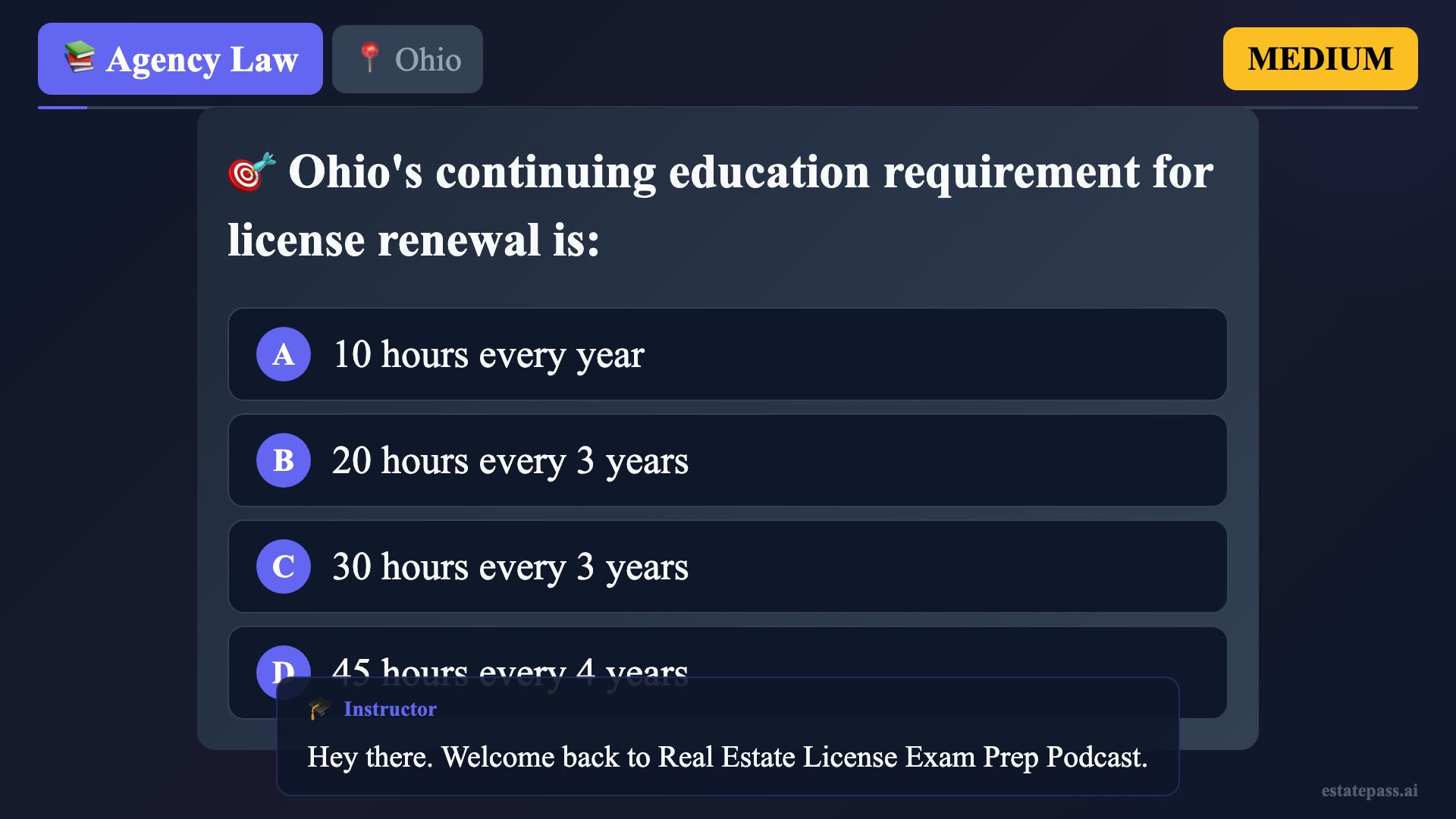
Ohio's continuing education requirement for license renewal is:
2:14 • 0 views
Ohio real estate licensees are regulated by the:
2:51 • 0 views
A seller's agent in Texas owes which duty to buyers?
2:47 • 0 views
South Dakota requires how many hours of pre-license education?
3:19 • 0 views
Which Illinois agency fiduciary duty survives beyond the end of an agency relationship?
2:17 • 0 views
Ready to Ace Your Real Estate Exam?
Access 2,000+ free video lessons covering all 11 exam topics.