
In Illinois, a broker acting as a dual agent must:
Question & Answer
Review the question and all answer choices
Only represent the seller
Representing only the seller would make the broker a seller's agent, not a dual agent — this option contradicts the very definition of dual agency, which requires simultaneous representation of both parties.
Obtain written consent from both parties
Refuse to complete the transaction
Illinois law does not require a broker to refuse the transaction simply because dual agency exists; instead, the law provides a legal pathway for dual agency through written consent, making refusal unnecessary and commercially impractical.
Only disclose to the buyer
Disclosing only to the buyer is insufficient and violates Illinois law; both the buyer and the seller must receive disclosure and provide written consent, since both parties are equally affected by the broker's divided loyalty.
Why is this correct?
Under 225 ILCS 454/15-45, Illinois explicitly mandates that a licensee acting as a dual agent must obtain prior written informed consent from both the buyer and the seller before proceeding with the transaction. This written consent requirement protects both parties by ensuring they knowingly waive the right to undivided representation and understand the limitations the dual agency places on the broker's ability to advocate fully for either side.
Continue Learning
Explore this topic in different formats
More Agency Law Videos
Continue learning with related video lessons
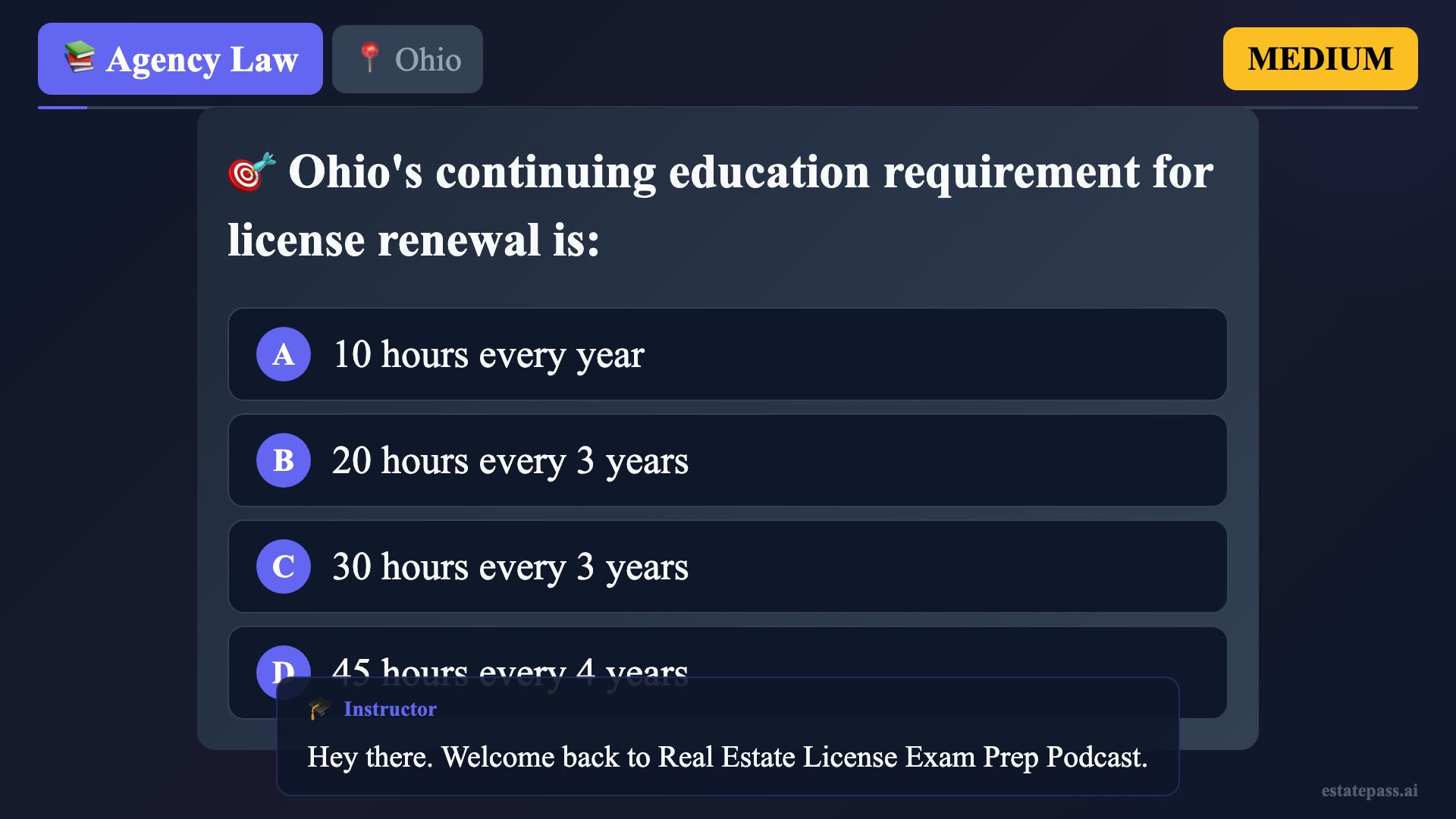
Ohio's continuing education requirement for license renewal is:
2:14 • 0 views
Ohio real estate licensees are regulated by the:
2:51 • 0 views
A seller's agent in Texas owes which duty to buyers?
2:47 • 0 views
South Dakota requires how many hours of pre-license education?
3:19 • 0 views
Which Illinois agency fiduciary duty survives beyond the end of an agency relationship?
2:17 • 0 views
Ready to Ace Your Real Estate Exam?
Access 2,000+ free video lessons covering all 11 exam topics.