
A broker who represents both the buyer and seller in the same transaction without the knowledge and consent of both parties is practicing:
Question & Answer
Review the question and all answer choices
Dual agency
A is incorrect because dual agency requires the knowledge and consent of both parties, which is explicitly absent in this scenario. Without this consent, the situation cannot be legally classified as dual agency under California law.
Undisclosed dual agency
Single agency
C is incorrect because single agency involves representing only one party in a transaction, not both. The scenario clearly states the broker is representing both buyer and seller, which contradicts the definition of single agency.
Transaction brokerage
D is incorrect because transaction brokerage is a specific form of limited representation where the broker facilitates the transaction without representing either party. This doesn't match the scenario where the broker is actively representing both sides.
Why is this correct?
B is correct because undisclosed dual agency specifically refers to representing both buyer and seller without their knowledge and consent. This violates California's requirement for full disclosure and informed consent before establishing any dual agency relationship, making it both illegal and unethical.
Continue Learning
Explore this topic in different formats
More Agency Law Videos
Continue learning with related video lessons
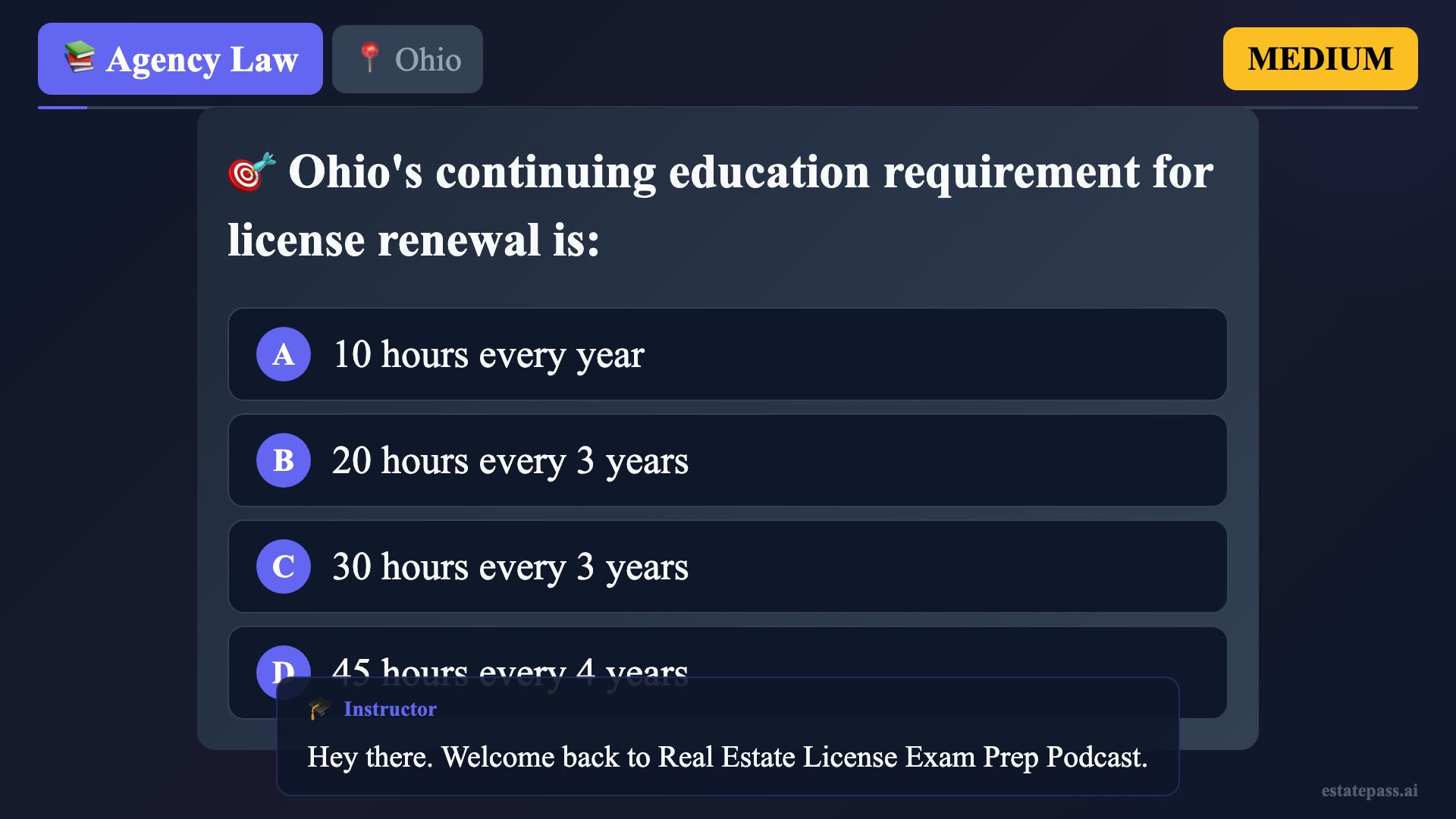
Ohio's continuing education requirement for license renewal is:
2:14 • 0 views
Ohio real estate licensees are regulated by the:
2:51 • 0 views
A seller's agent in Texas owes which duty to buyers?
2:47 • 0 views
South Dakota requires how many hours of pre-license education?
3:19 • 0 views
Which Illinois agency fiduciary duty survives beyond the end of an agency relationship?
2:17 • 0 views
Ready to Ace Your Real Estate Exam?
Access 2,000+ free video lessons covering all 11 exam topics.