
The final 72 hours before the real estate exam should not feel like a desperate attempt to reread everything. At this stage, the goal is to reduce noise, protect recall, and focus only on the topics that still create hesitation under pressure.
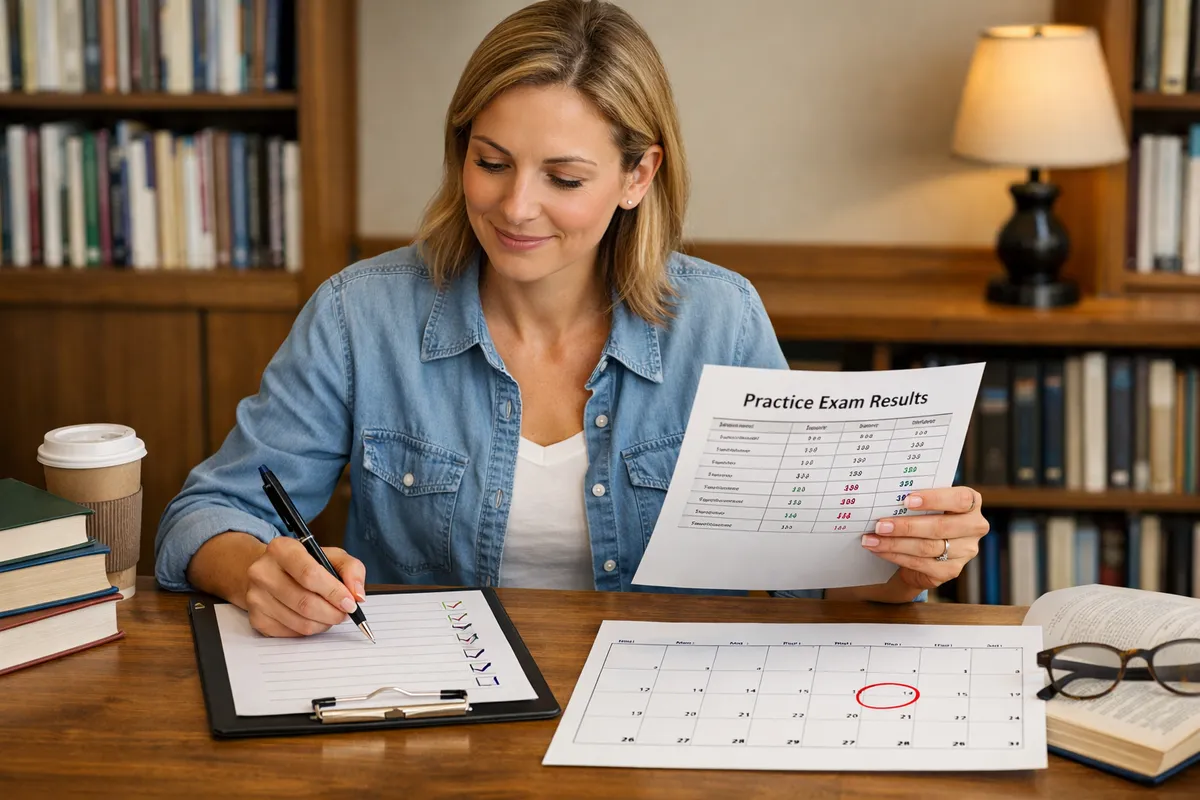
If you are searching for what to review in the last 72 hours before the real estate exam, the practical answer is narrower than most people expect. You do not need one more giant review cycle. You need a short, controlled plan that tells you what still deserves attention, what should be left alone, and how to walk into test day without turning the final stretch into a confidence crash.
This matters because the last three days influence much more than content recall. They shape energy, focus, pacing, and emotional control. Learners often think they are failing when they simply feel normal pre-exam tension. A structured final review plan keeps you from mistaking anxiety for unreadiness. It also helps you avoid the common mistake of trying to recover every weak area at once.
The direct answer most learners need
In the final 72 hours, review only the material that still breaks down when you answer questions. That usually means one or more of the following:
- state-specific rules that still blur together
- agency, contracts, disclosures, or fair housing distinctions that sound too similar
- real estate math and finance question types that still slow you down
- vocabulary terms you can recognize but cannot explain clearly under pressure
Everything else should move into light maintenance mode. The final three days are not for building new understanding from scratch. They are for protecting the knowledge you already earned and closing the few gaps most likely to cost points on test day.
Why the final 72 hours feel harder than they should
Most learners do not struggle in the last three days because they lack materials. They struggle because their study system changes too late. For weeks, they may have been reading, highlighting, and doing broader mixed review. Then the final stretch arrives, and they keep doing the same thing even though the job has changed.
At this stage, the challenge is no longer “How do I cover more?” It becomes “How do I stabilize what I already know?” Those are different goals. One rewards volume. The other rewards selectivity, active recall, and pattern recognition.
The last 72 hours also magnify emotional mistakes. If you miss a handful of questions late in the process, it is easy to overreact and assume the entire plan is failing. That usually leads to bigger sets, longer nights, and more passive rereading. Ironically, those choices often make recall worse. They increase fatigue without increasing confidence.
A practical 72-hour review plan
72 to 48 hours out: diagnose, do not panic
Start by reviewing your most recent timed set or practice exam. Do not just look at the score. Sort misses into categories. You want to know whether you are losing points because of concept confusion, reading mistakes, timing, or state-specific detail errors.
Then build a short review list. The list should be small enough that you can finish it well. A useful rule is to keep it to three to five categories. Once the list gets bigger than that, you are no longer prioritizing. You are just recreating your entire prep plan in a more stressful window.
Good categories for this stage often look like this:
- state licensing law and timelines
- agency duties and disclosure obligations
- contract formation, assignment, or novation distinctions
- commission, prorations, loan terminology, or valuation math
- property ownership terms and transfer language
48 to 24 hours out: tighten weak areas
Once the weak list is clear, switch to targeted repetition. This is when smaller focused sets are more useful than giant mixed sets. Ten to twenty questions around one weak category will usually teach you more than another full exam if the real problem is still local and specific.
As you review, ask a better question than “Did I get it right?” Ask “Would I still get this right if the wording changed?” The exam does not reward memorizing one familiar pattern. It rewards usable understanding. A concept is not stable until it survives different fact patterns, different wording, and a little time pressure.
This is also the best time to review flashcards, short definitions, or state-specific notes. Those tools work well late in the process because they encourage retrieval instead of passive rereading. If a card still feels unclear, that is useful information. It means the topic still belongs on the active review list.
Final 24 hours: protect clarity and energy
The last day should feel lighter, not heavier. That does not mean doing nothing. It means shifting to review that protects recall without draining attention. Read short summaries, run a few confidence-building questions, revisit formulas, and review the topics you most want fresh in your head the next morning.
What you should not do is start a new chapter, attempt a huge cram session, or stay up late trying to force certainty. Most last-day overstudying is really an attempt to reduce anxiety, not improve readiness. The problem is that it usually hurts sleep, attention, and emotional steadiness, which are all performance variables on exam day.
What to review first if time is tight
If you have less time than planned, do not default to random review. Rank topics by risk. The best order is usually:
- topics you miss repeatedly
- topics with confusing answer choices
- state-specific rules or terms that can be mixed up easily
- math or finance items where a small setup mistake causes the whole question to fail
- broad concepts that only need light refresh
This order works because it reflects how exam mistakes actually happen. Most late errors do not come from material you have never seen. They come from material you almost know. That “almost” is what the final three days should target.
What not to do in the last 72 hours
The most common last-minute mistakes are predictable:
- trying to reread every chapter one more time
- mistaking familiarity for readiness
- letting one bad practice block erase confidence
- adding new resources right before the test
- using stress to justify longer, less focused study sessions
These habits feel productive because they create motion. But motion is not the same as progress. A shorter focused session that clarifies one weak area is far more valuable than three hours of broad passive review that leaves you just as uncertain as before.
Another trap is repeatedly checking what other test takers studied. Those lists can be useful earlier in the process, but late-stage comparison often creates noise. Your final 72-hour plan should come from your own missed questions, your own timing issues, and your own weak areas.
How to judge whether you are ready enough
You do not need to feel perfect to sit for the exam. You need to feel steady enough that normal exam stress does not collapse your recall. In practice, that means:
- you can explain core concepts without reading from notes
- you can recover after a missed question instead of spiraling
- you can finish short timed sets without losing track of wording
- you know which topics are still weak and have a clear plan for handling them
That last point matters more than many people realize. Confidence does not come from pretending every topic is strong. It comes from knowing exactly what remains imperfect and still feeling able to manage it. Test-day confidence is often a planning result, not a personality trait.
Where EstatePass fits in the final-review window
EstatePass is most useful here when you need a cleaner bridge between “I finished the coursework” and “I am actually ready to test.” The public exam prep, practice questions, study planner, and state pages all point to the same idea: make weak areas visible early, practice them directly, and keep review structured enough that you do not waste the final week guessing.
If your prep is drifting, the final 72 hours are not the time to search for more content. They are the time to use the material you already have in a more disciplined way. A focused set of practice questions, a short list of misses, and a realistic plan for the final review window will usually do more for readiness than one more big burst of reading.
FAQ
What should I study 72 hours before the real estate exam?
Study only the categories that still produce confusion or slow answers. That usually includes state-specific rules, vocabulary distinctions, and math or finance topics that still break down under time pressure.
Should I take a full practice test in the last three days?
One well-timed practice block can help if you use it diagnostically. But most learners benefit more from smaller targeted sets late in the process because they reveal patterns without draining confidence or energy.
Is the final day for cramming?
No. The final day is for light review, formula refresh, and keeping your recall sharp. Cramming often increases fatigue more than it increases readiness.
What if I still feel underprepared the night before?
Narrow the plan instead of expanding it. Review short notes, a few definitions, and the categories you most want fresh. Do not try to rebuild your whole study plan in one night.
How do I know if my weak areas are still a real problem?
If the same topic still fails when wording changes or time pressure increases, it still deserves review. If it survives a few short sets without surprise mistakes, it is likely stable enough to move into maintenance mode.
Final takeaway
The final 72 hours before the real estate exam should be narrow, calm, and evidence-based. Review what still breaks. Protect what already works. Do not let stress trick you into touching everything again. If you keep the last three days focused, you give yourself the best chance to walk into exam day steady instead of overloaded.