
Failing the licensing test is not a reflection of your intelligence, but it is a clear signal that your previous study method was inefficient. If you are a retaker staring at a failing score, you need a surgical approach that prioritizes your weak areas rather than wasting time on what you already know. This guide strips away the fluff to focus on diagnosing your score report and executing a tight, 10-day plan to rebuild your accuracy and speed.
Here is how we turn a failure into a passing score:
decoding your score report to pinpoint exactly where you lost points.
structuring a 10-day schedule that balances content review with active testing.
replacing passive textbook reading with high-intensity targeted drills.
using timed mock exams to fix pacing issues and exam anxiety.
Morning Session: Deep dive into the concepts of your weakest category.
Afternoon Session: 20-30 practice questions specific to that category only.
Evening Review: Review the explanations for every wrong answer.
Vocabulary: The foundation of the exam. If you don't know what "adverse possession" means, you can't answer the question.
Exclusions: Questions asking for "NOT" or "EXCEPT." These trip up fast readers.
State-Specific Laws: These are often memorization-heavy and easy to forget.
Skip and Return: If a question takes more than 60 seconds, flag it and move on.
Math Last: Industry experts often recommend saving math questions for the end. They are time-consuming and can drain your confidence early in the session.
First Instinct: Your first answer is usually correct. Only change it if you find definitive evidence in the question stem that you misread it.
Analyze: Identify your "red zone" topics from your failed score report immediately.
Schedule: Block out 2 hours daily for the next 10 days, strictly following the review-drill-simulate structure.
Equip: Use tools that support targeted tagging of questions rather than generic random quizzes.
Simulate: Take at least two full-length, timed mock exams to build stamina.
The Diagnostic Phase: decoding Your Score Report
Most candidates throw their failed real estate exam result in the trash out of frustration. I urge you to dig it out immediately. That sheet is the most valuable study tool you currently possess. Unlike your first attempt where you were guessing what might be on the test, you now have hard data showing exactly where your knowledge collapsed.
State licensing bodies, whether in Florida, California, or Texas, typically provide a diagnostic breakdown. If your report shows you scored 85% on Agency Law but only 45% on Real Estate Math, your path is obvious. Industry data suggests that retakers who focus exclusively on sections where they scored below 75% see a significantly higher pass rate than those who try to "review everything."
Actionable Suggestion:
Take three different highlighters to your score report. Mark sections above 80% in green (maintenance only), 60-79% in yellow (needs review), and below 60% in red (critical weak areas). Your next 10 days will be weighted heavily toward the red zones.
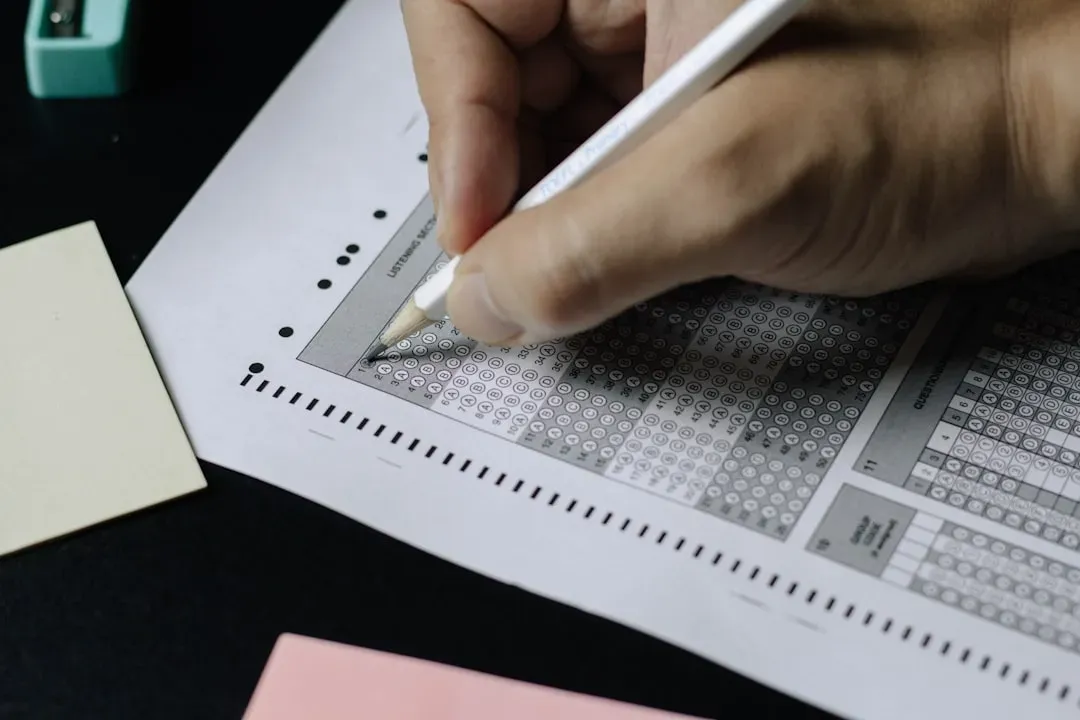
Days 1-3: Content Review of Weak Areas
The first three days of your recovery plan must focus on the "red zones" you identified. Do not open your textbook to Chapter 1. If you failed because of Financing and Property Ownership, you start there.
I have seen too many students fall into the trap of passive reading—skimming pages and nodding along. This creates a false sense of competence. Instead, you need to rewrite the rules and definitions of these specific categories in your own words. If you don't understand why a lien priority works the way it does, no amount of memorization will save you when the question phrasing changes.
Industry Insight: According to analysis of repeat test-takers, candidates who spend 50% of their study time on their weakest diagnostic categories improve their overall score by an average of 12-15 points.
Days 4-7: High-Volume Targeted Drills
Once you have refreshed the concepts, you need to test your application of that knowledge. This is where targeted drills come into play. You are not taking full exams yet. You are drilling specific topics until you are bored of getting them right.
Modern adaptive tools like EstatePass have changed the game here by allowing users to generate quizzes focused solely on specific tags like "Contracts" or "Fair Housing." This repetition builds the neural pathways needed for instant recall. If you are struggling with math, do 50 math problems in a row. The goal is to spot the pattern in the question so you know which formula to apply before you even finish reading the prompt.
Key Drill Focus Areas:

Days 8-10: Timed Mock Exams and Stamina
The final phase is about speed and pressure management. You know the material; now you need to prove you can retrieve it under stress. A timed mock exam is the only way to simulate the fatigue you felt during the actual test.
Many students fail not because they lack knowledge, but because they panic when the clock ticks down. I recommend taking your practice exams at the exact same time of day your real test is scheduled. Turn off your phone, clear your desk, and do not get up for 3 hours.
Strategy for the Exam:
Data Reality Check: Statistics from real estate schools indicate that pass rates for second-time takers can drop below 40% if they do not change their study habits. Simulating exam conditions is the number one factor in reversing this trend.

Mastering the Mental Game
Anxiety is a silent killer on exam day. You might know the definition of a fee simple estate perfectly at home, but blank out in the testing center. This is usually due to "future tripping"—worrying about failing again while you are still on question 10.
To combat this, you must treat the test as a series of isolated problems. Do not think about the score. Think about the question in front of you. If you encounter a question you have absolutely no clue about, guess and move on immediately. Dwelling on it wastes mental energy that you need for the remaining questions.
Actionable Suggestion:
Practice "box breathing" (inhale 4s, hold 4s, exhale 4s) between sections of your mock exam. It resets your cortisol levels and helps you focus.

FAQ
How soon should I retake the exam after failing?
Check your state's specific rules, but generally, you should schedule it as soon as possible—ideally within 2 weeks. The information is still fresh in your mind. Waiting months often requires you to restart the learning process entirely.
Is the retake exam harder than the first one?
The difficulty level is calibrated to be the same, but the questions will be different. However, statistically, pass rates for repeaters are lower. This is usually because they repeat the same ineffective study habits. A new retake strategy is required to break this cycle.
Should I memorize the questions I saw on the exam?
No. You will likely not see the exact same questions again. Focus on the concepts behind the questions. If you understand the principle of agency, you can answer any variation of an agency question.
How do I handle the math questions if I am bad at math?
Math typically makes up only 10-15% of the exam. You can actually miss every math question and still pass if you ace the other sections. However, don't ignore it. Memorize the 5-7 core formulas (amortization, area, commission, etc.) and save these questions for the end of the exam so they don't eat up your time.
Conclusion and Actionable Suggestions
Passing your retake is about precision, not volume. You do not need to study harder; you need to study where it hurts. By using your score report as a map and modern tools to drill your weak spots, you can walk into the testing center with genuine confidence.
For a structured approach to drilling those weak areas and accessing realistic practice tests, you might find the Retake Prep Toolkit useful for organizing your final push. Get your data, make your plan, and go get your license.