
If You Die With No Will and No Heirs, Who Gets Your House? "Escheat" Explained
You didn't "lose" the property. You just ran out of people who can legally inherit it.
That's the uncomfortable idea behind a real estate term that shows up on exams and in real life:
Escheat.And yes—its spelling is weird enough that your brain wants to read it as "cheat." You're not imagining it.
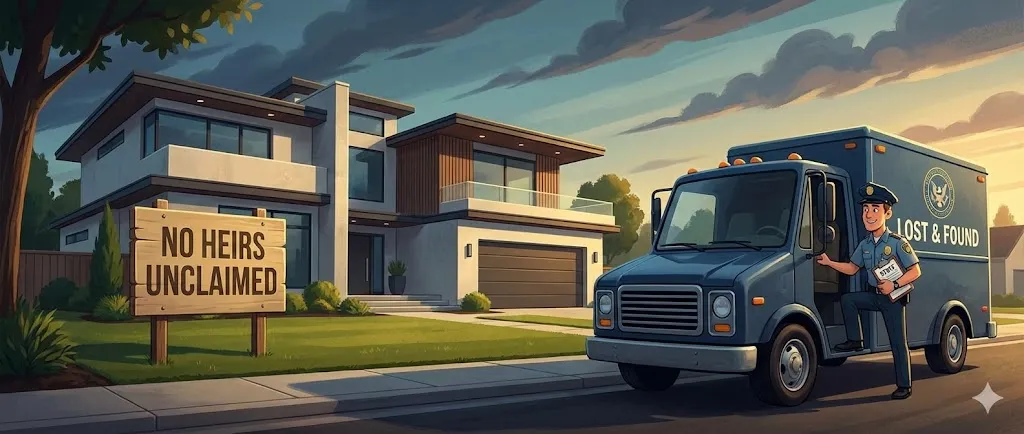
The 30-Second Definition
Escheat is a legal principle where property transfers (reverts) to the state when someone dies without a will and without legal heirs.In other words: no will + no heirs = the state becomes the "final receiver."
If you only memorize one line for your exam, make it this:
Escheat happens when ownership has nowhere else to legally go.
The Story That Makes It Stick
Picture this:
A wealthy man dies.
- No spouse. No kids. No siblings. No known relatives.
- No will. No trust. Nothing.
So the obvious question is: who owns his house now?
It can't stay "ownerless" forever. Someone must pay property taxes, maintain the building, and hold legal title.
So the law basically says:
If nobody can legally inherit it, the state steps in as the last-resort owner.
That's Escheat.
Why Does Escheat Exist at All?
Because the law hates "orphaned" property.
If assets can float around with no owner, you get a mess:
- No one can legally sell it
- No one is responsible for taxes and maintenance
- The property can deteriorate and drag down the neighborhood
- Fraud becomes easier ("I'll just claim it!")
So the legal system uses escheat as a clean endpoint:
There is always a final place ownership can land.
The Spelling Trap: Escheat vs. "Cheat"
Let's deal with the pain point directly.
This word looks like it's trying to prank you: es-cheat.
Here's a memory trick that's actually useful:
- Cheat = someone is doing something wrong
- Escheat = nobody's doing anything wrong, but no rightful owner exists
So think:
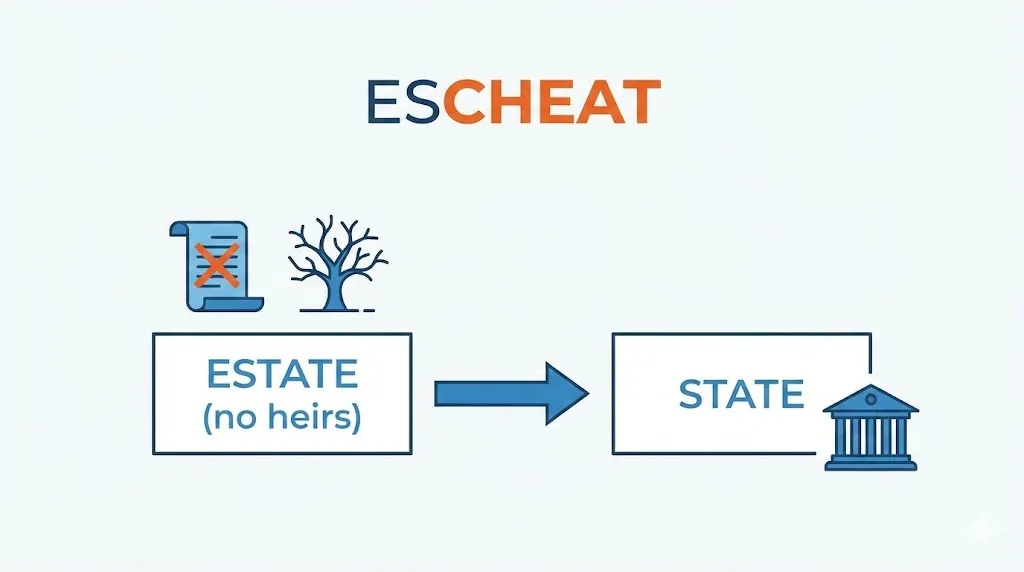
Escheat = "Estate… has no one… so the State gets it."Estate → State.
That's the mental bridge.
Where You'll See This in Real Life (More Often Than You Think)
On exams, escheat is usually about real property (land/house).
In real life, you'll often see the same concept show up through unclaimed property rules.
Examples people commonly "lose track of":
- Old bank accounts you forgot existed
- Uncashed checks (refunds, payroll, dividends)
- Utility deposits from a previous apartment
- Insurance proceeds no one claimed
- Safe deposit box contents left untouched for years
After a dormancy period (which varies by state and asset type), organizations may be required to transfer the property to the state to hold until the rightful owner shows up.
Key mindset:
The state often functions like a "lost-and-found" for financial property.(Not legal advice—specific rules vary by jurisdiction.)
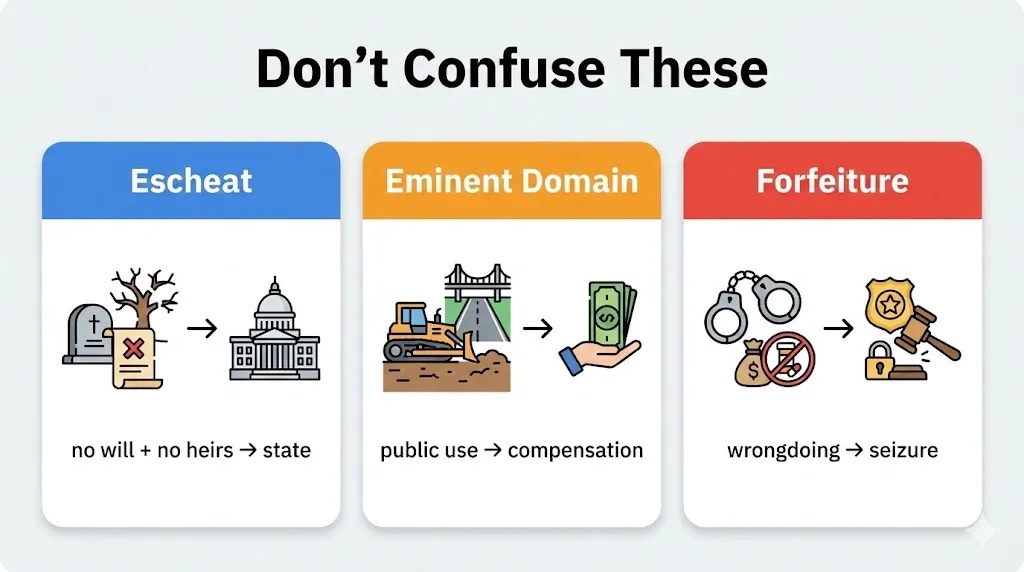
The Exam Trap: Don't Confuse Escheat With These
This is where students drop points.
1. Escheat vs. Eminent Domain (Condemnation)
They both involve the government, so they blur together fast.
Eminent Domain is:- The government takes private property for public use
- Typically requires just compensation
- Property transfers to the state because no legal owner/heir exists
- It's not "taking for a project," it's "ownership has no destination"
- If you see "public use," "highway," "school," "compensation" → think Eminent Domain
- If you see "dies intestate," "no heirs," "no will" → think Escheat
2. Escheat vs. Forfeiture
Forfeiture usually has a punishment vibe:- Property is taken because it's tied to wrongdoing or illegal activity
- It's about absence of a legal recipient.
The "Escheat Checklist" You Can Write on Scratch Paper
If you're taking a real estate exam, train your eyes to hunt for these signals:
- [ ] Owner dies
- [ ] No will (intestate)
- [ ] No heirs / no lawful claimants
- [ ] Property reverts/transfers to the state
"So How Do I Avoid This Happening to Me?"
You're not a fictional billionaire with no relatives.
But you can still create the same outcome accidentally—especially with unclaimed money and "lost accounts."
Here's the practical, low-effort prevention list:
- Keep beneficiaries updated on key accounts (retirement, life insurance, etc.)
- Keep your address current with banks, employers, insurers, brokerages
- Don't let accounts go dark for years (even a small login or transaction can help, depending on the institution)
- Do basic estate planning (even a simple will can prevent the "no destination" problem)
If you've moved, changed jobs, or used multiple banks over the years, it's worth doing a quick check on your state's unclaimed property program.
Sample Exam Questions
Question 1
A property owner dies without a will and has no known heirs. What happens to the property?A. It becomes public property immediately
B. It transfers to the state through escheat ✓
C. It is sold at auction to the highest bidder
D. The county takes ownership through eminent domain
Explanation: When someone dies intestate (without a will) and has no heirs, the property escheats to the state.Question 2
Which government power allows the state to take ownership of property when the owner dies without heirs?A. Eminent domain
B. Police power
C. Escheat ✓
D. Taxation
Explanation: Escheat is the government power that allows property to revert to the state when there are no legal heirs.Question 3
Escheat differs from eminent domain in that escheat:A. Requires compensation to the property owner
B. Is used for public projects like highways
C. Occurs when there is no legal heir to inherit property ✓
D. Involves taking property for illegal activity
Explanation: Escheat occurs due to lack of heirs, while eminent domain involves taking property for public use with compensation.Key Terms to Remember
| Term | Definition |
| ------ | ------------ |
| Escheat | Property reverts to the state when owner dies without will or heirs |
| Intestate | Dying without a valid will |
| Eminent Domain | Government takes property for public use with compensation |
| Forfeiture | Property seized due to illegal activity |
| Unclaimed Property | Assets held by the state until rightful owner claims them |
Final Thoughts
Escheat sounds like a weird word because it is.
But the concept is simple:
If there's no legal person to receive the property, the state becomes the final backstop.
Now test yourself: when you see Escheat on a practice exam, do you tend to confuse it with Eminent Domain or with something else?
Practice More
Ready to test your knowledge? Try our practice questions:
Start your free trial and access all practice questions →